
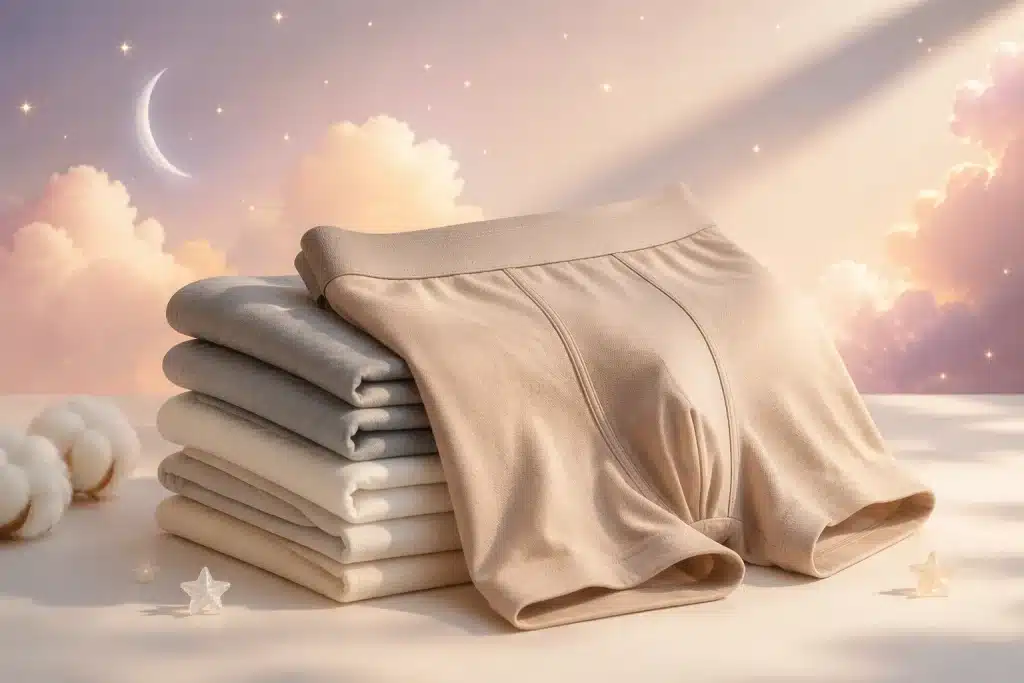
You know that midday irritation. Your boxers bunch, chafe, or feel damp. That constant readjusting pulls you from the present moment. It drags down your focus. How can you achieve comfort all day long without giving up support, health, or style? This guide gives you the blueprint. We cover style comparisons, the science behind fabrics, fit tricks, and construction secrets. You’ll get practical answers you can use today. The perfect fit, fabric, and style are within reach. Don’t let poor men’s underwear ruin your day. Upgrade your choices and feel the difference. From morning to night, you can stay at ease.
Key Takeaways
Pick the right underwear style for your day. Boxers let air flow for rest. Briefs give support for activity.
Choose natural materials such as cotton so your skin can breathe. Man-made fabrics hold in sweat and can irritate the skin.
Find your best fit with the two-finger rule. A snug waistband stays in place without pinching.
Look for seamless construction and flatlock stitching. These cut down on rubbing and keep you comfortable.
Get new underwear every 6-12 months. Clean underwear keeps you comfortable and healthy.
Why Men’s Underwear Affects Daily Life
Health and Hygiene Considerations
Your underwear touches your skin all day long. This makes it your first defense for skin health, cleanliness, and even testicle temperature control. A bad men’s underwear choice traps sweat and germs. This can cause a few issues:
Skin soreness from dirty fabrics that hold sweat and germs, leading to itching and rashes
Fungus and bacteria infections from long contact with germs
Bad smells that stick around from built-up sweat and bacteria
Weak fabric as dirty materials break down faster
Man-made materials like polyester and nylon can also cause allergic reactions. You might see itching, swelling, or painful rashes on your private parts, buttocks, waist, and thighs. Bad hygiene and wearing wet underwear make yeast and fungus infections more likely. Research on testicle temperature hints that cotton fabrics may release heat better than polyester fabrics. The proof is not direct, but it suggests natural fibers help control temperature better.
Comfort as a Performance Booster
Comfort is not just about feeling good. It directly affects your focus and how much you get done. One source says comfort in work clothes lowers stress and keeps you focused, especially in high-pressure jobs. When you feel properly dressed, your confidence goes up. That confidence can change your performance, involvement, and creativity. The idea of enclothed cognition suggests clothes affect how you think and act. Feeling comfortable in what you wear is key for lasting focus and efficiency during the workday.
Athletes understand this well. Good support helps muscles line up right, lowers muscle tiredness, and boosts better performance. Moisture-wicking materials and seamless design reduce chafing and irritation. This allows for more endurance and quicker recovery. Compression underwear gives targeted muscle support and improves blood flow. Boxer briefs offer balanced support and coverage. When you don’t worry about fixing uncomfortable underwear, you give full attention to your game or work. Putting men’s underwear quality first is an investment in your daily well-being. The right underwear choice helps your body and mind from morning to night.
Boxers vs. Briefs: Pros and Cons
The boxers vs. briefs debate has raged for decades. Men’s boxers vs. briefs is not just about personal preference. Each style serves different needs. Understanding these differences helps you make a smarter underwear choice.
When to Choose Boxers
Loose boxers shine when airflow matters most. They reduce direct compression and allow better air circulation around the groin. This keeps the area dry and lowers moisture buildup. You will notice the difference on warm days or after a tough workout.
Here is when boxers work best for you:
You sit for long hours at a desk or behind the wheel
You sweat easily or live in a hot climate
You struggle with chafing or groin irritation
You want less heat retention during sleep
Some researchers link boxers to better sperm quality. Some urologists are skeptical of that claim, noting that outer clothing like tight jeans may cancel out any advantage. The research is not settled. Choose boxers for breathability and daily comfort, not as a fertility fix.
When Briefs and Trunks Work Best
Briefs and trunks give you firm support. They hold everything in place during movement. This makes them ideal for active days at the gym or on the field. The snug fit also prevents rubbing between your thighs.
Modern styles like trunks and boxer briefs often combine the best traits. They offer the balance between coverage and support that many men want. Boxer briefs sit as a middle ground. They give you the length of boxers with the support of briefs. Trunks take a shorter cut but keep that secure feel.
Your activity level should guide your style and fit. Pick briefs or trunks for high-movement days. Pick boxers for rest and recovery. Try both and see what your body prefers.
Best Fabrics for All-Day Comfort
Breathable Naturals and Blends
The fabric you pick can make or ruin your day. Natural fibers like cotton and linen soak up small amounts of moisture. Then they release it slowly into the air. This helps sweat dry up faster. Your skin stays cool and dry. Synthetic fibers act in a different way. They push water away, so moisture gets stuck between your skin and the cloth. That trapped moisture makes a damp, uncomfortable space. It also leads to bad smells.
Here is how natural and synthetic fibers stack up:
Attribute | Natural Fibers | Synthetic Fibers |
|---|---|---|
Breathability and moisture-wicking | Cotton and linen are known for breathability and moisture-wicking, great for hot, humid climates | Made for different traits; low absorbency means moisture is not easily taken in |
Absorbency | Take in moisture (e.g., cotton, wool) | Low absorbency; push moisture away, lowering mold, mildew, and bacterial growth |
Insulation | Wool insulates very well and keeps warmth even when wet | Made for stretch, durability, and resistance to heat and cold |
Durability | Breaks down naturally, good for the environment | Strong, resists wear, keeps its shape after repeated use |
Other | Less likely to cause allergies (silk) | Great colorfastness and color retention |
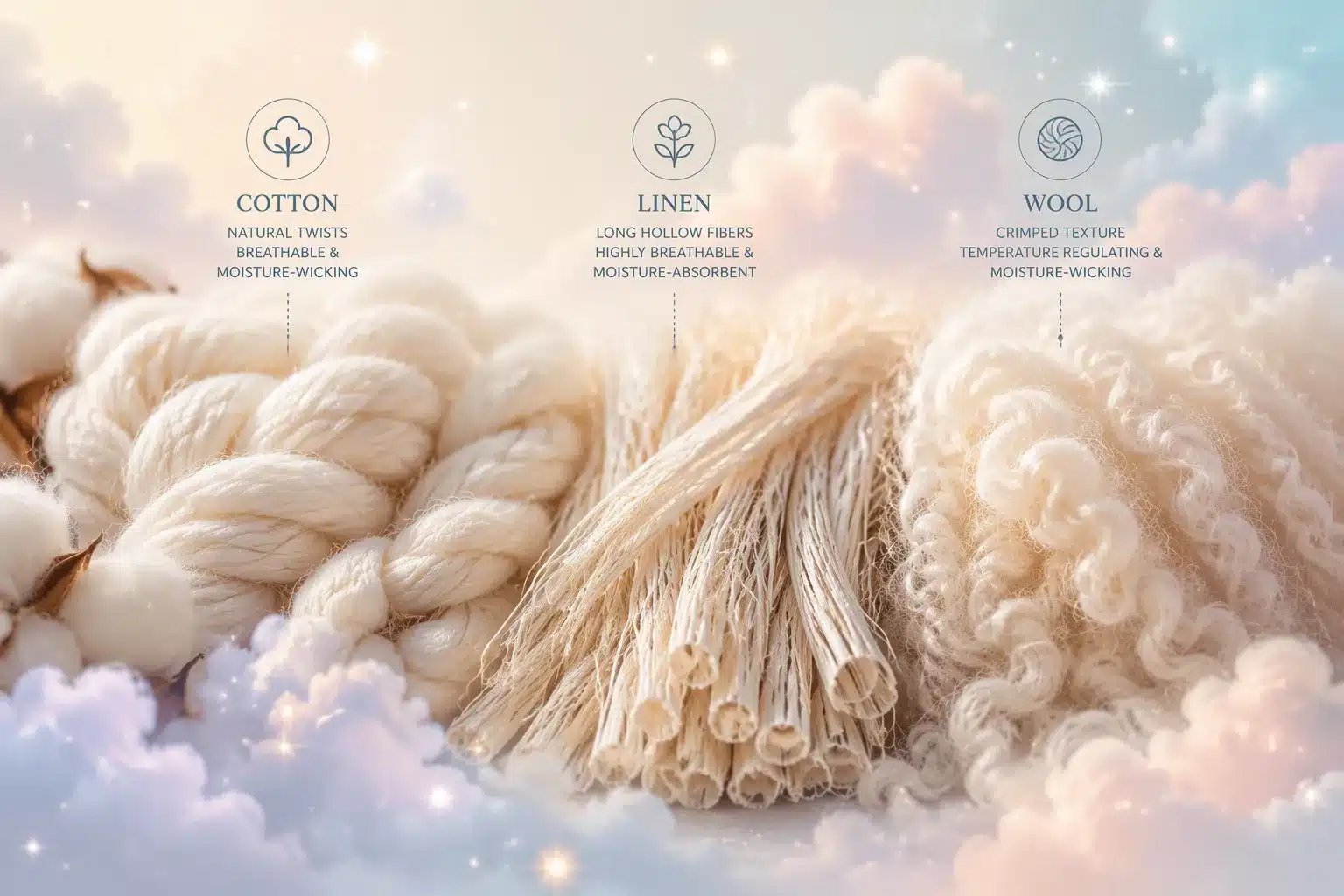
Cotton fibers have natural twists that make airflow inside woven fabrics. Linen fibers are long and hollow, so heat and moisture move through the textile with ease. Wool fibers have a crimped shape that traps insulating air while still letting moisture vapor out. Synthetic fibers like polyester or nylon are made as smooth plastic filaments with even surfaces. Their structure often traps heat instead of letting it flow freely. These natural structural traits let natural fiber garments control heat and moisture on their own, without extra chemical treatments or synthetic coatings.
For hot climates, lightweight mesh options bring real relief. Ice silk fibers are designed to move body heat away from your skin, providing a cooling effect. Ice silk also does a great job at moisture-wicking. It pulls sweat away from your skin and lets it evaporate fast. The loose weave and characteristics of ice silk fibers let air move freely. This creates a cooling breeze effect against your skin. Under certain conditions, ice silk can provide a noticeable drop in skin temperature.
Eco-friendly blends give you both comfort and sustainability. Brands can follow social responsibility standards that ensure fair labor practices, safe working conditions, and transparent supply chains. You should also look for certifications that guarantee textiles meet high ecological and safety standards, from raw material to finished product. When you pick men’s underwear made from breathable, moisture-wicking fabrics with these certifications, you invest in your comfort and the planet.
How to Find the Right Fit

Understanding Size Charts and Waistband Tension
Your size label only tells you a little. Brands use different numbers for the same waist size. Look at this common size chart:
Size | Waist Range |
|---|---|
S | 28–30″ |
M | 31–34″ |
L | 35–38″ |
XL | 39–42″ |
2XL | 43–46″ |
A medium from one brand may feel tight, but another brand fits just right. That is why you should think about more than your waist. Tailors check a few key measurements:
Measurement | Where to measure | Why important |
|---|---|---|
Hip Girth | Around the fullest part of your hips and buttocks | Important for pants and fitted coats |
Thigh Girth | Around the fullest part of your upper thigh | Helps you get the right size for trousers and sportswear |
Inseam Length | From the crotch point to the bottom of your ankle | Needed for trousers and jeans |
These numbers help you choose a style that fits your body shape. A man with bigger thighs needs a different cut than someone with thinner legs.
Now let’s talk about the waistband. Getting this right is the most important part. A comfy waistband should sit at your natural waist, not at your narrowest point. Follow these steps to find the right spot:
Put the waistband at your natural waist instead of pulling it too tight at the narrowest point.
Close the waistband firmly with a strong button or hook-and-eye closure.
Use a belt or drawcord to hold the load steady, not to make up for a waist that is too big.
Do not pull it too tight, because the belt will “walk” up and then loosen as you move.
Think about moving the holding force to your shoulders with suspenders if you need to.
For underwear, the waistband needs different qualities:
Choose a width that spreads pressure evenly
Look for medium-firm elastic tension that provides low-pressure comfort
The elastic should return to shape easily as you move
A covered spandex yarn can give steady stretch
Double-layer encased elastic stops rolling and removes pressure hot spots
The two-finger rule works well here. Slide two fingers under the waistband with ease. If it is tighter than that, it is too tight. If it is looser than that, it is too loose. Also check for bunching around your legs. If fabric gathers or rides up, the cut does not match your body.
Well-designed underwear can boost this support. The engineering lifts your natural shape while keeping the waistband secure. You do not feel pinched or held back. You feel supported.
Matching Fit to Your Activity Level
Your daily routine should guide your underwear choice. Think about what you really do each day.
For active days with running or stretching, look for a no ride-up design. Precision-cut leg openings and adaptive stretch let the underwear move with you. The engineered shape stays put without shifting or rolling. Seamless construction with bonded edges cuts down on chafing and lets you move freely.
For long hours sitting at a desk, a snug fit offers real health benefits. Compression puts graduated pressure on your lower legs. This helps blood flow from your ankles back toward your heart. It helps when blood tends to pool during long periods of not moving. Better circulation lowers tiredness and heaviness. It also reduces swelling in your feet, ankles, and legs.
Your personal comfort depends on your activity level. A runner needs different support than an office worker. An athlete needs moisture management and freedom of movement. A desk worker needs circulation support and a secure hold.
The perfect fit combines the right size, the right waistband tension, and the right style for your activities. Start by measuring yourself the right way. Then pick a style that matches your daily demands. Test the waistband using the two-finger rule. Check for bunching as you move. Your body tells you when you get it right. The comfort you feel throughout the day starts with these small details.
Prioritizing Men’s Comfort and Health
Seamless Construction and Flatlock Stitching
Seams matter more than most guys think. A raised, looped ridge rubs your skin with every step you take. Flatlock stitching fixes this problem. It lines up fabric edges without overlapping them, which creates a totally flat surface. This design cuts down friction and makes running, yoga, and cycling much more comfortable. High-friction spots like inseams gain the most.
Metric | Overlock (standard) | Flatlock |
|---|---|---|
~2.5 mm raised ridge | <1 mm, lays flush | |
Chafing risk | Noticeable during repetitive movement | Dramatically reduced |
Skin comfort | Prone to chafing | Maximum (zero friction) |
Seamless underwear takes this idea even further. Makers form it on circular knitting machines as one continuous piece with no side seams. Edges are laser-cut or bonded instead of hemmed. This gives you a smooth feel against your skin. Traditional cut-and-sew construction uses stitched seams and elastic trims. That approach allows more structure and design variety. But it also creates more chances for irritation. For men’s comfort and health, seamless wins in skin-contact areas.
Moisture Management for Sensitive Skin
Moisture-wicking fabrics pull sweat away from your skin so it does not soak into the clothing. This keeps you dry and lowers chafing, rashes, and odors. Moisture helps bacteria grow. Lots of sweat may lead to skin irritation and infections. Moisture-wicking materials limit the damp conditions fungi need to live. Cotton soaks up and holds moisture, which can leave your skin wet and heavy. That makes breathable materials a smarter choice for active days.
If you have eczema or psoriasis in the groin area, fabric choice becomes very important. The recommended option is 100% organic cotton. Boxers made from 100% organic cotton work as a good choice for groin dermatitis or psoriasis. The right fit and fabric keep you comfortable all day long. Your underwear should help your skin, not fight it.
You started by understanding how your underwear impacts your health. Then you explored boxers versus briefs, picked the right fabric, found the perfect fit, and learned about smart construction. These choices matter more than you might think. Achieving all-day ease takes experimentation, not a single purchase. What works for your friend might not work for you. Test different options. These practical tips guide you toward your own perfect setup. Your ideal choice might mix features from different styles. Start with one change—try a new fabric or style—and notice how your comfort improves. Your body will thank you from morning to night. Small adjustments lead to big gains in your overall comfort.
FAQ
How often should I replace my underwear?
Replace your underwear when it shows signs of wear, like sagging waistbands, thinning material, or lingering odors. If your underwear feels loose or looks worn, it is time for new pairs. Fresh underwear keeps you comfortable and hygienic.
What is the best underwear for sweaty days?
Pick moisture-wicking fabrics like bamboo, silk, or lightweight mesh. These materials pull sweat away from your skin and dry fast. Avoid heavy cotton on hot days. It soaks up moisture and stays damp. Lightweight mesh options also work well. They let air flow freely around your body.
Can the wrong underwear cause health problems?
Yes. Tight or synthetic underwear traps heat and moisture. This creates a breeding ground for bacteria and fungus. You may get rashes, itching, or infections. Poor support can also cause chafing during movement. Choose breathable fabrics and a proper fit to protect your skin and stay healthy.
Should I wear different underwear for work and workouts?
Absolutely. Your body has different needs throughout the day. For desk work, pick soft, breathable fabrics with a secure waistband. For the gym, choose moisture-wicking materials with flatlock seams. Boxer briefs or trunks give you support during movement. Matching your underwear to your activity keeps you comfortable and focused.
How do I know if my underwear fits right?
Use the two-finger rule. Slide two fingers under the waistband. It should feel snug but not tight. Check for bunching around your legs. Fabric should lie flat against your skin. If you constantly readjust or feel pinched, try a different size or style. The right fit stays put all day.