
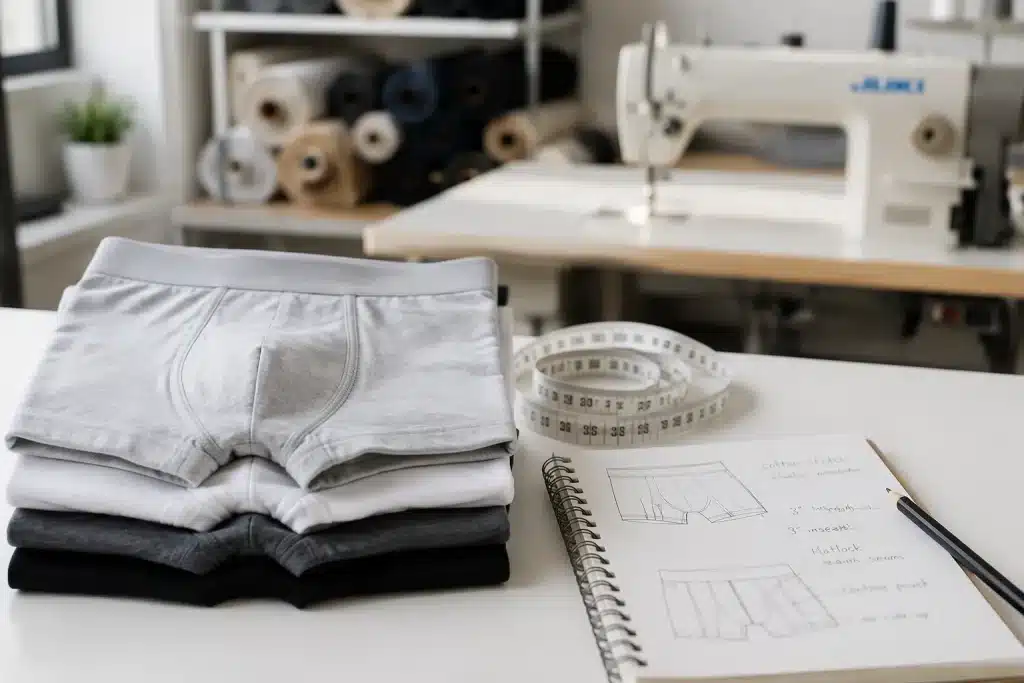
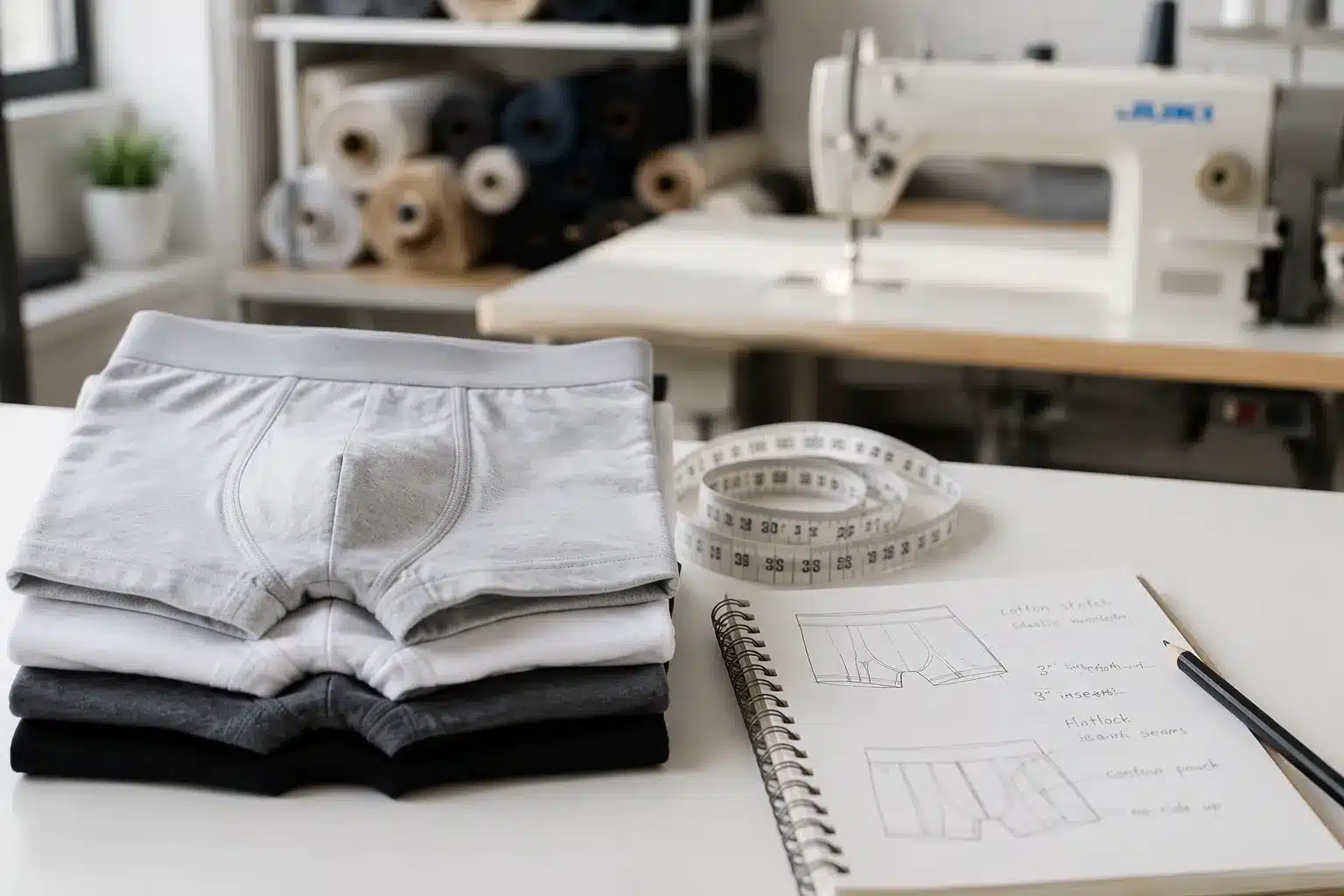
Absolutely, you can produce small batch boxer briefs even with limited quantities. Emerging brands partner with specialized factories all the time. This guide will help you locate a reliable low MOQ underwear manufacturer, break down your actual costs, maintain quality standards, and navigate your first production run with confidence. No massive budget or prior experience is required—just the right partner and a solid strategy. Let’s get your brand launched.
Key Takeaways
You can start with as few as 100 pieces, so you don’t need a huge budget.
Small batches let you test designs and avoid unsold inventory.
Check factory certifications and order samples before you commit.
Use a tech pack and written approvals to keep quality on track.
Plan your size and color splits carefully to reduce stock risk.
What Is Low MOQ Manufacturing
Understanding MOQs
MOQ stands for minimum order quantity. Factories set MOQs because they need to cover setup costs, material sourcing, and machine time. A traditional factory might require thousands of pieces before they turn on a production line. That number keeps small brands out of the game.
Low MOQ manufacturing changes the rules. A low moq underwear manufacturer accepts smaller runs, often starting at just 100 pieces. This opens the door for emerging brands to test designs without risking a huge investment. You can order a small batch of boxer briefs, see how customers respond, and adjust your plan from there.
Benefits of Small Batch Production
The low moq manufacturing model gives you two big wins: less stock risk and lower upfront cash. You do not need to fill a warehouse with inventory you might not sell. Instead, you order what you need, learn from real sales data, and scale up when you are ready.
Private-label production lets you grow from a small-batch launch to full production runs under your own brand name. The manufacturer handles everything end to end. One studio has taken first-season independent brands from an initial idea all the way to a sellable product range. It has also built licensed programs and private-label collections that shipped in the hundreds of thousands of units for national retailers. What matters is your intent to sell the product, not how many retail doors you have today.
Here is how the path often looks:
Program Stage | Minimum Order Quantity | Service Type | Turnaround / Notes |
|---|---|---|---|
Small-batch test phase | 100 pieces | Ready-stock boxer briefs with your label | 7-day dispatch |
Full production scale-up | 500 pieces | Full OEM/ODM custom manufacturing | Industry standard is 2,000+ pieces |
Start your underwear brand without the risk. Ready stock from 100 pieces, private label from 100 pieces. No large commitments required.
You get quality control at every stage. You also keep your cash free for marketing and growth. That is the power of small batches.
Finding a Low MOQ Underwear Manufacturer
Where to Look
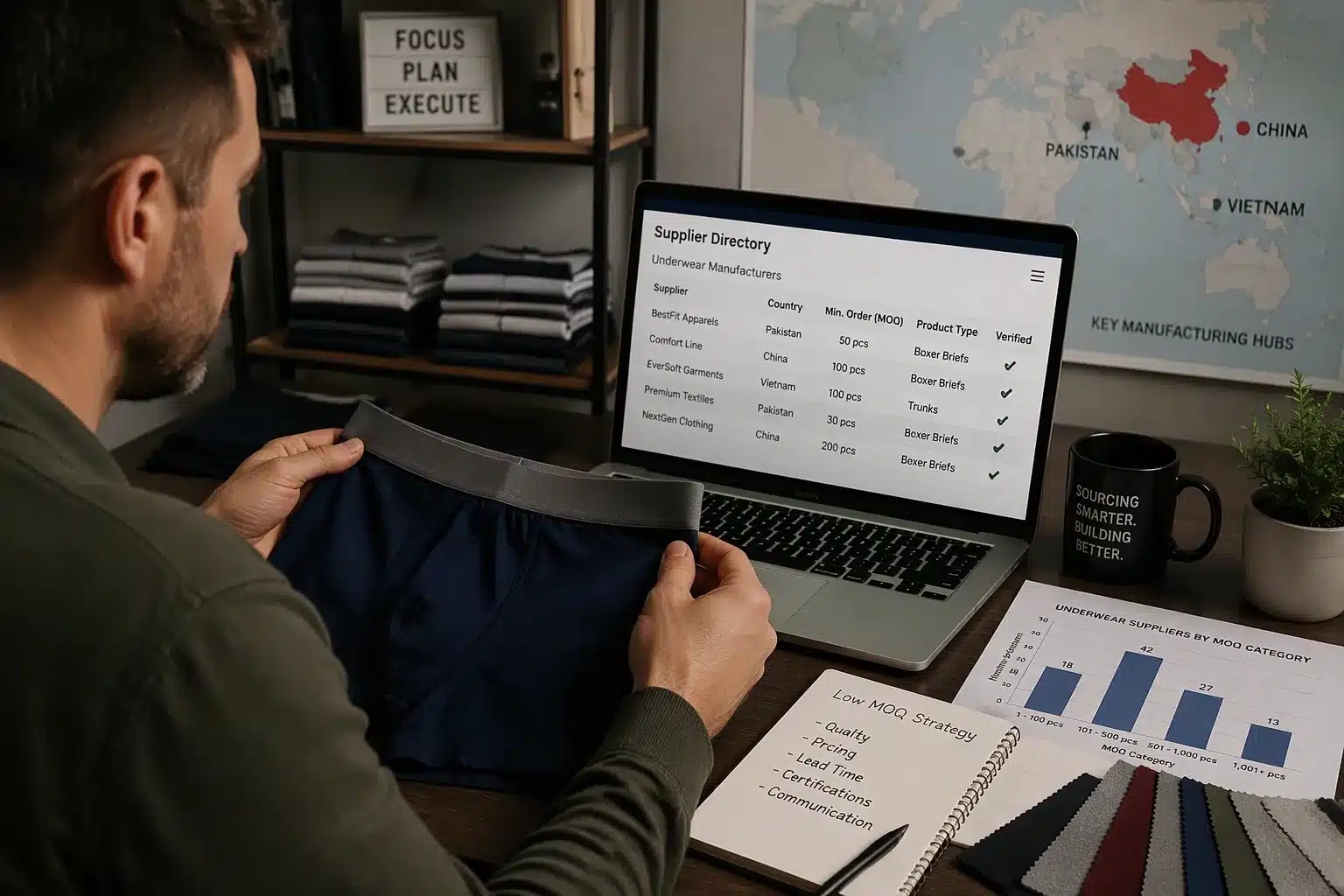
You have several channels for finding a low moq underwear manufacturer that welcomes small batch boxer briefs. Online directories like Accio list suppliers with their stated minimums right on the product page. You can filter by product type and see exactly who accepts small runs. Trade shows put you face to face with factory representatives. Referrals from other brand owners often lead to the best partners. Specialized OEM services also support small-batch production directly.
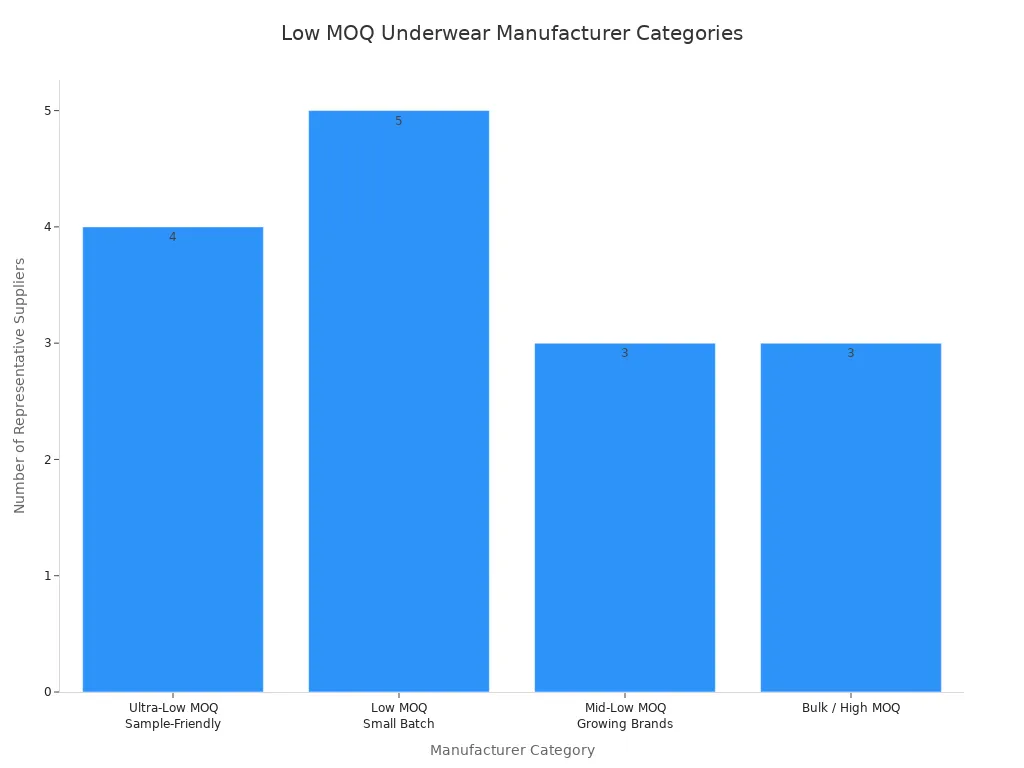
The supplier landscape breaks into clear tiers. Ultra-low MOQ suppliers accept just 2 to 5 pieces, which suits startups testing designs. Low MOQ factories handle 10 to 30 pieces for small batch boxer briefs brands. Mid-low MOQ suppliers work with 50 to 100 pieces for growing brands. Bulk manufacturers want 500 to 1000+ pieces and offer the best per-unit pricing.
China and Pakistan remain dominant manufacturing hubs for cost-effective bulk production. Vietnam is emerging as a key player, known for quality and favorable trade agreements. The trend favors suppliers offering low MOQs and flexible customization.
How to Vet a Factory
Evaluating a low moq men’s boxer briefs manufacturer takes more than a quick email. Check certifications first. Ask for samples before you commit to anything. A responsive factory answers questions within a day or two. Confirm they accept small runs in writing.
Online directories make comparison easy. One listing shows a men’s boxer briefs manufacturer offering custom logo boxer briefs at 100 pieces. Another lists a supplier at just 2 pieces for cotton boxer briefs with custom logos. A third offers custom design service at 10 pieces. These listings help you spot which factories truly support small batches.
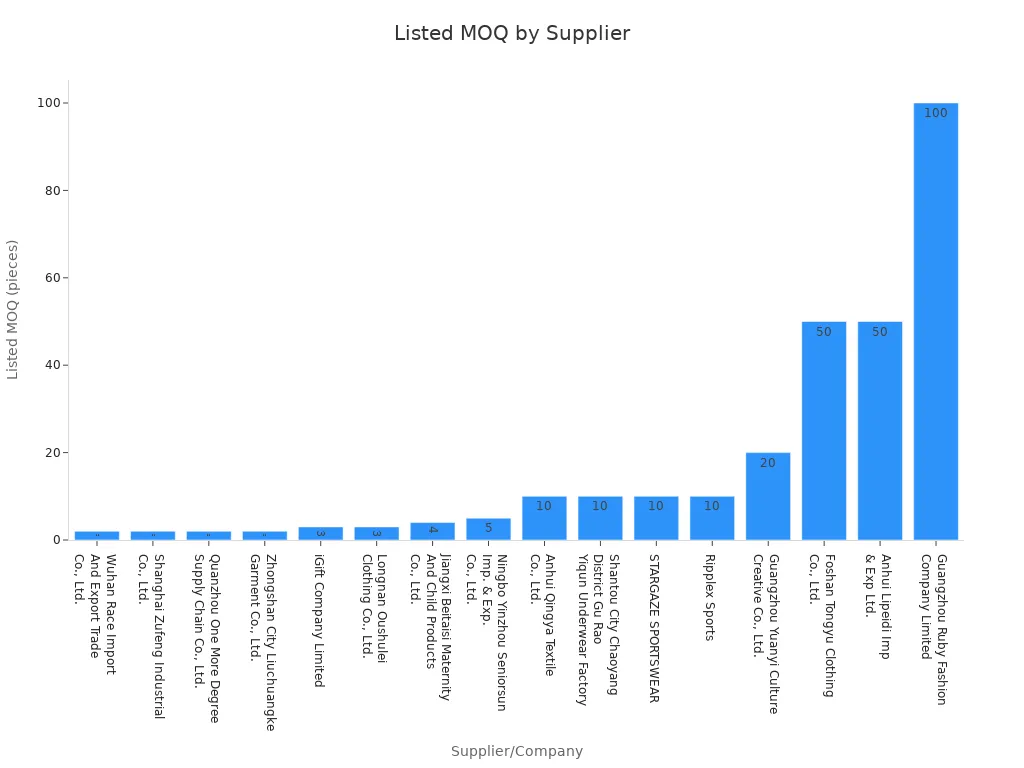
Custom club swimwear manufacturing guides cover timelines, squad sizing, custom designs, fabrics, and minimums. These same considerations apply to small-batch boxer briefs manufacturing. You need to know lead times, size ranges, design options, material choices, and order minimums before you sign anything.
Ask about applicable fabric, style, and branding conditions before committing. A custom underwear manufacturer may offer low-moq options on certain fabrics but require higher volumes for others. Branding methods like woven labels, printed tags, or embroidery each carry their own minimums. A flexible production partner will walk you through these details clearly.
For b2b underwear sourcing, treat every conversation as a chance to learn. The right manufacturer for your low-moq programs will guide you through production steps and help you avoid costly mistakes.
Key Factors Before You Start
Cost and Budgeting
Your total cost per unit comes from several places. Fabric, labor, sampling, labels, packaging, and shipping all add up. Here is a simple breakdown to help you plan.
Cost Category | What It Covers |
|---|---|
Fabric | Main material, waistband elastic, thread |
Labor | Cutting, sewing, finishing |
Sampling | Pre-production samples and revisions |
Labels | Woven tags, printed care labels |
Packaging | Poly bags, hang tags, boxes |
Shipping | Freight, customs, duties |
Small runs carry higher per-unit costs. A factory spreads setup time across fewer pieces. That means each pair of cotton boxer briefs bulk order costs more than a 5,000-piece run. But your total risk drops. You invest less cash upfront and avoid dead stock.
Quality and Materials
Fabric selection shapes everything. Cotton breathes well and feels familiar. Modal drapes softly and resists shrinkage. Spandex blends stretch and recover for a snug fit. Each choice affects comfort, durability, and price. Ask your manufacturer for swatches before you decide.
Think about brand consistency too. Standard uniform requirements often specify exact colors, materials, and design elements. Your custom boxer briefs manufacturing should follow the same logic. Pick a fabric weight and color code you can repeat across future orders.
Quality control protects your brand. Start with pre-production samples. Approve them in writing. Then schedule inline inspections during sewing. Check stitching, waistband tension, and label placement. Finish with a final inspection before shipping. A good manufacturer welcomes these steps. They want you to catch problems early, not after your customers do.
Your First Production Run
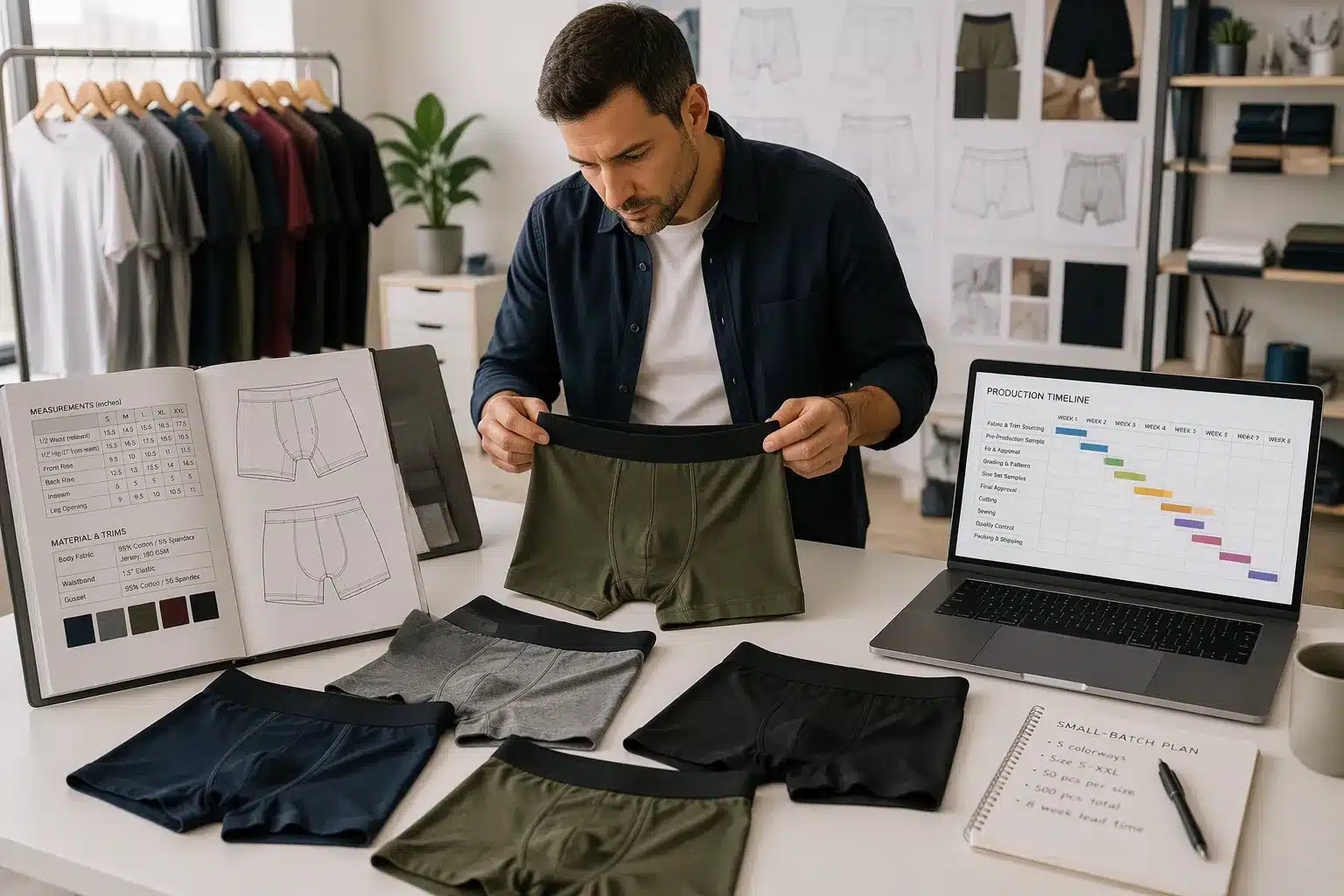
Design to Delivery
Your first run follows a clear path. Each step builds on the one before it, and a good partner walks you through every stage.
Finalize your design. Lock in the cut, waistband style, fabric, and colorways.
Create a tech pack. This document spells out measurements, materials, stitching, and labeling. It becomes your factory’s blueprint.
Order samples. Review pre-production samples for fit, feel, and finish.
Approve in writing. Sign off on the sample before bulk work begins.
Start bulk production. The factory cuts, sews, and finishes your order.
Receive delivery. Inspect the goods and confirm they match the approved sample.
A men’s boxer briefs manufacturer guides each step. They flag design issues early, suggest fabric alternatives, and keep your timeline realistic. Ask your low moq men’s boxer briefs manufacturer for a written schedule with milestone dates. Clear communication prevents most problems. Confirm who handles shipping, customs, and duties before you commit.
Validating Size and Color Splits
Size and color splits decide how you allocate your order across variants. Get them wrong, and you sit on piles of unsold medium or an unpopular shade. Get them right, and you reduce stock risk dramatically.
Start with a micro-batch. A small run lets you test which sizes and colors actually sell. Use that data to plan your next order. This approach beats guessing every time.
For your initial test batch, keep the split simple. Order more of your core sizes and fewer extremes. Limit colors to two or three until you see demand. Micro-batch prototyping works the same way. You learn fast, spend little, and adjust before scaling.
HKUNDERWEAR advertises orders from 500 pieces. Confirm applicable fabric, style, and branding conditions before you commit. Not every material or label option applies at every volume. A quick conversation saves you from surprises later.
Timelines matter too. Ask about lead times for sampling, bulk production, and shipping. Build buffer days into your launch plan. Factories run on schedules, and delays happen. A low moq underwear manufacturer that communicates proactively keeps you informed. Small batch boxer briefs succeed when you plan ahead and stay flexible.
Treat every order as a learning cycle. Your first run teaches you what works. Your second run refines it. That is how small brands grow into real businesses.
Common Challenges and Solutions
Communication and Timelines
Language barriers can slow everything down. You send a detailed email, and your factory contact misunderstands one key point. Suddenly, your waistband elastic arrives in the wrong width. The fix starts with a clear tech pack. Include measurements, fabric specs, and reference photos. Label every detail. A visual guide beats a paragraph of text every time.
Time zone differences make real-time conversation tricky. You are asleep when your manufacturer is working. Schedule weekly check-ins instead of relying on instant replies. Pick a fixed time that works for both sides. Use that call to review progress, flag issues, and confirm next steps. Ask for written updates between calls. This keeps everyone aligned without constant back-and-forth.
Production delays happen. Fabric shipments arrive late. Machines break down. A good low moq men’s boxer briefs manufacturer tells you about problems early. Build buffer days into your launch timeline. Expect the unexpected, and you will stay calm when delays pop up.
Quality and Payment Pitfalls
Color mismatches, sizing inconsistencies, and fabric defects are the big three quality issues. A dye lot can vary slightly from your approved sample. Sizing can drift if the factory cuts patterns by hand. Fabric can arrive with pulls or thin spots. Catch these problems before they reach your customers.
Third-party inspections protect you. Hire an independent inspector to check goods at the factory. They verify measurements, colors, and stitching against your tech pack. This step costs a little upfront. It saves you from costly returns and bad reviews later.
Payment risks deserve equal attention. Never wire full payment upfront. Use escrow services that hold funds until you approve the goods. Structure milestone payments tied to production stages. Pay a deposit to start, then release more when sampling passes, and the balance after final inspection. Get every term in a written contract. Verbal promises mean nothing when disputes arise.
This men’s underwear sourcing guide exists to help you avoid these traps. Ask questions. Document everything. Trust your gut when a men’s boxer briefs manufacturer dodges your concerns. The right partner welcomes scrutiny and delivers consistent quality every time.
Low MOQ manufacturing lowers your financial risk, lets you test the market, and scales with your brand. You start small, learn fast, and grow on your own terms. Finding the right partner takes research and clear communication. That goal is achievable.
Validate your size and color splits before committing. HKUNDERWEAR advertises orders from 500 pieces. Confirm applicable fabric, style, and branding conditions first. Then request quotes, order samples, and launch your small batch boxer briefs. Your journey starts with one conversation.
FAQ
Starting a small underwear brand brings up plenty of questions. This FAQ covers what first-time founders ask most often about custom manufacturing. Use these answers to move forward with confidence.
What is the lowest minimum order quantity you can realistically get?
You can find a low MOQ manufacturer accepting as few as 2 pieces for testing. Most partners start around 100 pieces. The exact number depends on fabric, style, and branding choices. Ask each factory directly about their limits.
How much does a small batch cost per unit?
Per-unit cost runs higher than bulk orders. You’ll pay more per pair. Smaller runs spread setup costs across fewer pieces. Fabric, labor, samples, labels, and shipping all factor in. You avoid dead stock, so you save elsewhere.
How long does production take from start to finish?
Sampling takes a couple of weeks. Bulk runs take longer, depending on factory workload. Ask for a written schedule with milestone dates. Build buffer days into your timeline, since delays happen.
Can you launch an underwear brand with just 500 pieces?
Yes. HKUNDERWEAR advertises orders from 500 pieces. You can confirm applicable fabric, style, and branding conditions first. Some materials need higher volumes. That conversation saves you from surprises later.
How do you prevent quality problems in a small run?
Use approval samples. Approve them in writing. Schedule inline inspections during sewing. Book a final check before shipping. This keeps quality on target.
See Also
Selecting A Private Label Men’s Underwear Maker In 2026
Key Factors For Choosing Men’s Underwear Manufacturers In 2026