
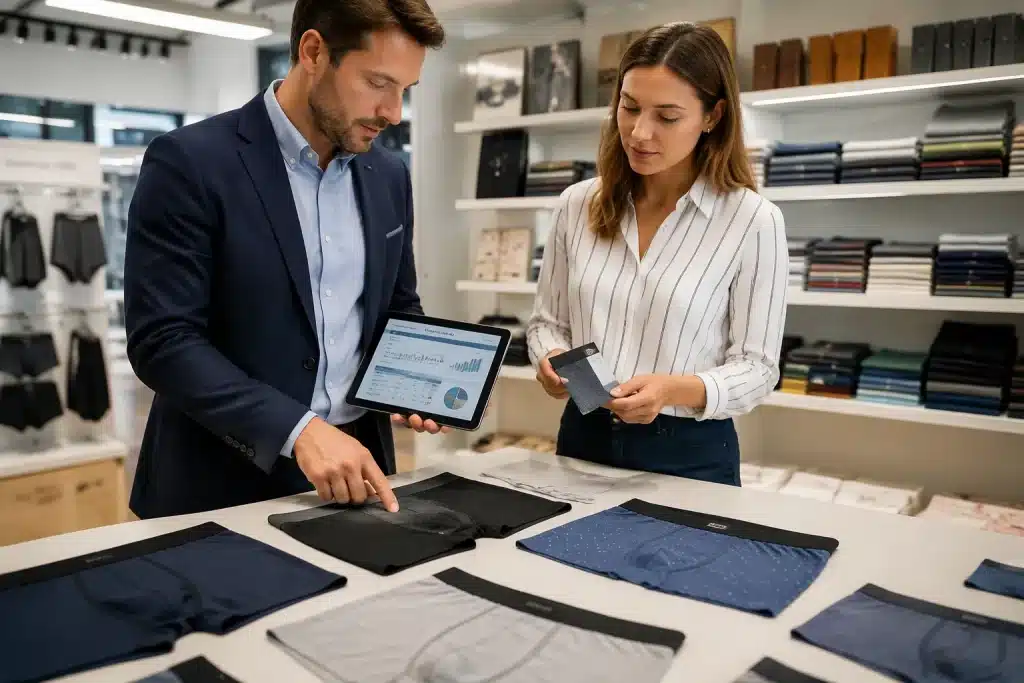
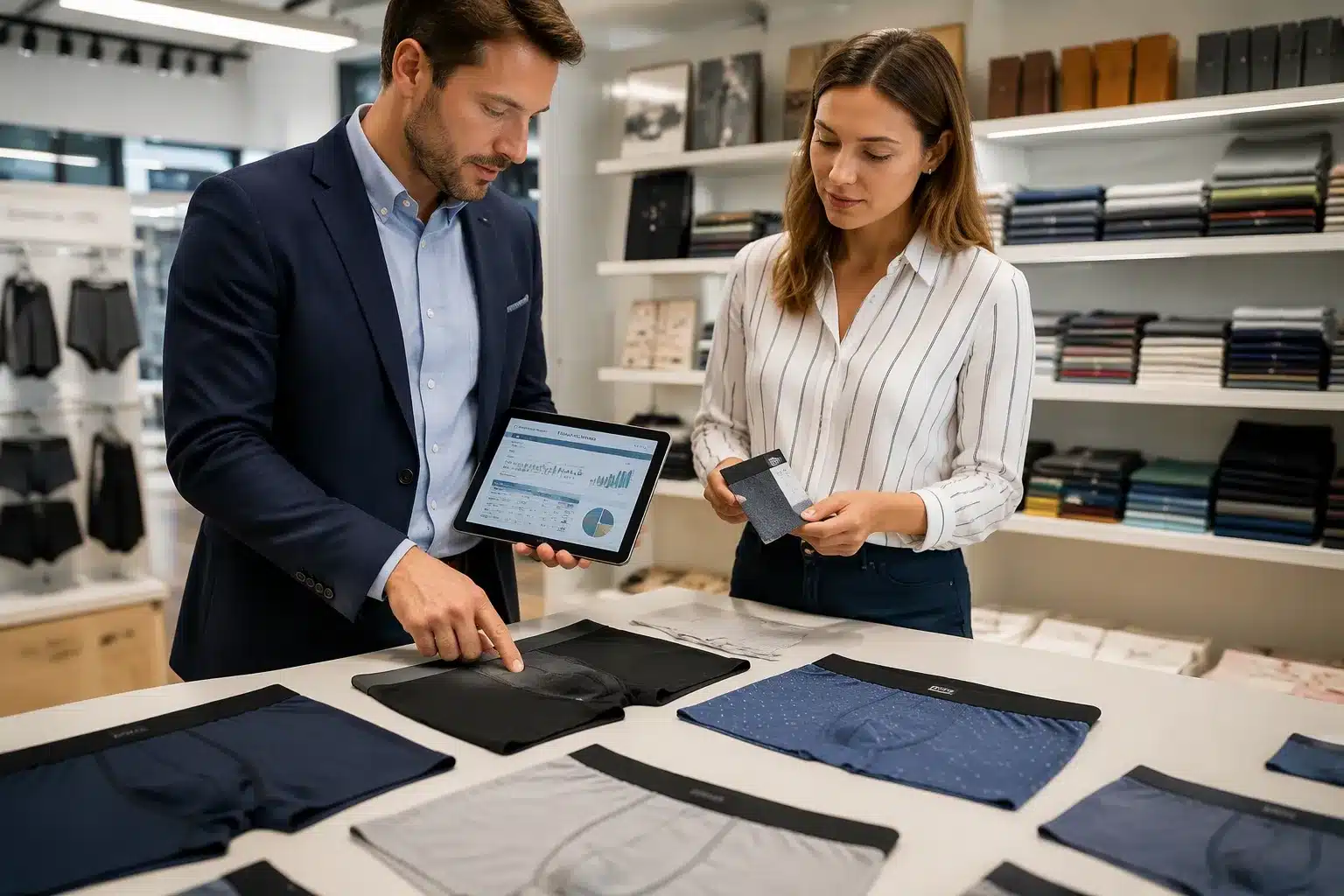
Picking the right private label men’s underwear manufacturer means checking product skills, fabric and waistband choices, sampling, quality control, private label support, and business terms. Price by itself won’t tell you the whole story. The cheapest quote often costs you more later. You’ll pay for rework, sizes that don’t match, and missed deadlines. That’s why you should treat your private label men’s underwear manufacturer as a long-term growth partner, not a one-time seller. A true custom underwear manufacturer grows along with your brand. This guide gives you a step-by-step plan and a checklist. You can use both in real talks with suppliers. Think of your private label clothing manufacturer as part of your team. A good private label men’s underwear manufacturer becomes a partner.
Key Takeaways
Pick a maker who works with you like a partner, not just someone who sells to you.
See if they have worked with the exact underwear styles and fabrics you want.
Pick your fabric and waistband before you start making the underwear.
Ask for quality checks that are not tied to the factory, and make sure sample approval rules are clear.
Check the smallest order amounts, wait times, and certifications to avoid surprises.
Choose a Private Label Men’s Underwear Manufacturer as a Partner
Why the Partner Mindset Matters
A private label men’s underwear manufacturer affects your product quality, cost control, and ability to grow. They do more than just sew fabric together. They shape how your brand grows over time. When you treat them as a production partner, they help with product briefs, fabric selection, and long-term SKU planning. That support matters more than a low unit price.
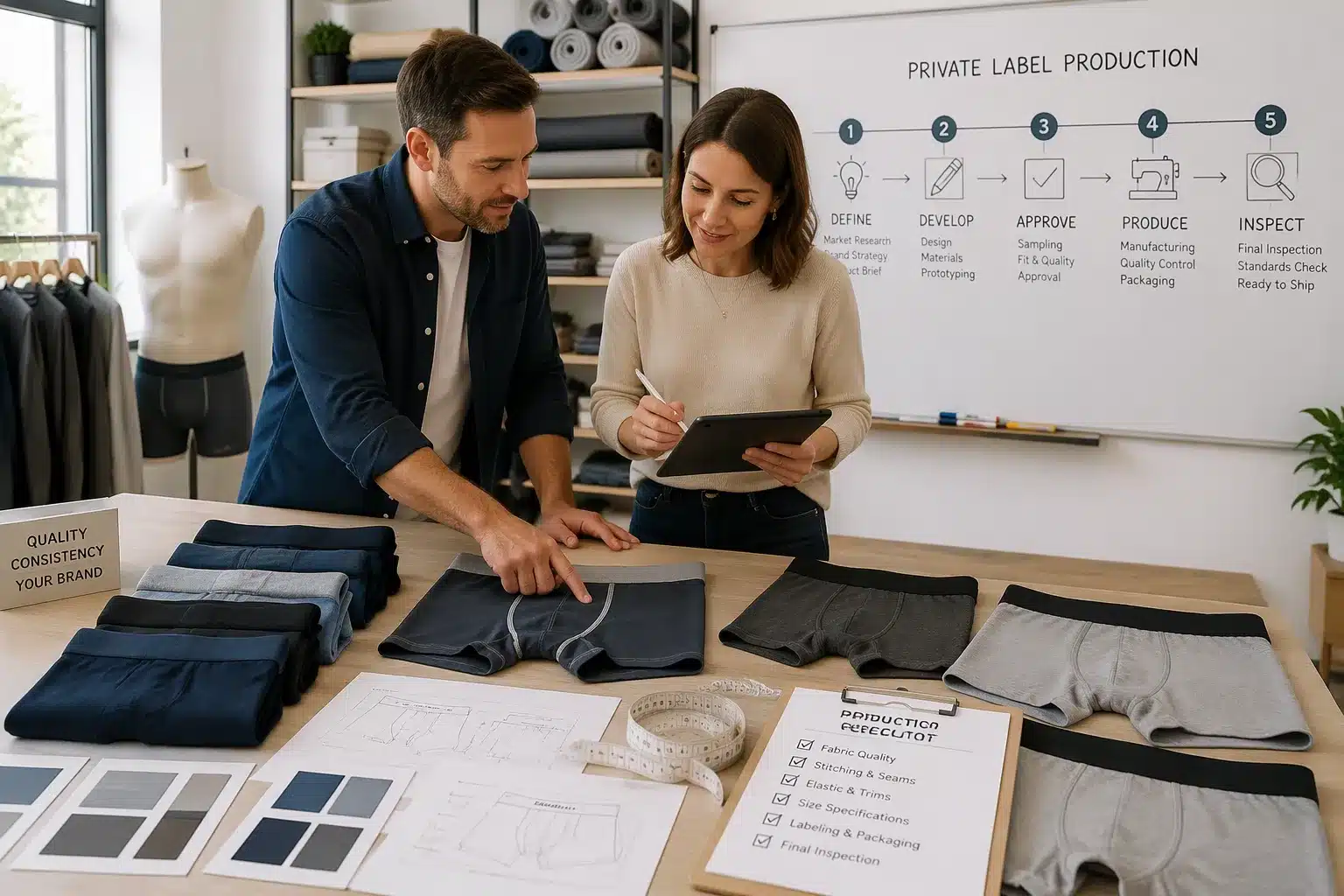
Suninner runs an integrated manufacturing-and-export model: the Zhengzhou team handles international sales, product development and order coordination, while affiliated production facilities in Zhongshan take care of sampling and manufacturing. The stages are Define, Develop, Approve, Produce, Inspect & Pack. Product decisions are recorded through development, material review, component testing and quality control. Sample development, material review, waistband development, and construction & QC are reviewed before bulk production.
This structured approach catches problems during sample approval instead of after bulk production. Fixing a pattern or changing thread color before cutting is manageable. Finding a defect after hundreds of units are complete is not. A strong men’s underwear manufacturer builds quality into sourcing, sample approval, production monitoring, and final inspection. That is how private label manufacturing protects both your budget and your reputation.
Signs of a True Development Partner
How do you spot a real partner? Look at their behavior, not their sales pitch. A true development partner communicates proactively. They advise on fabric before the cut. They support repeat orders without making you start from scratch. They also offer both private label support and deeper private label development as your volume grows.
Behavioral Indicator | What It Looks Like |
|---|---|
End-to-end integrated development | Combines textile engineering, garment construction, and manufacturing within one system, so you do not coordinate separate suppliers. |
Private label and ODM flexibility | Offers both private label customization (colors, logos, packaging, sizing, branding) and full ODM development. |
Commercialization and scalability support | Develops products with pilot production and scalable manufacturing in mind, supporting sizing, production consistency, washing, documentation, packaging, and market compliance. |
Compliance and regulatory support | Supports applicable CE, FCC, RoHS, and REACH documentation; evaluates intended use and additional testing for regulated projects before claims are finalized. |
Collaborative problem-solving | A multidisciplinary team evaluates garment architecture, construction, and manufacturing feasibility together, reducing technical handoffs. |
Customization around brand strategy | Supports deeper ODM customization around brand strategy, including proprietary garment styling as volume and product strategy develop. |
B2B market adaptability | Adapts textile architecture and parameters for multiple B2B segments including men’s health, fitness, private label DTC, rehabilitation, distributors, startups, and hardware companies. |
A custom underwear manufacturer with these traits becomes a private label clothing manufacturer you can depend on. They bring oem and odm capabilities that grow with your brand. They also get that private label apparel buyers need speed and consistency. When you find a private label men’s underwear supplier who acts like a partner, you gain more than a vendor. You gain a team that helps you win.
Evaluate Product Capability and Fabric Options
Experience With Private Label Men’s Underwear Styles
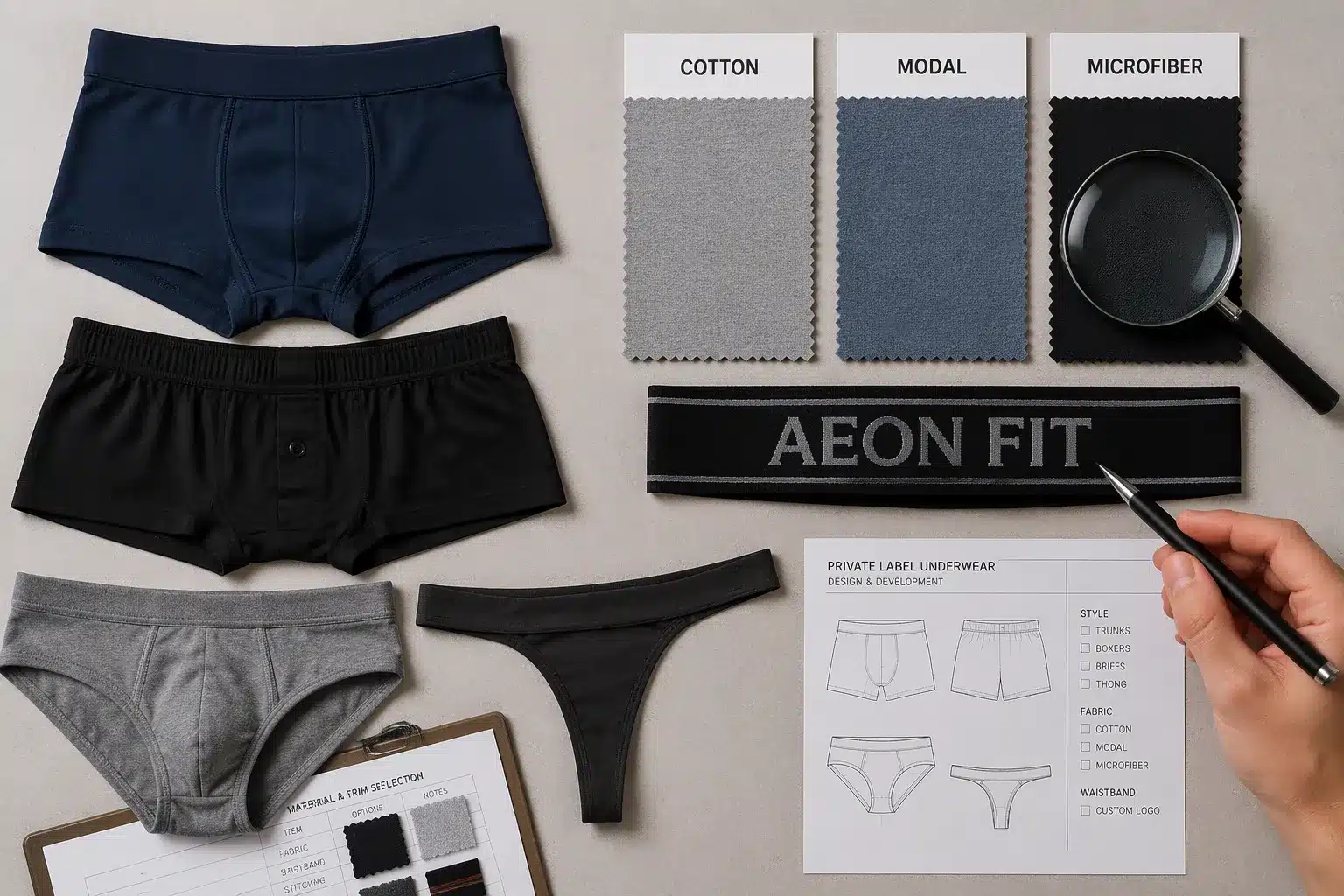
Not every underwear manufacturer makes every style well. You need a partner who has real experience with the specific cuts you plan to sell. Trunks hold the largest market share at 42%, followed by boxers at 23%, briefs at 22%, and thongs at 13%. Each style needs different construction skills.
Style | Specialized Manufacturing Requirements |
|---|---|
Mid-thigh compression fit, supportive pouch construction, 4-way stretch fabric, custom waistband branding, fly/no-fly option | |
Trunks | Short-leg square-cut construction, elastic waistband with custom branding, flat seam construction for friction-free wear, cotton/modal/microfiber options |
Boxers | Woven cotton or jersey knit construction, relaxed fit, button or fly front, custom woven waistband |
Performance Underwear | Moisture-wicking/anti-odor fabric, seamless or flatlock seam construction, supportive pouch or gusset |
A strong custom underwear manufacturer also handles skills that apply across many styles. These include waistband elastic tested for recovery through 30+ wash cycles, flat-stitched crotch and inner thigh seams, custom knit-in brand names in waistband elastic, and size-inclusive grading up to 5XL. Ask your private label men’s underwear manufacturer which styles they make most often. Their answer shows you where their real strength lies.
Fabric, Waistband, and Trim Choices
Here is a rule that saves time and money: choose the fabric before the cut. Fabric decides your MOQ and your production calendar. A fabric with limited availability pushes your timeline back. A fabric with high minimums raises your upfront cost. Locking the fabric first keeps everything else predictable.
Start with one core cut and one fabric. Prove that SKU works. Then grow into new styles and materials. This approach lowers risk and lets you test the market without overcommitting. A good custom underwear manufacturer will support this staged path.
Trim choices affect how long your product lasts. Elastic waistbands give consistent stretch and recovery. Drawcords offer adjustability but may wear out faster without reinforcement. Flatlock stitching lies flat against skin and stretches with fabric. This lowers friction and seam failure in high-stress areas. Overlock stitching can dig into skin under tension and lead to early tearing. Inconsistent thread tension across sizes creates weak seams that fail sooner, especially in stretch fabrics. Bar-tack reinforcement at fly ends and double-needle stitching along side seams prevent blowouts.
A skilled men’s underwear manufacturer advises on waistband elasticity, trim durability, and color consistency. They use Pantone references and lab dips for approval. They also test custom branded elastic waistbands for recovery. This level of support separates a true private label clothing manufacturer from a basic supplier. Your underwear manufacturer should guide these decisions before you commit to a full cut-and-sew manufacturing run. A well-planned cut-and-sew program depends on getting fabric, waistband, and trim right from the start. That is how custom underwear manufacturing protects your brand. Strong custom underwear manufacturing also means your private label men’s underwear holds up after many washes.
Review Sampling, Quality Control, and Private Label Manufacturing
Pattern-Making, Sampling, and Approval Terms
The pattern-making and sampling process turns your idea into a real product. You begin with a tech pack. This document lists fit and measurements, fabric feel, stretch and recovery, waistband tension and logo alignment, pouch shape, seams, leg openings, plus labels, packaging, and barcode details. A clear tech pack and an approved pre-production reference sample are a must before bulk production starts.
Your sample approval process needs written terms. How many revision rounds do you get? Who pays for each round? What happens on repeat orders? Put these answers in writing. A sample is production-ready when waist elastic tension, stitching around curved panels, and measurement control after washing stay consistent. Those details often decide fit and comfort across sizes.
“Sample is for style validation, not the full-scale production benchmark. It is critical to lock written specifications: fabric composition, weight, stretch rate, color tolerance, defect acceptance standard, and wash performance. A clear tech-pack reduces rework, customer complaints and financial loss later.”
Small differences in fabric weight, stretch recovery, or seam allowance may hide on prototypes. They become obvious once thousands of units roll off the line. That is why your sample-development process deserves real attention, not a quick glance.
QC Checks, Labeling, and Packaging
A solid quality-control approach relies on independent inspection, not factory self-checks. Your private label men’s underwear manufacturer should hit AQL 2.5 with a target defect rate below 1.5%. Batch-bound reports tie to the PO. A third-party 13-point ESG audit from Intertek adds social compliance proof.
QC Checkpoint | Standard / Requirement |
|---|---|
Bulk inspection | Independent QC, not factory self-inspection |
Acceptable Quality Limit | AQL 2.5 |
Target defect rate | Below 1.5% |
Batch traceability | Batch-bound report tied to the PO |
Measurement tolerances | Locked in tech-pack |
Color consistency | Tested against washing, rubbing, light |
Inspection happens in three stages. Pre-Production Inspection checks raw materials and initial samples. In-Line Production Monitoring watches stitching, seam integrity, and assembly during the run. Final Random Inspection covers quantity, packaging, labeling, and shipping marks once the order is complete.
Labeling errors count as a real defect class. A slightly off-center label is minor, but safety or regulatory labeling failures are critical with zero tolerance. Passing AQL sampling does not equal brand compliance. Labeling must separately satisfy the market regulation named in your purchase order, such as CPSIA or REACH. Check labels and packaging at pre-shipment, when at least 80% of the order is produced and packed. That timing preserves your leverage for rework before goods ship.
Packing counts matter too. Verify size, color, and barcode details against the PO. Confirm care labels, hang tags, size stickers, polybags, and boxes match your brand guidelines. For multi-size or multi-style programs, organization matters as much as craftsmanship. A custom underwear manufacturer with tight records keeps reorders consistent. Your quality standard depends on it.
Compare MOQs, Lead Times, and Certifications
Minimums by Style and Color
The smallest order you can place depends on the style and color you choose. A stock style starts at 200 pieces, based on what is available. Custom production starts at 2,000 pieces for each color and style. That difference shapes your entire launch plan. If you sell three colors in one cut, your moq for that style goes up quickly. Ask your supplier to quote moq for each style and color on its own, so you can see what you are really committing to.
A low price per unit does not mean a low total cost. Landed cost includes fabric, sizes, colors, construction, elastic, branding, labels, and packing. Compare every quote using the same specification. Keep your first range tight: fewer overlapping silhouettes, colors with a clear purpose, shared components, and pack formats chosen before sampling. That method reduces late changes without forcing every brief into one fit.
Certifications should be part of the same talk. Ask which papers cover your fabrics and trims.
Certification | Scope / Condition |
|---|---|
OEKO-TEX® Standard 100 | Applied to all standard fabrics and trims |
GOTS | Available for organic cotton programs, on request |
SEDEX / BSCI | Social compliance audit available |
Lenzing | Fiber certificates for Modal, MicroModal, TENCEL |
Stock Styles vs. Custom Development
Stock styles let you test the market with less money upfront. They work well for trial orders and quick stock gaps. Custom development gives you a fit, fabric, colors, branding, sizes, and packaging made just for you. It suits planned launches and long-term programs. Choose stock when you need speed. Choose custom when you need a product that stands out.
For startup brands, stock fabric colors are ready to pick. You skip dyeing fees, which saves money. Suppliers often carry hundreds of styles, and some details can still be adjusted to match your brand. A good custom underwear manufacturer guides you through project review, product definition, a base-size sample, revision and grading, pre-production alignment, then bulk, inspection, and packing. Material availability, color minimums, and artwork can all slow down a briefs program, so a merchandiser should track open decisions. That discipline protects your timeline and your quality control. A reliable underwear manufacturer keeps those steps clear from day one.
Spot Red Flags and Ask Key Questions
Warning Signs Before You Commit
Some suppliers look good on paper until you dig deeper. Watch for unclear answers about fabric content. A real men’s underwear manufacturer names the fiber, the weight, and the mill. They never say “premium cotton blend” and stop there.
Be careful with prices that seem too good. Cheap bamboo claims often hide a dirty secret.
Generic Amazon brands selling “100% bamboo” t-shirts at under $15 are almost surely conventional bamboo viscose. They likely don’t have OEKO-TEX certification either, which is the only consumer facing check on leftover chemicals. If price decides your choice, a GOTS organic cotton tee at the same price is a cleaner pick.
Other red flags include refusing a third-party quality inspection, avoiding questions about certifications, and pushing you to skip the sample stage. A supplier who rushes you past approval usually has something to hide.
Questions for Every Men’s Underwear Manufacturer
Bring a written list to every call. Ask about fabric directions for your style, the composition and weight details they give you, and how they approve color and hand feel. Then move to construction: can they make a jacquard, printed, or plain elastic waistband, and how do they check waistband artwork, width, and tension on the final garment?
Cover the sample process next. Ask how they handle pattern development from references, manage measurement charts and tolerances, and do size grading. Find out how they handle fit revisions, pouch and leg-opening adjustments, and pre-production approval. Ask how they write down every revision.
Then lock down the business side. What is the minimum order quantity for your style and color? What is the lead time? Who owns the pattern and artwork? How do reorders work? What are the shipping terms? For Amazon sellers, add three more: can they supply a compliant sizing chart, support listing requirements, and scale production as your rankings grow?
Use this custom underwear manufacturer checklist before you sign anything: confirmed fabric specs, written sample terms, QC standards, MOQ per color, lead time, IP ownership, and packing details. Strong quality control and clear answers separate a partner from a problem.
You now have a clear plan to follow. Check what products they can make, the quality of fabric and waistbands, sample terms, quality control, private label support, and business terms. A private label men’s underwear manufacturer who grows with you is better than the cheapest option every time.
Bring the red-flags checklist and the 12-question framework to your next supplier call. Ask tough questions. Compare the answers side by side. The right custom underwear manufacturer will be happy to answer them.
In 2026, honesty, certifications, and fast communication set great partners apart from average ones. Pick an underwear manufacturer who treats your private label men’s underwear like their own product. That choice protects your brand for years.
FAQ
What is the minimum order for private label men’s underwear?
It depends on the route you take. Stock styles begin at 200 pieces. Custom production starts at 2,000 pieces for each color and style. Ask your supplier to give a price for each style and color on its own. That way you know your true commitment before you sign.
How long does sampling take, and how many revisions do I get?
Times vary by supplier and how hard the style is. What matters more is to put the terms in writing. Ask how many rounds of changes you get, who pays for each round, and what happens on reorders. A reliable custom underwear maker tells you these things clearly before you agree.
Which certifications should I ask for?
Ask which papers cover your fabrics and trims. OEKO-TEX Standard 100 covers all standard fabrics and trims. GOTS is offered for organic cotton programs when you ask. SEDEX or BSCI social compliance checks are also available. Lenzing gives fiber certificates for Modal, MicroModal, and TENCEL.
What quality standard should my underwear manufacturer meet?
Your underwear maker should reach AQL 2.5 with a target defect rate below 1.5%. Independent quality control matters more than factory self-checks. Each batch report is tied to the purchase order. Inspection happens at three stages: before production, during production, and after the order is complete.
Can I start with a stock style and switch to custom later?
Yes. Stock styles let you test the market with less money upfront. Once a SKU does well, you can move into custom development. A good sample from your first run gives you a reference point. Then you expand into new fits, fabrics, and branding as volume grows.
See Also
Key Factors For Choosing Men’s Underwear Manufacturers In 2026