
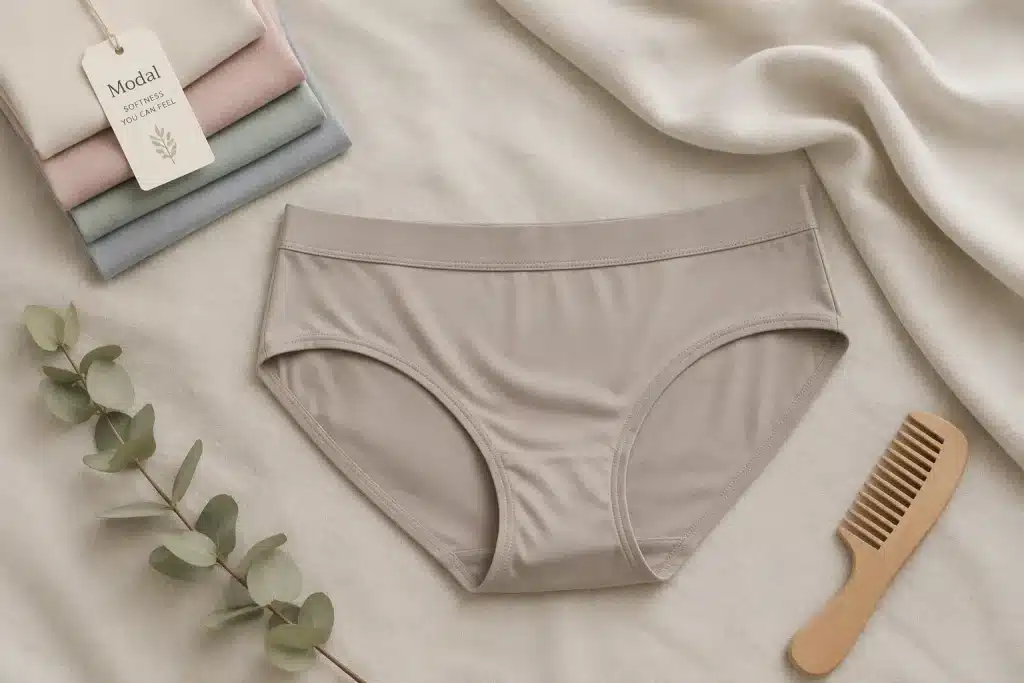
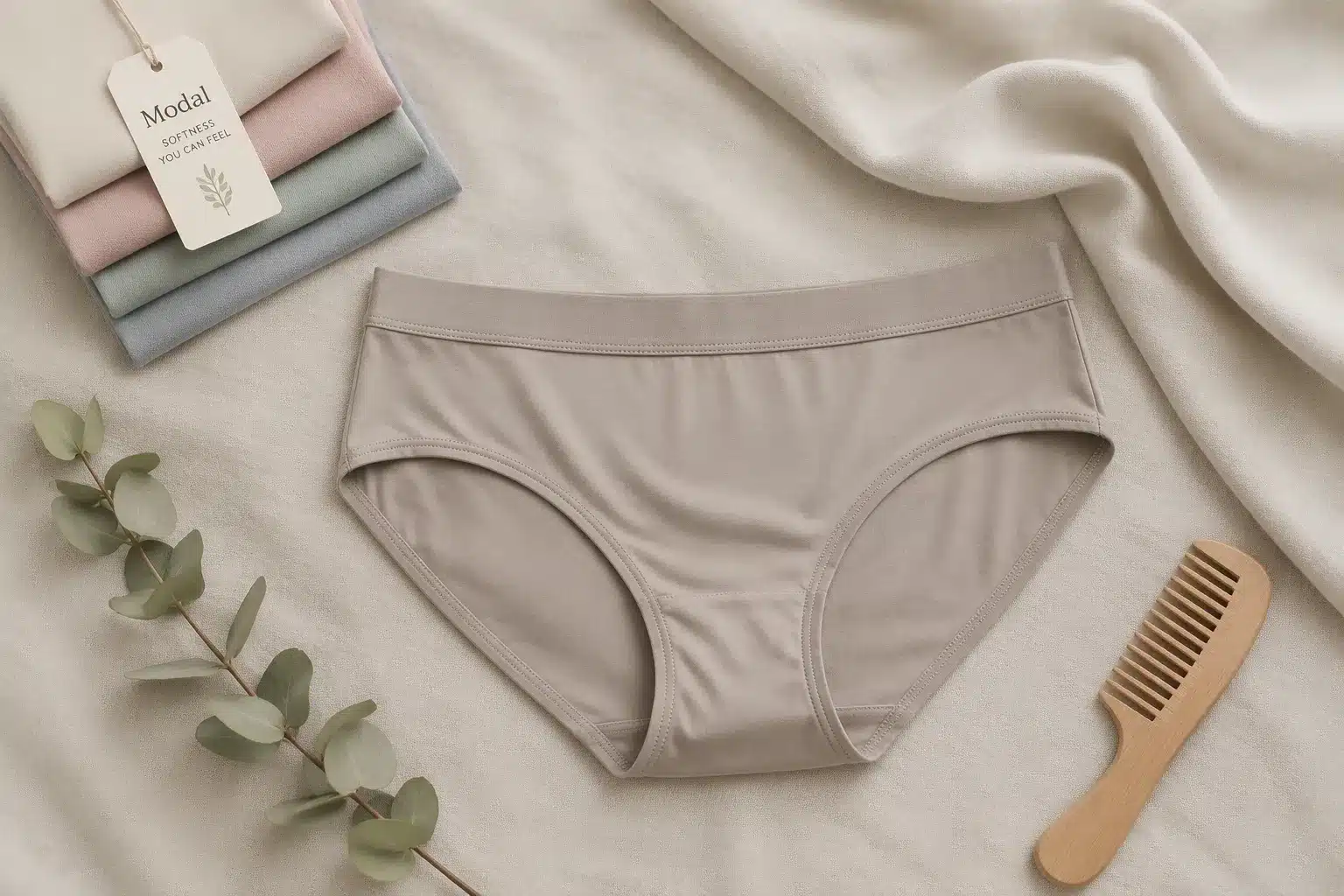
Modal underwear, also known as micro modal underwear, is underwear made from modal, a soft regenerated cellulose fiber derived from wood pulp. Shoppers choose modal underwear for its softness, breathability, quick-drying nature, and durability. These traits explain the steady rise in demand for this fabric.
Two questions sit at the center of the category. First, what exactly is modal fabric? Second, why do people keep choosing micro modal underwear over other materials? The answers cover fiber production, core properties, and everyday wear.
Comfort drives most purchases. A breathable surface and a smooth feel matter during long days. This guide addresses both questions with plain facts.
Key Takeaways
Modal underwear feels very soft and smooth against your skin.
Modal fabric breathes well and dries quickly, keeping you comfortable.
Modal underwear holds its shape better than some other fabrics.
MicroModal is an even softer version of modal underwear.
Modal costs more than cotton but lasts through many washes.
You can choose from many styles like briefs, hipsters, and thongs.
Always check the label for fiber content and fabric weight.
Wash modal underwear in cool water and dry on low heat to keep it soft.
What Is Modal Fabric?

Modal is a regenerated cellulose fiber. The term “regenerated cellulose” means manufacturers dissolve natural cellulose and reform it into new fiber. Wood pulp supplies the raw cellulose. Beech wood serves as the primary source for branded modal. This semi-natural fabric sits between plant-based cotton and fully synthetic fibers.
Source and Production
Wood Pulp Raw Material
Production begins with beech tree fibers harvested from certified managed forests. The wood is chipped and then pulped into raw cellulose. Mechanical and mild chemical processes break the wood down. The result is a purified cellulose pulp ready for the next stage.
Fiber Spinning Process
The pulp dissolves in N-Methylmorpholine N-oxide (NMMO), a non-toxic organic solvent. This step creates a viscous cellulose solution. The solution is forced through spinnerets into a water bath. There, the cellulose precipitates back into fiber form. The NMMO solvent is captured from the bath, purified, and recycled in a closed loop. Published recovery rates exceed 99%. The fiber is then cut, spun into yarn, and woven into fabric.
Core Properties
Softness and Fluid Drape
Modal typically feels soft, smooth, and fluid. It drapes easily rather than feeling stiff. Feel also depends on construction, weight, finishing, and blending. Buyers should treat consumer search volume as a weak signal of B2B demand and confirm specifications directly.
Breathability and Temperature Regulation
Modal can be breathable, but construction matters greatly. A thin, open knit allows more air and heat movement than a thick, tightly constructed textile. Because modal is cellulose-based, it absorbs and releases moisture. This trait suits close-to-skin clothing such as underwear and sleepwear.
Strength and Quick Drying
Modal belongs to the same regenerated-cellulose family as rayon and viscose. Manufacturers process it under modified conditions that improve wet strength. These conditions help the fiber resist changes in size and shape when wet. Dimensional stability therefore exceeds that of traditional viscose. Durability still varies with the finished textile. A heavier, well-constructed fabric may handle frequent wear better than a thin or loosely made one. Gentle care helps preserve softness, shape, and surface quality. Modal can pill and can shrink. Yarn quality, construction, finishing, friction, and washing habits all affect pilling. Heat, washing method, and blend fibers affect final size. Claims that modal never shrinks are too broad. Modal is not naturally elastic like spandex. Stretch depends on knit construction or added elastic fibers.
Micro Modal Underwear
How MicroModal Differs
Modal is the broad category for the smooth, wood-pulp fiber. MicroModal is modal spun into finer, thinner fibers. Standard modal measures 1.0–1.7 dtex. MicroModal measures 1.0 dtex or less. The finer fiber often gives a softer and more polished feel.
MicroModal is modal made as finer fibres, which gives a smoother, softer fabric.
Feel Against the Skin
Finer fibers create a silky-smooth texture with a near-liquid hand feel. This quality places MicroModal in the luxury tier. The surface stays gentle on the skin during long wear. Shoppers seeking luxurious softness often prefer this grade for micro modal underwear. A silky modal blend delivers the same smooth hand at a lower price point. The material rewards careful label reading, since fiber content and blend ratios drive the final feel.
Why Modal Underwear Is So Popular
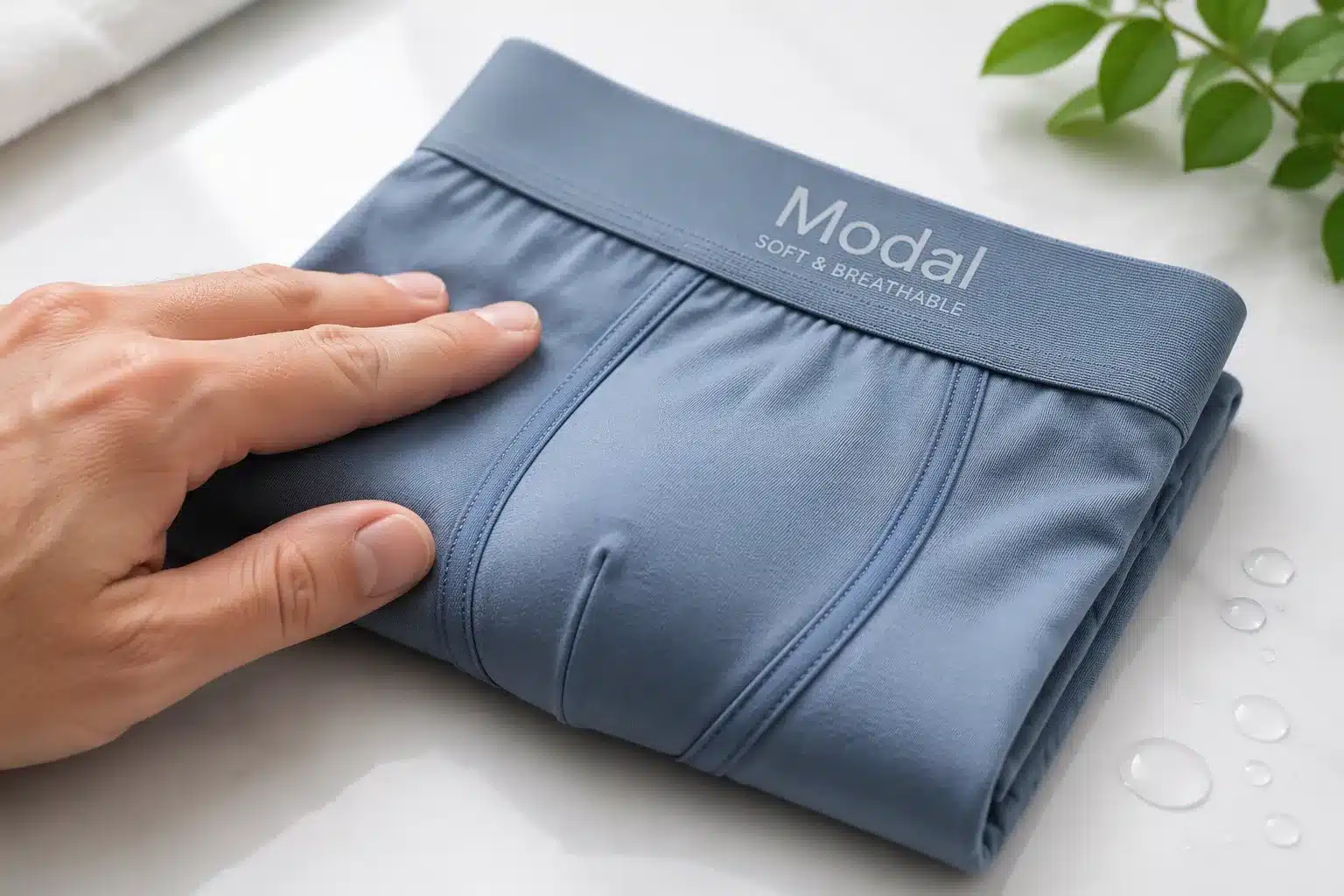
Everyday wear sets the real test for any fabric. A garment spends long hours against the skin, under jeans, through commutes and desk days. Modal handles that routine well. Its fiber structure creates a smooth, low-friction surface against the skin while it manages moisture. That combination of feel and function explains much of the demand. Value matters too, and the sections below weigh comfort, moisture handling, and durability in practical terms.
Softness and Comfort
The fiber does the heavy lifting here. Fine modal filaments produce a smooth yarn with few rough edges. That surface glides over the skin instead of catching on it. Wearers notice the difference most during long days, when friction and bunching become irritating. Softness of this kind supports all-day comfort without bulk or weight.
Construction shapes the final result. Product developers comparing modal, cotton, and bamboo-derived viscose should confirm specifications directly with the mill. High consumer search volume is a weak signal of B2B demand, so buyers should verify stretch, testing, and labeling claims before committing to a program.
Blends extend the story. A touch of elastane adds recovery, and organic cotton softens the hand further. Each blend shifts the balance of stretch, cost, and feel. The best choice depends on the cut and the wearer. For many shoppers, maximum softness and comfort come from a fine-gauge modal knit worn close to the skin.
Breathability and Moisture Management
Airflow matters, and so does moisture handling. Modal rates as breathable and moisture-wicking. It lets air through and carries moisture away from the skin. Cotton also breathes well and absorbs sweat, yet it holds that moisture longer.
Cotton offers classic breathability and airflow, allowing heat to escape. However, it absorbs sweat and dries slowly, so it may feel wet and heavier after activity.
The numbers support the distinction. Modal shows a moisture regain of roughly 11.8 percent, against roughly 7 to 8 percent for cotton. Higher regain means the fiber takes up more moisture. Modal then moves that moisture along and dries quickly, while cotton knits can stay damp. This moisture-wicking ability suits underwear worn through hot days or light activity.
Fabric | Moisture Regain |
|---|---|
Modal | ~11.8% |
Cotton | ~7–8% |
Neither option wins everywhere. Cotton remains a solid pick for cool, dry conditions and for wearers who prefer a familiar hand. Synthetics dry fast and hold their shape under heavy use. Modal sits between them, with breathability and skin friendliness that suit daily innerwear.
Durability and Shape Retention
Modal resists change when wet. Manufacturers process the fiber under modified conditions that improve wet strength, so the fabric holds its dimensions better than traditional viscose. That stability keeps a pair of underwear fitting the way it did on day one.
Durability still depends on the finished textile. A heavier, well-constructed fabric handles frequent washing better than a thin or loosely made one. Pilling and shrinkage remain possible. Yarn quality, knit construction, finishing, friction, and washing habits all play a part. Claims that modal never shrinks are too broad. Modal is not naturally elastic, so stretch comes from knit structure or added elastic fibers.
Care preserves performance. Gentle washing and low heat protect softness and shape over time. A breathable fabric that keeps its fit earns its place in a drawer. That reliability, paired with everyday comfort, gives modal underwear its staying power. Shoppers who want a smooth, breathable layer for daily wear will find the material hard to beat.
Modal vs Cotton vs Lace vs Microfiber
A side-by-side look at modal vs cotton vs lace vs microfiber shows four materials with distinct strengths. Each one earns a place in a drawer. The right pick depends on the cut, the season, and the wearer’s routine.
Feel and Drape
Modal feels smooth and fluid. Its fine filaments create a low-friction surface that glides over the skin. Cotton feels familiar and slightly matte. It drapes with a bit more body. Lace brings texture and openness. The pattern adds visual interest, and the hand varies with the yarn and the ground mesh. Microfiber feels sleek and uniform, with a dense, synthetic smoothness.
Drape follows the same pattern. Modal falls softly and follows body lines. Cotton holds a crisper shape. Lace moves with stretch and recovery built into its knit. Microfiber sits close and flat. Product developers comparing these underwear fabrics should note one point. Modal dries faster than cotton and carries a smoother, lower-friction surface. That trait matters under jeans and leggings, where friction builds through the day.
Breathability and Drying Speed
Airflow separates these fabric types. Cotton offers classic breathability and moves heat well. It absorbs sweat and holds it, so it dries slowly. Modal absorbs moisture and releases it quickly. Its moisture-wicking behavior keeps the surface drier during light activity. Lace relies on an open structure. Gaps in the pattern let air pass, yet coverage varies by design. Microfiber knits can be engineered for airflow, and their fine filaments dry fast.
Drying speed shapes daily use. Modal and microfiber shed moisture faster than cotton. Cotton remains a solid choice for cool, dry conditions. Lace suits occasions that call for something lighter. Among breathable fabrics, none wins every category. Breathability depends on knit weight and openness as much as on fiber.
Stretch and Shape
Stretch comes from construction, not fiber alone. Modal has no natural elasticity. Recovery depends on knit structure or added elastane. Cotton knits stretch modestly and can relax over time. Lace gains stretch from its ground mesh and elastic yarns. Microfiber often pairs with elastane for a firm, close fit. Bamboo-derived viscose behaves much like modal in stretch terms, and it needs the same blend support.
Shape retention varies with testing and care. Buyers should confirm stretch, recovery, and shrinkage through lab testing before committing to a program. Cost differs too. Modal and bamboo-derived viscose carry higher fiber prices than cotton. Labeling claims deserve scrutiny. High consumer search volume is a weak signal of B2B demand, so verify specifications directly with the mill. These panty fabrics each serve different needs, and a mixed assortment often covers the widest range.
Cost, Production Efficiency, and Value
Why Modal Costs More
Fiber production sets the floor for price. Modal requires a dissolving step, a solvent recovery loop, and controlled spinning conditions. Those stages add cost at the mill before any yarn reaches a knitter. Cotton moves through a simpler ginning and spinning path. The gap shows up at retail.
Fabric | Price comparison |
|---|---|
Modal | More expensive |
Cotton | More affordable / budget-friendly |
Although modal production costs are declining, they are still higher than those of conventional fibers like cotton, which creates pricing challenges in cost-sensitive markets.
That gap does not signal poor value. The premium buys a smoother fiber and steadier performance across washes. Buyers in cost-sensitive markets may still hesitate at the register, so brands often position modal underwear as an upgrade rather than an everyday staple.
Blends and Fabric Yield
Blending changes the economics. A modal and organic cotton blend lowers the fiber bill while keeping a soft hand. A small elastane addition improves recovery and fit. Each blend ratio shifts cost, stretch, and feel, so developers should confirm specifications directly with the mill rather than infer them from search trends.
Yield matters as much as fiber price. A lighter knit uses less material per garment than a heavier construction. Product developers comparing modal, cotton, and bamboo-derived viscose should weigh stretch, lab testing, cost, and labeling claims together. High consumer search volume is a weak signal of B2B demand, so verify testing and labeling directly before committing to a program.
Is It Worth the Price?
Modal garments carry a higher initial price than cheap cotton. The higher cost is justified by better retention of softness, fit, and color over time. A pair that keeps its shape and surface through repeated washing delivers more wears per dollar. Buying in packs can reduce the per-item cost further.
Value also depends on use. A breathable modal blend suits daily wear under jeans and leggings, where a smooth surface and quick drying matter. Cotton remains a budget-friendly choice for cool, dry conditions. Bamboo-derived viscose behaves much like modal and needs the same blend support. Shoppers who want lasting softness from a lightweight material will find the premium easy to justify. Those who rotate underwear often and wash gently get the most from each pair.
Styles and Versatility
Common Modal Panties Cuts
The category covers a wide range of shapes. Briefs deliver classic, fuller coverage with leg openings shaped around the upper thighs. Hipsters sit lower on the hips with wider side panels and a fairly straight leg line. Boyshorts extend farther along the sides and may cover part of the upper thighs, which suits lounge or sleep. Thongs use minimal fabric at the back with a narrow strip, mainly to avoid visible lines under fitted clothing. Bikinis, cheeky cuts, and high-cut styles round out the range.
Style | Rise | Leg and Back Coverage | Good For |
|---|---|---|---|
Brief | Mid to high | Full back | Everyday multipacks |
Hipster | Low | Full back, straight leg line | Low-rise trousers |
Bikini | Low to mid | Moderate back | Everyday basics |
Thong | Low to mid | Minimal back | Under fitted clothing |
Boyshort | Low to mid | Full back, short leg | Lounge and sleep |
Blends for Stretch and Recovery
Pure modal has no natural elasticity, so recovery comes from the knit or from added fibers. Blends with organic cotton soften the hand and lower the fiber bill. A small elastane addition improves stretch and snap-back. Product developers sourcing private-label boxer briefs should confirm stretch, lab testing, cost, and labeling claims directly with the mill. High consumer search volume is a weak signal of B2B demand, so verify specifications rather than infer them from trends.
Matching Styles to Everyday Needs
The low-friction, smooth surface of this fabric works well under jeans and leggings. A thong or bikini cut suits fitted trousers, where visible lines matter. Briefs and boyshorts fit relaxed days and sleepwear. Breathability depends on knit openness as much as fiber, so a lighter knit serves hot weather and a denser one suits cooler months. Shoppers building a drawer can mix cuts and blends to cover workdays, workouts, and rest. That variety, paired with soft, flexible underwear that holds its shape, gives modal panties their range. A breathable knit supports all-day comfort, and the smooth fabric keeps innerwear discreet under almost any outfit. Few materials match this mix of comfort and versatility.
Buying and Care Tips
Reading Fabric Labels
A label tells a shopper most of what matters. Check four items: fiber content, blend ratios, fabric weight, and stretch. Fiber content names the main material. Blend ratios show how much elastane or cotton supports it. Weight signals how substantial the knit feels. Stretch describes how much the garment recovers after it moves.
Product developers sourcing private-label boxer briefs should confirm stretch, lab testing, cost, and labeling claims directly with the mill. High consumer search volume is a weak signal of B2B demand, so verify specifications rather than infer them from trends. A modal pair with a small elastane share usually fits better than a pure knit. Shoppers who read labels carefully get fewer surprises after the first wash.
Washing and Drying Basics
Simple habits protect softness and shape. Follow these steps:
Turn garments inside out before washing.
Use cool water and a mild detergent.
Skip bleach and fabric softener.
Wash with similar colors on a gentle cycle.
Tumble dry on low heat or hang to dry.
Heat drives shrinkage and pilling. A low setting or air drying keeps the knit closer to its original size. Modal dries quickly on its own, so a short cycle often suffices. Separate dark shades from light ones to limit dye transfer. Wash new underwear before the first wear to remove any finishing residue.
Keeping Softness Over Time
Softness fades with rough handling, not with normal use. Friction during washing wears the surface. A mesh laundry bag reduces that friction. So does a smaller load. Store clean pairs loosely folded rather than crammed into a drawer.
Rotate pairs through the week. Rest gives elastic fibers time to recover. A moisture-wicking knit that airs between wears holds its hand longer. Check seams and waistbands periodically for thinning. Retire any pair that loses recovery, since a loose fit defeats the purpose. With modest care, modal underwear keeps its smooth feel and breathable surface through many wash cycles. That durability supports the higher upfront price and delivers real comfort across the life of the garment.
Modal underwear is underwear knit from a soft regenerated cellulose fiber made from wood pulp. Shoppers keep returning to it for its softness, breathability, quick drying, durability, cost efficiency, and range of cuts. Those traits answer the popularity question directly. The fabric earns its place through everyday performance rather than hype.
Buyers should check fiber content, blend ratios, and weight on the label before buying. Cool water, mild detergent, and low heat preserve the soft, moisture-wicking surface. A breathable knit then delivers lasting comfort through many washes. Care and smart selection keep modal underwear performing at its best.
FAQ
What makes modal underwear different from cotton underwear?
Modal fibers are finer and smoother than cotton fibers. That surface creates less friction against the skin. Modal underwear also releases moisture faster, so it feels drier during long wear. Cotton underwear remains a solid choice for cool, dry days and lower budgets.
Does modal underwear shrink or pill?
Modal can shrink and can pill. Heat, washing method, and blend fibers affect final size. Yarn quality, knit construction, and friction affect pilling. Gentle washing and low heat protect both. Claims that modal underwear never shrinks are too broad to trust.
Is modal underwear good for hot weather?
Yes. A thin, open knit supports airflow, and the fiber absorbs and releases moisture. That combination suits hot days and light activity. A denser knit traps more heat. Shoppers should check fabric weight on the label before choosing underwear for summer wear.
How should shoppers wash modal underwear?
Turn the underwear inside out and use cool water with a mild detergent. Skip bleach and fabric softener. Tumble dry on low heat or hang to dry. A mesh laundry bag reduces friction. These habits preserve softness and shape through many wash cycles.
What should product developers check before sourcing private-label boxer briefs?
Confirm stretch, recovery, shrinkage, and labeling claims through lab testing with the mill. Compare modal, cotton, and bamboo-derived viscose on cost and performance. High consumer search volume is a weak signal of B2B demand, so verify specifications directly.
Does modal underwear work under jeans and leggings?
Yes. The smooth, low-friction surface keeps underwear discreet under fitted clothing. Thong and bikini cuts suit tight trousers, where visible lines matter. Briefs and boyshorts fit relaxed days. A breathable knit adds all-day comfort under denim or leggings.
Is modal underwear worth the higher price?
The premium buys steadier performance across washes. A pair that keeps its shape and surface delivers more wears per dollar. Blends with organic cotton lower the cost while keeping softness. Shoppers who want lasting comfort from lightweight underwear will find the price easy to justify.
Does modal underwear need special elastic?
Modal has no natural elasticity. Stretch and recovery come from knit structure or added elastane. A small elastane share usually improves fit. Buyers should confirm stretch and recovery through testing rather than assume pure modal underwear will hold its shape.
See Also
Your Complete Guide to All-Day Comfort with Men’s Underwear
Simple Wholesale Men’s Underwear Guide for First-Time New Buyers
What to Look for in Men’s Underwear Manufacturers in 2026
Guide to Custom Waistband Underwear Manufacturers for New Brands
My Search for a Reliable UK Men’s Underwear Wholesale Supplier