
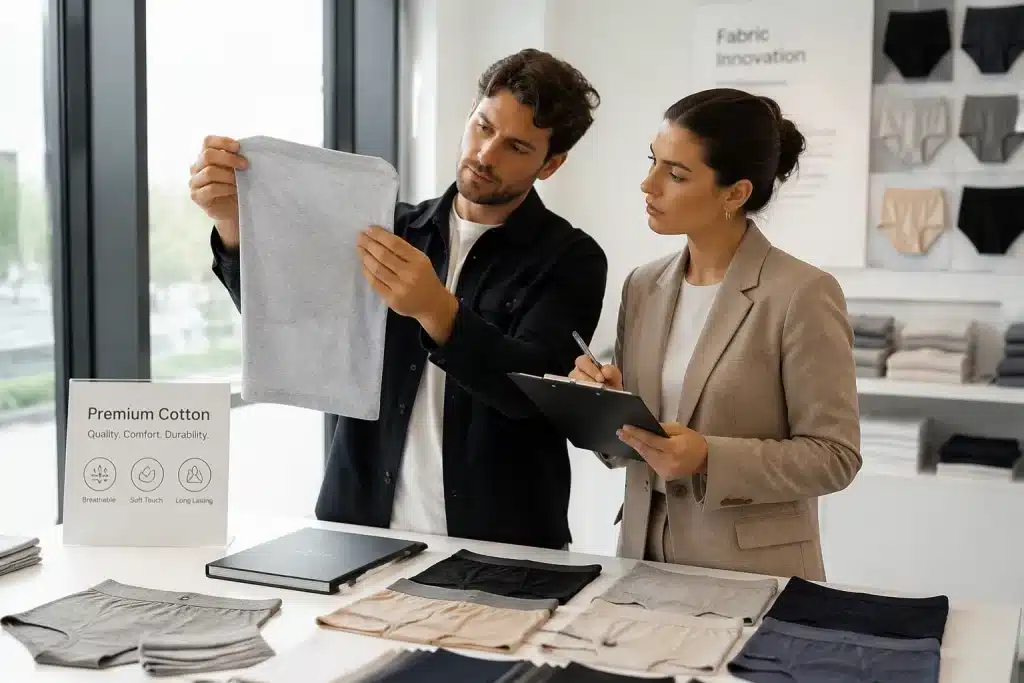
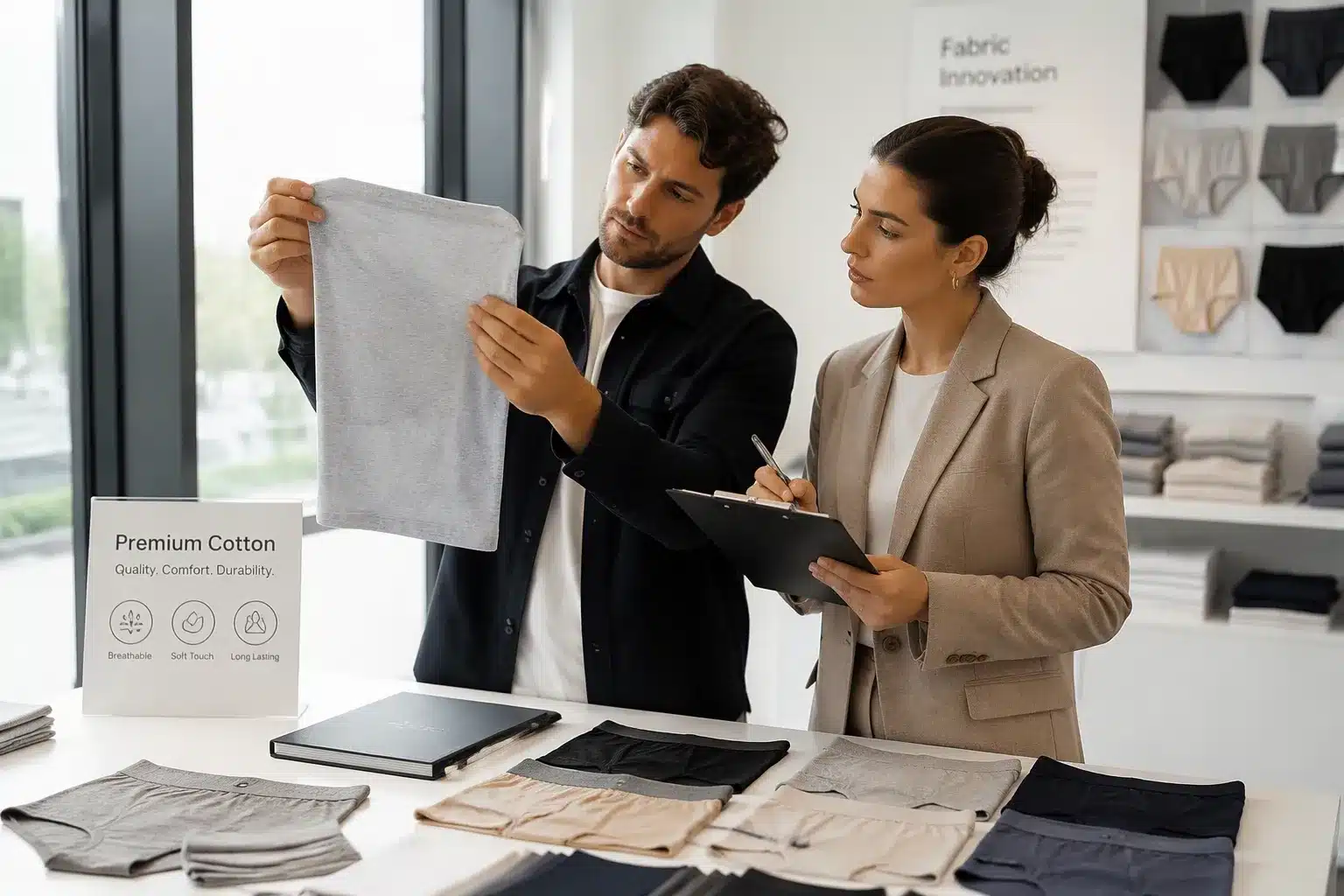
So, which Turkish underwear manufacturers should be on your shortlist for 2026? GBS Trend Inc., Design Cotton Turkey and Gildan Activewear. They stand out on four points: technical performance, application fit, regulatory compliance and cost.
Turkey has built a strong name as a sourcing destination for quality boxer shorts and underwear. Yet praise for the country tells you little. You need to compare each factory on its own numbers.
This post shows you how to compare, check and work with these manufacturers directly. You’ll see what a similar quote must contain, which documents to ask for and how to run a trial order. Sourcing from Turkey works best when you check the factory, not the flag. Many underwear brands learn that lesson the hard way.
Key Takeaways
Compare factories on four points: technical performance, product fit, compliance, and cost.
Before you trust a factory, ask for plant-level certificates and fabric test reports.
Ask for a full quote that lists the cost of fabric, making, trims, sampling, MOQ, lead time, and freight.
Pick the maker that fits your product: GBS Trend for vertical integration, Design Cotton for prints, and Gildan for basics.
Begin with a small trial order, and check samples and audits to make sure of the quality.
Quick Answer: Turkish Manufacturers to Shortlist
The 2026 Shortlist at a Glance
Three names keep coming up when people talk about Turkish underwear manufacturers. Here is the short version.
GBS Trend Inc. is the choice for buyers who want vertical integration and capacity in several countries. Design Cotton Turkey suits fashion-led boxer programmes and ranges with lots of prints. Gildan Activewear fits high-volume basic lines.
That is the one-line answer. Now the reasoning.
Four Criteria That Decide the Shortlist
Lots of factories in Turkey can sew a garment. Fewer can prove they will do it the same way in month twelve as they did in the sample room. So the shortlist rests on four tests.
Technical performance. Can the factory keep stitch density, seam strength and shrinkage control steady across a full run? Ask for test reports, not promises.
Application fit. Does the product range match yours? A factory built for printed boxer briefs may struggle with seamless lingerie, and the reverse is true too.
Regulatory compliance. Can they supply current certification and traceable fibre documentation when you ask?
Cost. What sits behind the unit price — fabric, finishing, packing, freight — and how does that look once you add the hidden extras?
Run every candidate through all four. A weak score on any one of them usually shows up later as a chargeback or a delayed shipment.
Here is the part most guides skip. Praise for the country tells you nothing about a specific factory. Turkey has a solid reputation as a sourcing destination, and that reputation is earned. It still won’t tell you whether a given plant can hit your delivery window in peak season.
Sourcing from Turkey rewards buyers who verify. It punishes buyers who assume.
So treat the three names above as a starting point, not a finish line. Each one earns its place for a different reason, and each one has a scenario where it fits best. The sections that follow break down technical performance, compliance paperwork, cost structures and engagement steps for all three.
One practical note for UK supply chain managers weighing a 500-piece trial order. Sample availability, minimum order quantities, lead times and total cost of ownership vary by product line within each factory, not just between factories. Confirm those four fields directly with each supplier before you compare quotes. A like-for-like comparison only works when every quote answers the same questions.
That’s the framework. Let’s get into the detail.
Technical Performance and Product Fit
Knitting, Fabric and Construction
Turkey has built a strong name for making good boxer shorts and underwear. Buyers trust the knitting, the seams and the finishing. That reputation comes from real skill, not luck.
The local textile industry also backs the sector with a steady fabric supply. Lace fabric suppliers working with Turkish factories include Best Pacific, Sun Hing Industries Holding, Lauma Fabrics, HongDa, Liebaert and Marand. These suppliers give makers access to quality fabrics without long waits for imports.
Good construction shows in the small details. Check stitch density, seam strength and shrinkage control. Ask for test reports on each one. A factory that tracks these numbers across a full run will repeat the sample. One that doesn’t will drift.
Fit, Sizing and Category Specialisation
Fit is what separates a good factory from a great one. Sizing blocks differ from market to market, and a supplier who knows your target body shape saves you months of rework.
Design Cotton Turkey shows how this works in practice. The company handles printed boxers, comfortable fits and quality finishing. Print-heavy ranges suit its setup well. Men’s underwear buyers who want bold patterns and a soft hand-feel will find a natural match here.
Category focus matters too. A plant built for boxer briefs may not do well at lingerie, and the reverse is also true. Match the factory to your product, then check the fit on real samples. That step beats any claim in a brochure.
Compliance, Certification and Quality Assurance
Documentation Buyers Should Request
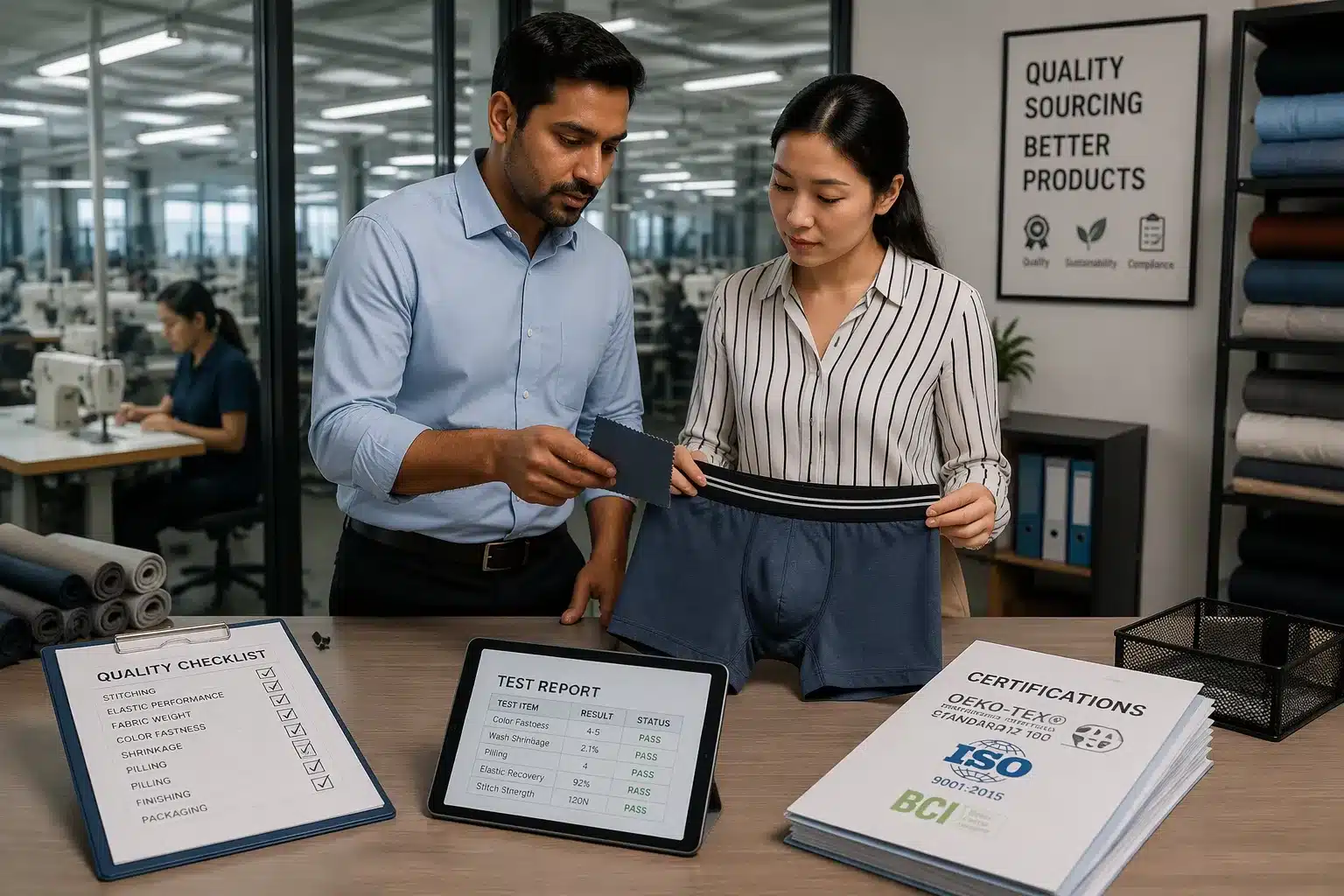
Paperwork shows whether a factory is serious or just hoping. Before you talk about price, ask every candidate for its current set of certificates. A good set covers quality management, fibre content and restricted substances.
Look for ISO 9001 for quality management. Check for OEKO-TEX Standard 100 on the fabrics, which tests for harmful substances. If a range uses organic cotton, ask for GOTS scope certificates that name the actual production site.
Turkey has a deep textile industry, and many underwear suppliers there hold these documents. The trick is matching the certificate to the plant that will sew your order. A group-level certificate means little if your line runs in a different building.
Ask for the certificate number and expiry date. Then check each one on the issuing body’s register. That takes ten minutes and saves months.
Audits, Testing and Traceability
Certificates show intent. Audits and test reports show practice. Ask for the latest third-party audit report, not just the summary page. Read the findings section, not the score.
Testing matters most on the fabric. Ask for shrinkage, colourfastness and seam strength reports for the exact fabric you plan to use. A report from a different quality tells you nothing.
Traceability closes the loop. Can the factory show which yarn lot went into which fabric batch? Can it link a finished garment back to a dye lot? Suppliers who can answer these questions control their textiles properly. Those who can’t are guessing.
One more thing. Ask how the factory handles a failed test. A calm, written corrective action beats a promise that it won’t happen again.
Cost Structures and Quotation Basis
What a Comparable Quote Must Include
A unit price by itself tells you very little. Two quotes for the same underwear style can look close but still hide very different totals. Ask every supplier to break the price into the same fields, then compare each line.
Field | What to ask for |
|---|---|
Fabric | Mill name, composition, weight, price per metre |
Making | Cut, sew and finishing cost per piece |
Trims | Labels, elastic, thread, packaging |
Sampling | Sample cost and whether it is credited against the order |
MOQ | Minimum per style, per colour, per size |
Lead time | Sample lead time and bulk lead time, stated separately |
Freight | Incoterm and estimated cost to the UK |
A quote that leaves out any of these fields can’t be compared. Push back and ask again.
MOQ, Lead Times and Total Cost of Ownership
Minimum order quantities differ by product line within each factory, not just between factories. A 500-piece trial order may fit easily inside one line but fall well below the MOQ of another. Check the figure for your exact style before you plan anything.
Lead times need the same care. Turkey’s closeness to European markets helps here. Freight to the UK is short, and that allows quicker lead times than many Asian choices. Ask each manufacturer for its production turnaround in writing, including peak-season dates.
Total cost of ownership goes beyond the invoice. Add sampling, freight, duty, quality inspection and the cost of a re-run if the first batch fails. Sourcing from Turkey can offer quick production turnaround times, and that speed has real value when a range launches late. Even so, check it for each factory. Sourcing decisions rest on evidence, and the suppliers who answer these questions clearly are the ones worth a trial order.
Manufacturer Profile: GBS Trend Inc.
Capabilities and Product Fit
GBS Trend Inc. makes lingerie and underwear in its own factories in Turkey and Egypt. That setup matters. The company controls both fabric and garment production, so it doesn’t wait on outside mills for its core lines.
Vertical integration changes the conversation. A buyer can trace a style from yarn to finished boxer briefs without chasing three separate suppliers. Fewer handoffs mean fewer surprises.
The multi-country footprint adds flexibility. Turkey offers short freight routes to the UK. Egypt gives the group a second production base. Buyers who need backup capacity in peak season get a real option here.
Product fit leans towards lingerie and underwear programmes that reward control. Think coordinated ranges, consistent fabric lots and repeat orders. Men’s underwear lines fit comfortably inside that model too.
Compliance, Cost and Best Use Case
Compliance follows the same logic. In-house textiles make traceability easier to document. Ask for certificates tied to the specific plant, plus test reports for the exact fabrics you plan to use.
Cost works differently here. A vertically integrated manufacturer can quote fabric and making together. That simplifies the quote, but it also hides the detail. Ask for the breakdown anyway — fabric, making, trims, sampling, freight.
On the practical fields, confirm MOQ, sample availability, lead times and total cost of ownership line by line. These vary by product line, not just by factory. A 500-piece trial order may suit one line and miss another.
Best use case? Buyers who want vertical integration and multi-country capacity. If your sourcing plan needs one partner to control more of the chain, GBS Trend Inc. earns a close look.
Manufacturer Profile: Design Cotton Turkey
Capabilities and Product Fit
Design Cotton Turkey has made its name on printed boxers. The factory works well with bold patterns, and the print quality stays strong across a full run. Buyers get comfortable fits and good finishing on every style.
That focus shapes what the factory offers. Printed boxer briefs are at the heart of its range. Plain boxer briefs run on the same lines without much trouble. Men’s underwear brands looking for seasonal prints will find a natural partner here.
The textile side supports the print work. Design Cotton Turkey uses local fabrics and keeps a close eye on how they feel. Print-heavy ranges depend on colour accuracy, and this factory treats that as a core skill.
Fashion-led underwear brands should take note. A print-led boxer briefs programme rewards a supplier who understands pattern placement and can repeat it. Design Cotton Turkey fits that brief.
Compliance, Cost and Best Use Case
Compliance follows the pattern set out earlier. Ask for certificates tied to the plant that will sew your order, plus test reports for the exact fabrics in your range. Print work needs colourfastness reports too. Request those before you approve a sample.
Cost needs the same care. A print-heavy boxer briefs line involves extra steps — design setup, screen or digital preparation, colour matching. Ask for those costs as separate lines in the quote. A single unit price hides them.
On the practical fields, confirm MOQ, sample availability, lead times and total cost of ownership for your exact style. These vary by product line within the factory. A 500-piece trial order may suit one printed boxer briefs line and miss another, so check before you plan.
Best use case? Fashion-led boxer programmes and print-heavy ranges. If your sourcing plan leans on bold prints and comfortable fits, Design Cotton Turkey earns a place on the shortlist. Buyers who want plain, high-volume basics should look elsewhere in this list.
Manufacturer Profile: Gildan Activewear
Capabilities and Product Fit
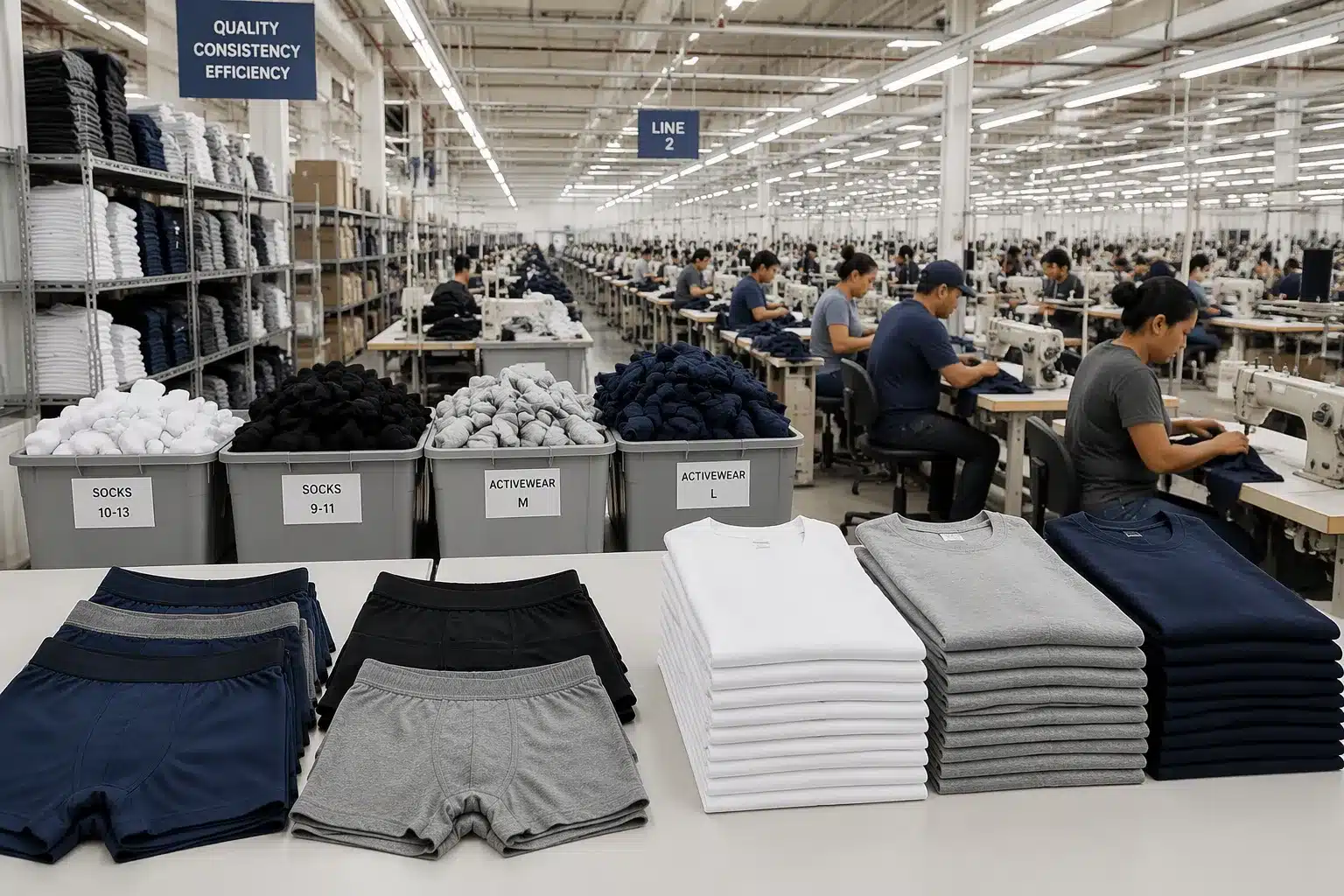
Gildan Activewear bases its business on everyday basic clothing. Underwear, socks and activewear form the heart of that range. The company runs production on a large scale, and that size shapes everything it does.
Think about what this means for a buyer. Plain men’s underwear, simple boxer briefs and staple basics come off the line in huge volumes. Consistency is the main selling point here. A buyer who needs the same boxer briefs in the same spec, order after order, gets a result they can predict.
Fashion-led lines are a different matter. Gildan Activewear doesn’t go after seasonal prints or trend-driven cuts. That’s not a weakness — it’s a focus. The factory does one job well, and it does that job at volume.
Turkey fits neatly into this picture. The country’s textiles sector supports fast turnaround, and underwear manufacturing there gains from short freight routes to the UK. Buyers weighing suppliers in Turkey should note where scale helps and where it doesn’t.
Compliance, Cost and Best Use Case
Compliance paperwork follows the pattern set out earlier in this guide. Ask for certificates tied to the plant that will sew your order. Request test reports for the exact fabrics in your range. Large manufacturers usually hold these documents — the job is matching them to your line.
Cost works in your favour at high volume. Unit prices fall as order sizes rise, and that suits basic ranges. Small trial runs fit less comfortably. Confirm MOQ, sample availability, lead times and total cost of ownership for your exact style before you plan a 500-piece trial order. These fields vary by product line, not just by factory.
Best use case? High-volume basic ranges rather than fashion-led lines. If your sourcing plan relies on plain underwear, socks and activewear in steady volumes, Gildan Activewear earns a place on the shortlist. Underwear brands chasing bold prints should look at Design Cotton Turkey instead. That’s the beauty of a shortlist — each name covers a different need.
Matching Manufacturers to Your Needs
Comparison Summary by Category and Order Size
A side-by-side view makes the choice easier. The table below compares the three Turkish underwear manufacturers on the points that decide a trial order.
Field | GBS Trend Inc. | Design Cotton Turkey | Gildan Activewear |
|---|---|---|---|
Category | Lingerie and underwear | Printed boxers | Basic underwear, socks, activewear |
Order size | Check per line | Check per line | Best for large volumes |
Compliance documents | Plant-level certificates, fabric test reports | Plant-level certificates, colourfastness reports | Plant-level certificates, fabric test reports |
Cost basis | Fabric and making quoted together | Print setup quoted separately | Unit price drops at volume |
Treat every cell as a question, not an answer. MOQ, sample availability, lead times and total cost of ownership change by product line within each factory. Ask all three suppliers for those four fields in writing before anyone quotes.
Which Manufacturer Fits Which Scenario
GBS Trend Inc. suits vertical multi-country production. Its own factories in Turkey and Egypt control fabric and garment together. Buyers who want one partner across the chain fit here.
Design Cotton Turkey fits fashion-led boxers. Print-heavy ranges and comfortable fits sit at the heart of its work. Men’s underwear brands chasing seasonal patterns should start here.
Gildan Activewear covers high-volume basics. Plain boxer briefs and staple lines come off the line in huge volumes. Underwear brands needing steady repeats, not trends, get a result they can predict.
Sourcing from Turkey rewards a clear brief. Match the scenario first, then compare quotes. That order saves weeks.
How to Verify and Engage Turkish Manufacturers
Sample, Audit and Reference Checks
Start with samples. Ask each factory for a production sample, not a showroom piece. Production samples show the real stitch quality and the real fit. Compare them side by side on the same body block.
Next, book the audit. Ask for the latest third-party report and read the findings, not the score. Then request two references from buyers in your category. A quick call with a current client tells you more than any brochure about how a plant handles a late fabric delivery.
Keep a simple checklist for every candidate. Sample availability, MOQ, lead time and total cost of ownership belong on it. These fields shift by product line, so confirm them for your exact style.
RFQ, Negotiation and Trial Order Steps
Send the same RFQ to all three. Use one spec sheet, one size range and one delivery window. Ask for the cost breakdown covered earlier, plus MOQ, sample lead time and bulk lead time in writing.
Then compare. Line up the quotes in one table and look for gaps. A missing freight line or an unclear trim cost is a question, not a bargain.
Negotiation comes next. Push on the fields that matter for a 500-piece trial order. Ask whether the sample cost is credited against bulk. Ask what happens to the price at higher volumes.
Finally, place the trial. Agree an inspection point before production starts. Sourcing from turkey works best when the first order is small and closely watched. Turkey rewards that discipline, and so do the underwear brands that follow it.
Sourcing from Turkey suits buyers who verify. The right suppliers will welcome the questions. Turkish manufacturers who answer them clearly deserve the trial order.
So there you have it. GBS Trend Inc. wins on vertical integration and multi-country capacity. Design Cotton Turkey suits print-heavy boxer ranges. Gildan Activewear covers high-volume basics. Technical performance, application fit, regulatory compliance and cost put all three on the list.
Ready to move? Follow these steps.
Ask each factory for plant-level certificates and fabric test reports.
Order production samples and compare them on one body block.
Send one RFQ covering MOQ, sample availability, lead times and total cost of ownership for a 500-piece trial.
Turkey rewards buyers who check. Ask all three underwear suppliers for comparable quotes this week, then start sample evaluation. Good underwear sourcing starts with evidence, not guesses.
FAQ
Which of these manufacturers suits a 500-piece trial order?
It hinges on the product line, not the factory’s name. Gildan Activewear leans towards big volumes, so a small trial may not sit so well there. GBS Trend Inc. and Design Cotton Turkey both run several lines. Ask each one for its minimum order quantity on your exact style before you sign up.
What should a UK buyer confirm before comparing quotes?
Four fields make a fair comparison: minimum order quantity, sample availability, lead times and total cost of ownership. Ask all three suppliers for these in writing, for each product line. A quote that misses any of them can’t be set against the others. Push back and ask once more.
Do these factories hold the certificates buyers need?
Each one should give plant-level certificates and fabric test reports when asked. Look for ISO 9001, OEKO-TEX Standard 100 and, where it applies, GOTS scope certificates that name the production site. Check every certificate number on the issuing body’s register. That step takes minutes and guards the whole order.
How does a buyer start working with a Turkish underwear supplier?
Send one RFQ to all three, using the same spec sheet and delivery window. Order production samples and compare them on one body block. Then place a small trial order with an agreed inspection point. Suppliers in turkey who answer clearly deserve that first order. Good underwear sourcing runs on evidence, not brochures.
Why does product line matter more than the factory’s reputation?
A plant built for printed boxers may struggle with seamless lingerie, and the reverse holds too. A name for underwear in turkey tells you about the sector, not your line. Match the factory to your category first, then check fit, certificates and cost on real samples.
See Also
What To Expect From Men’s Underwear Makers In 2026
Five Essential Comparisons For Wholesale Men’s Underwear Suppliers
My Hunt For A Dependable UK Men’s Underwear Wholesale Supplier
Comparing US Private Label Underwear Makers On MOQ Pricing And Services
How US Brands Should Pick OEM Or ODM For Private Label Men’s Underwear