
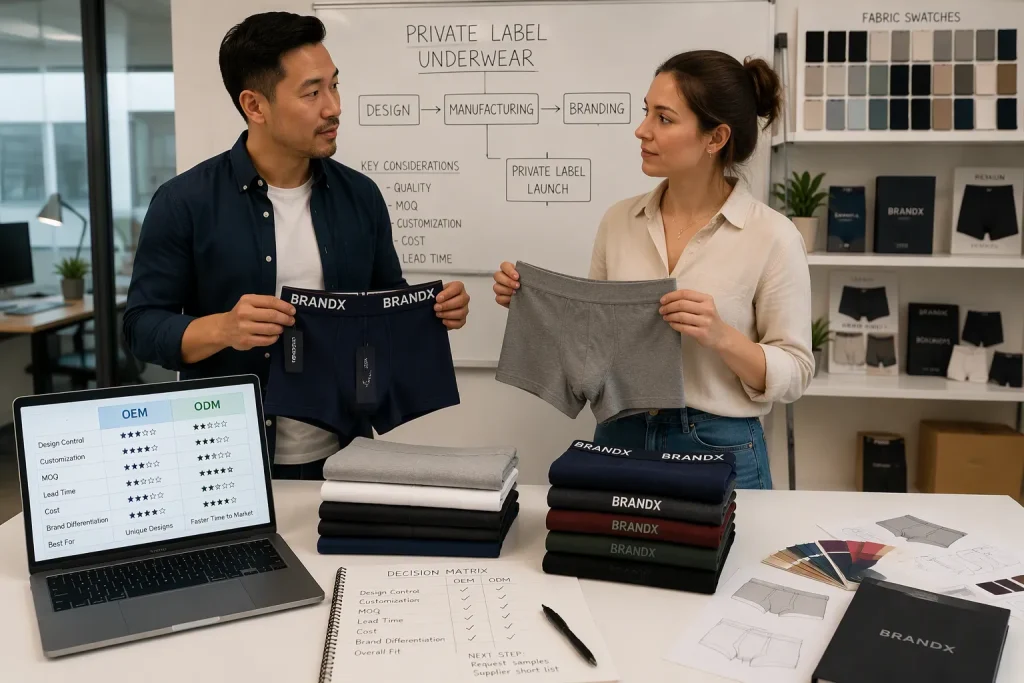
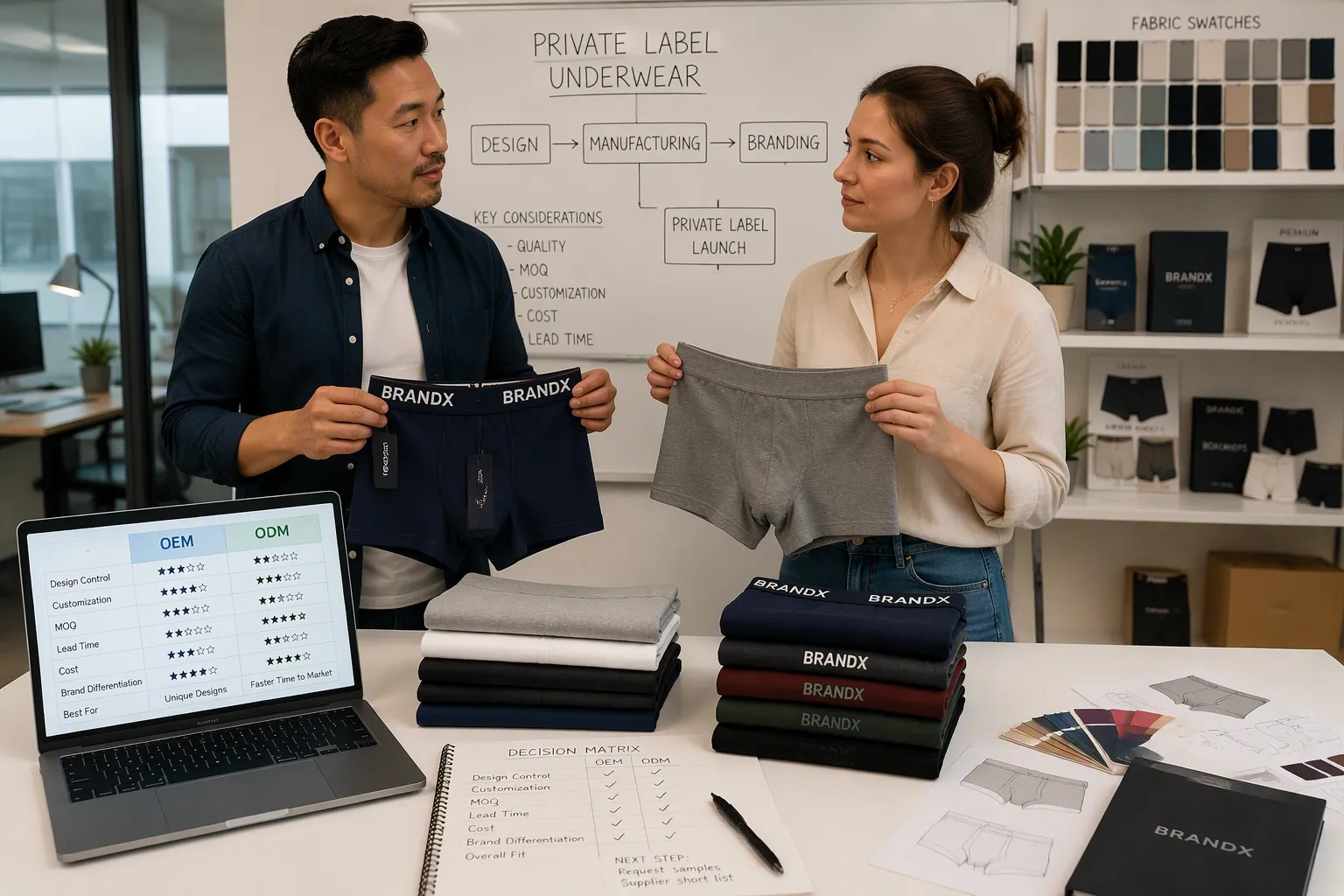
Choosing between OEM and ODM? I tell US brands it comes down to design control, budget, and time-to-market. OEM means you supply the designs. The factory produces them. The other model means you pick the factory’s existing design and add your brand.
That first path gives full customization. The ready-made route gives faster launches and lower costs.
If you need a private label men’s underwear manufacturer with stock styles, the ready-made route works best. If you need a unique cut, custom private label beats stock designs.
This guide helps US brands compare both models and choose based on their goals. Experienced partners like Hongku Underwear offer both paths, so the decision feels less risky.
Key Takeaways
OEM means you create the underwear design, and the factory produces it. ODM means you choose from the factory’s designs and put your brand on them.
For full design control and a unique product, choose OEM. For faster launches and lower costs, choose ODM.
Private label uses designs that already exist and puts your brand on them. Custom manufacturing makes new designs based on your own specs.
Begin with ODM or private label to test the market. Then change to OEM or custom for your top sellers.
Look closely at the smallest order you must place and the costs. OEM often requires larger minimums and more money paid upfront.
Ask factories about certifications like OEKO-TEX and BSCI. These certifications make sure the products are good and safe.
Always write down and confirm the steps for approving samples and the terms for repeat orders before you agree.
A mixed plan lets you pay for custom work with money made from ready-made styles.
OEM vs. ODM: Core Definitions
Let me break down both production models in plain terms. You need this clarity before you talk to any factory.
OEM Apparel Manufacturing: Your Design
OEM stands for original equipment manufacturer. In OEM apparel manufacturing, you bring the designs and specs. The factory builds exactly what you hand over.
How OEM Works for Underwear
You send tech packs, measurements, and fabric calls. The factory sources materials, cuts, sews, and finishes. This is true oem and custom cut and sew work. You own the pattern. You own the fit. An oem clothing manufacturer never sells your design to anyone else.
When US Brands Choose OEM
Pick OEM when your fit is your brand. Maybe you built a following on one perfect pouch shape. Maybe you need a waistband nobody else carries. OEM apparel manufacturing costs more upfront. Minimums run higher too. But you get a product no competitor can copy.
ODM Apparel Manufacturing: Their Design
ODM means original design manufacturer. Here the factory already designed the product. You pick from their catalog and add your label.
How ODM Works for Underwear
You review their sample line. You choose styles, colors, and fabrics. The factory handles pattern design, fabric procurement, and sampling. Then they sew your private label tags inside. This is odm clothing manufacturing at its core.
When US Brands Choose ODM
Choose ODM when speed matters most. You want to test the market fast. You want low minimums per style and color. ODM apparel manufacturing gets you selling in weeks, not months. The trade-off? Other brands can buy the same base design.
The Hybrid OEM + ODM Model
Smart brands rarely stay in one lane forever. That is where the hybrid oem + odm model comes in.
Blending Both Approaches
You launch with ODM stock styles. Sales prove the market. Then you invest in custom manufacturing for your hero products. One factory can run both tracks for you. Hongku Underwear does exactly this, with in-house pattern design and sampling under one roof.
Why Brands Switch Over Time
A young brand needs cash flow. ODM delivers that. A growing brand needs differentiation. OEM delivers that. The hybrid model lets you fund custom development with ready-made profits. I have watched many US brands make this exact shift.
One practical note: always clarify minimums by style and color before you commit. Ask about sample approval steps and repeat-order terms in writing. Stock styles and custom development carry very different commitments.
Private Label vs Custom: What’s the Difference?
People mix up these two terms all the time. I want to clear that up right now. The private label vs custom debate really comes down to who owns the design.
Private Label Basics
Private label means you take a design that already exists. You slap your brand on it. That is the whole idea.
Using Existing Designs with Your Brand
The factory owns the pattern. You pick from their catalog. You add your logo, your tags, your packaging. This is the fastest way to get private label men’s underwear on shelves. It also works well for odm and private label setups, where the factory handles design and you handle branding.
Lower Cost, Faster Launch
You skip pattern development. You skip sampling rounds. That saves money and time. A modified private label approach keeps costs low because the factory already solved the fit. You just customize the label and maybe the waistband color.
Custom Manufacturing Basics
Custom manufacturing flips the script. Here, you bring the design. The factory builds it.
Unique Designs and Specifications
You supply tech packs, measurements, and fabric calls. The factory cuts and sews to your specs. This is full custom work. Nobody else gets your pattern. Your fit becomes your brand signature.
Higher Investment, Stronger Differentiation
Custom manufacturing costs more upfront. Minimums run higher. Lead times stretch longer. But you get a product no competitor can copy. That differentiation pays off when your brand grows.
Which Approach Fits Your Brand?
Neither path wins every time. It depends on your goals, your budget, and your timeline.
Matching Product Strategy to Model
Ask yourself one question. Does your brand sell on fit and design? Then go full custom. Does your brand sell on price and speed? Then private label works better. The private label vs custom choice should match your product strategy, not your gut feeling.
When to Mix Private Label and Custom
Smart brands blend both. Launch with private label styles. Test the market. Then invest in custom manufacturing for your best sellers. This modified private label middle ground lets you fund custom development with ready-made profits. I call it the smart hybrid play.
One practical tip: always clarify minimums by style and color before you commit. Ask about sample approval steps and repeat-order terms in writing. Stock styles and custom development carry very different commitments. The private label versus custom decision gets easier once you compare those terms side by side. Many brands start with private label and custom orders running together. That mix keeps cash flowing while you build something unique.
Key Differences: OEM vs. ODM Side by Side
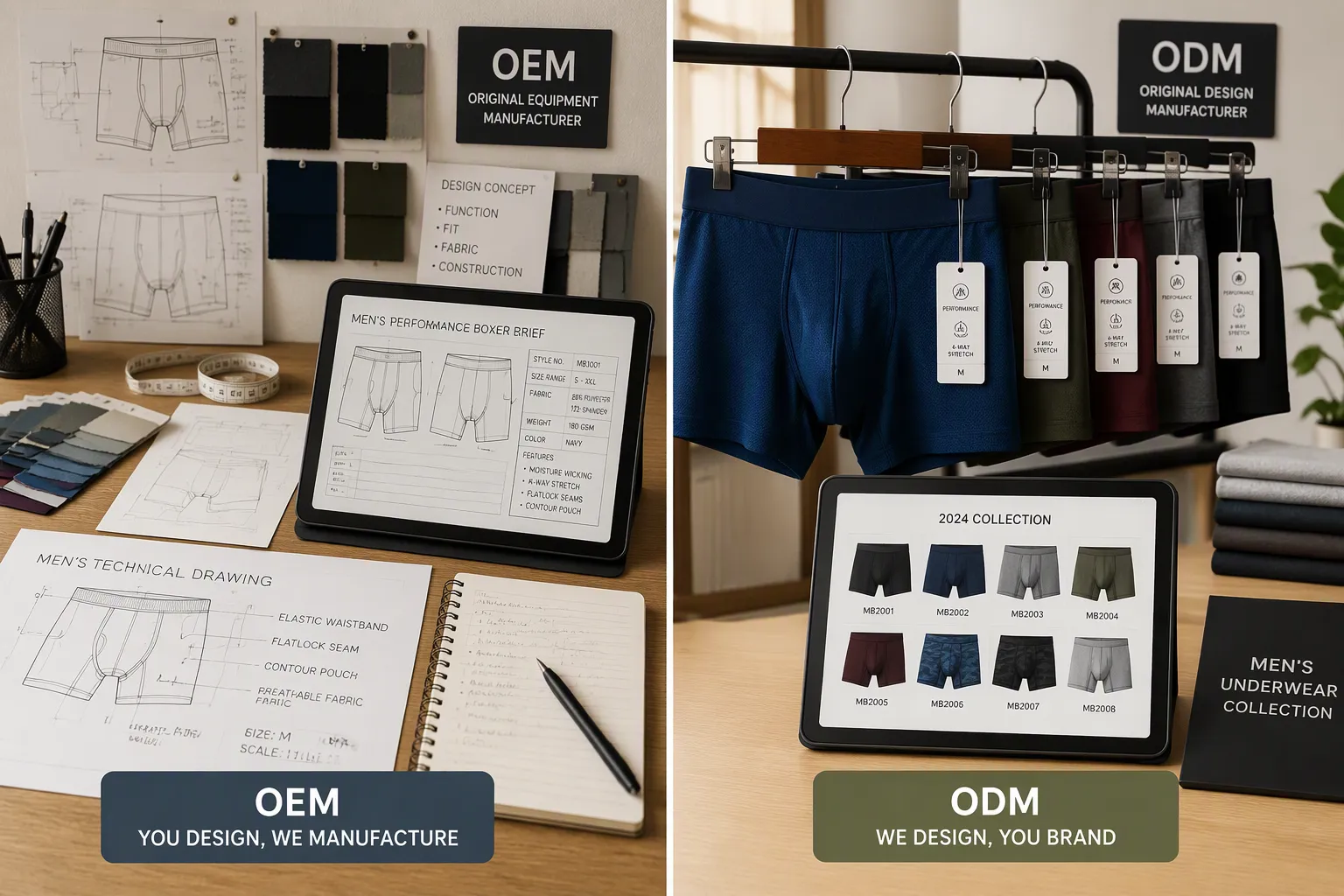
Now I want to place these two production models side by side. You will see exactly where they differ. This comparison looks at design control, money, speed, and quality. I have seen US brands make the wrong choice here. So pay close attention.
Design Control and Customization
Design control is the biggest fork in the road. It shapes everything else that follows.
OEM: Full Creative Freedom
With OEM, you keep full design control. You decide the pouch shape, the leg opening, and the waistband width. You choose the fabric weight and the stitch type. The factory follows your tech pack exactly. This is full custom work at its purest. An original equipment manufacturer never owns your pattern. You do. That means no competitor can order your exact fit. For a brand built on a signature cut, this matters more than anything. Full custom development takes longer. But the result belongs to you alone.
ODM: Limited to Available Designs
ODM flips that around. The original design manufacturer owns the patterns. You pick from their catalog. You can tweak colors, labels, and packaging. You cannot change the core fit without moving into custom manufacturing. That is the trade-off. You get speed and low risk. You give up full design control. Some brands try a modified private label approach here. They take a stock design and add small touches. That works for testing. It does not build a moat.
Cost, MOQ, and Time to Market
Money and speed decide most brand choices. Let me break down what each path really costs you.
OEM: Higher Upfront, Longer Lead Times
OEM apparel manufacturing demands more cash upfront. You pay for pattern development, sampling rounds, and fabric sourcing. Custom MOQs run higher per style and color. Custom manufacturing MOQs often start at levels that scare new brands. Lead times stretch longer too. You wait for development, approval, and bulk production. But here is the thing. You own the tooling. Repeat orders get easier and cheaper over time. Always clarify minimums by style and color before you sign. Ask about sample approval steps in writing. Get repeat-order terms locked in early.
ODM: Lower Costs, Faster Turnaround
ODM apparel manufacturing cuts the upfront cost. The factory already developed the pattern. You skip that expense. Private label MOQs stay lower per style. You can test five colors without huge risk. Turnaround is faster because production starts sooner. You review samples, approve them, and go. Private label and custom paths differ most here. One gets you selling in weeks. The other gets you a unique product in months. Neither is wrong. It depends on your cash and your calendar.
Quality Control and Scalability
Quality is where I see brands get burned. The model you pick changes who owns the standards.
OEM: You Own the Standards
With OEM, you set the quality bar. You write the specs. You approve the sealed pre-production sample in writing before bulk starts. Then you hold the factory to it. I always tell brands to require these standards from any OEM partner:
Standard / Certification | Purpose for US Brands |
|---|---|
OEKO-TEX® Standard 100 | Certified fabrics verified free from harmful substances; every fabric lot lab-tested for shrinkage, spirality, colorfastness (washing & perspiration), pilling, and stretch recovery, with test reports attached to the order file. |
BSCI Audit | Social compliance audit of partner factories covering labor standards. |
AQL 2.5 Inspection | Final random inspection covering quantity, workmanship, measurements against sealed spec, packing, and carton drop checks. |
REACH | Chemical awareness compliance. |
Third-Party Inspection (SGS, Intertek, TÜV) | Independent inspectors welcomed on any order for added verification. |
A strong OEM partner also runs inline QC at every operation. That means checks at cutting, sewing, and finishing, plus first-off approval on every line. Third-party inspectors like SGS, Intertek, or TÜV are welcome on any order. That gives you independent proof.
ODM: Factory-Driven Quality
ODM apparel manufacturing puts quality in the factory’s hands. They built the design. They know its limits. Their QC process already fits that pattern. You still get final inspection. You still approve a sample. But you inherit their standards, not your own. That works fine for stock styles. It falls short when your brand promises something unique. Scalability also differs. OEM scales with your specs. ODM scales with their capacity. Both can grow. One grows on your terms.
Choosing a Private Label Men’s Underwear Manufacturer
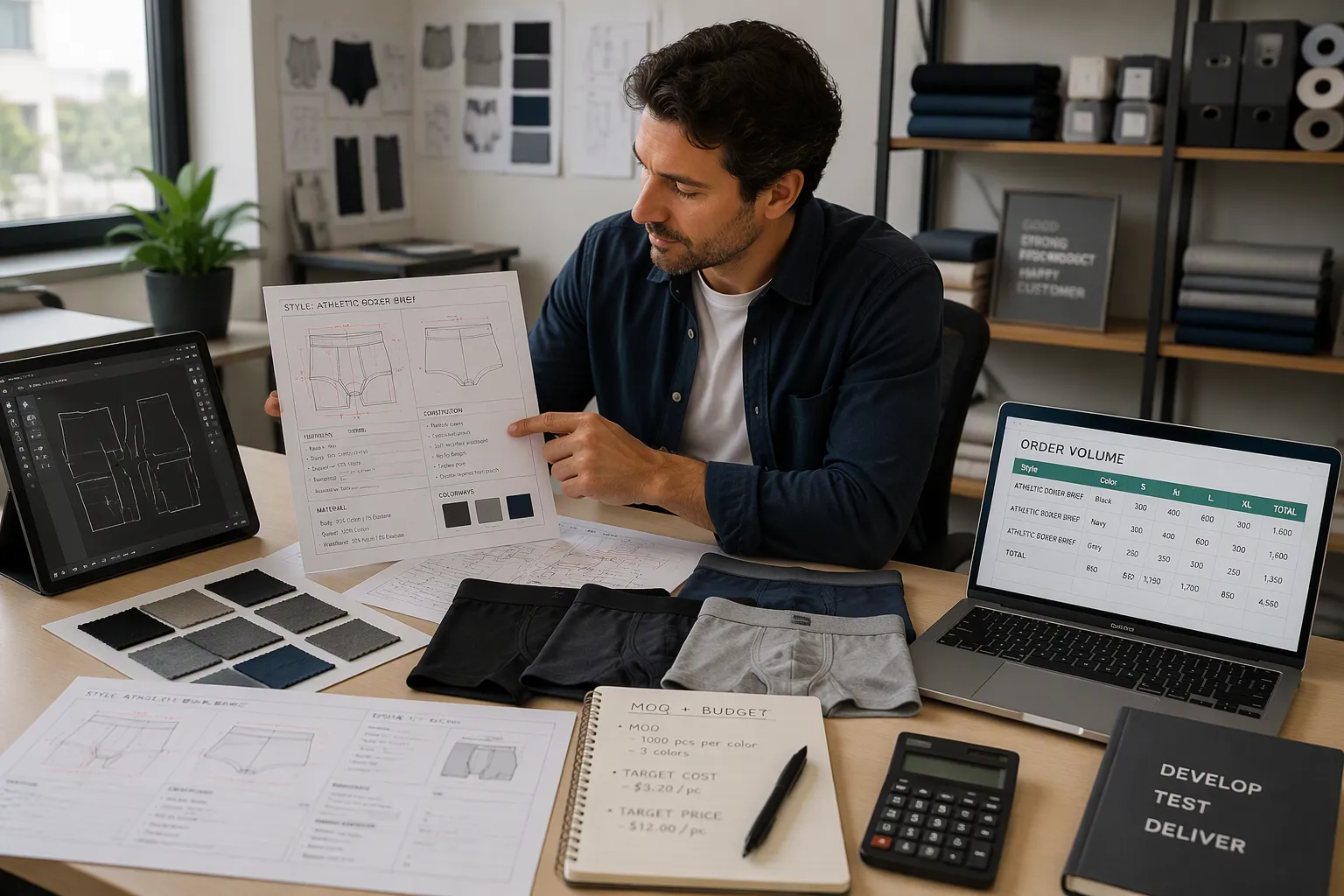
You have the definitions. You know the differences. Now comes the hard part. How do you actually pick a manufacturing model that fits your brand? I use a three-step framework with every brand I advise. It works for startups and established labels alike.
Step 1: Assess Design Capabilities
Your design resources decide a lot here. Be honest with yourself about what you can actually produce.
In-House Design Resources
Do you have a designer on staff? Can you build tech packs with measurements and fabric calls? If yes, you can handle oem and custom cut and sew work. If no, you lean toward odm apparel manufacturing. Most small US brands start without design staff. That is fine. It just points you toward stock styles first.
Need for Unique Product
Ask yourself one question. Does your brand win on a signature fit? If your customers buy you for one perfect cut, you need custom manufacturing. If they buy you for price and convenience, private label works fine. This single answer shapes your whole manufacturing model.
Here is how stock styles and custom development stack up at this step:
Factor | Stock Styles (ODM/Private Label) | Custom Development (OEM) |
|---|---|---|
Design ownership | Factory owns the pattern | You own the pattern |
Pattern making | Already done | You pay for development |
Fabric procurement | Factory’s existing supply | You specify fabrics |
Sampling | Quick sample review | Multiple sampling rounds |
Full-scale production | Starts fast | Starts after approvals |
Hongku Underwear supports both paths with in-house design and computer-aided pattern making. That means you can start with stock styles and move to full custom later without changing partners.
Step 2: Evaluate Budget and Order Volume
Money talks. Your budget and order volume narrow the choice fast.
Meeting Higher MOQs
Custom manufacturing demands higher minimums per style and color. You pay for pattern development, fabric sourcing, and sampling rounds. Private label MOQs stay much lower. If you cannot meet those higher minimums, do not force it. Start with private label and build capital first.
Testing with Limited Capital
Got a tight budget? Launch with a modified private label approach. Pick stock styles, add your branding, and test the market. This is the smartest path for new brands. You learn what sells without burning cash. Then you reinvest profits into custom manufacturing for your winners. I have watched dozens of brands use this exact playbook.
Step 3: Define Timeline and Go-to-Market
Speed matters in this market. Your timeline should match your model.
Speed to Market Needs
Need to sell in weeks? Go with odm apparel manufacturing. The factory already built the design. You approve samples and start production. Private label and custom paths differ most here. One gets you selling fast. The other takes months of development.
Willingness to Wait for Custom Development
Can you wait for something unique? Then invest in custom manufacturing. You will sit through pattern development, sampling rounds, and approval steps. The wait is real. But the payoff is a product nobody else can sell. That patience builds a real brand moat.
One more thing. The private label vs custom choice is not permanent. Many brands run both tracks at once. They keep private label and custom orders flowing together. That mix funds growth while you build differentiation. A good private label men’s underwear manufacturer will let you do both under one roof.
Before you sign anything, ask your factory these questions. Can they handle pattern making in-house? Do they source fabrics directly? How many sampling rounds do they include? What are their private label apparel manufacturing lead times? A partner who answers all four clearly is worth your business.
Common Pitfalls and Best Practices
I have helped many US brands make this choice. Some decisions hurt them. Learn from those mistakes.
Pitfalls to Avoid
Underestimating MOQs and Hidden Costs
Custom manufacturing requires higher minimums than you expect. A factory may ask for a separate minimum for each style and color. Costs climb fast. Pattern work, sample rounds, and fabric sourcing add hidden fees. Always ask for a complete quote breakdown. Get all costs in writing before you commit.
Do the numbers scare you? Start with stock styles. Test the market without spending a lot. Later, move to custom manufacturing when sales allow.
Choosing ODM When Differentiation Matters
Some brands pick ODM apparel manufacturing just to save money. They ignore the fit. Their underwear looks like many other private label men’s underwear brands. That sameness hurts them later.
Does your brand sell a special fit? Then you need OEM. The original design manufacturer owns the pattern. You only borrow their look. The OEM path costs more, but you own the design. Use custom manufacturing to build a real edge.
Best Practices for Partnership
Check Your Factory Partner Carefully
Look at their export history. Ask about quality checks. Do they inspect at cutting, sewing, and finishing? Do they allow outside inspectors like SGS or Intertek? Do they have certifications like OEKO-TEX Standard 100 or BSCI?
Ask for sample approval steps in writing. Repeat-order terms must also be clear. A confident partner shares those details happily. A weak one avoids them.
Start with a Small Trial Order
Never place a huge first order. Start with an ODM private label style or a small custom run. Test your market. Watch their timeline. Check their quality yourself.
A trial order lowers risk. It builds trust. You share feedback on samples. The factory learns your taste. The hybrid model works well here. Fund early wins with ready-made profits. Reinvest those profits into custom development.
How Hongku Underwear Supports Both Models
OEM Capabilities for Custom Underwear
Hongku Underwear handles OEM apparel manufacturing from pattern to final pack. For a true signature shape, OEM apparel manufacturing gives you exactly that. They source fabrics, cut, sew, and finish. Computer-aided pattern making improves fits before bulk starts.
Flexible MOQs let newer brands try custom manufacturing without fear. Custom manufacturing gives you full control over every seam. Their sampling process has clear approval steps.
ODM Options for Fast-Moving Brands
Need speed? Hongku offers ODM apparel manufacturing with ready-made designs. ODM apparel manufacturing cuts upfront design costs. ODM works best when speed matters most. Choose ODM when your timeline is short.
Their catalog covers many cuts and fabrics. Hongku makes the full ODM and private label experience simple. You skip development delays. Later, move toward full custom manufacturing as your brand grows.
Choose your manufacturing model based on design control, budget, MOQs, and time to market. Neither OEM nor ODM wins outright. Pick what fits your goals and cash. Start with private label or a hybrid model, then grow into custom manufacturing once sales prove out.
Before signing, I always clarify minimums by style and color, sample approvals, and repeat-order terms in writing. Stock styles get you selling fast. Custom manufacturing builds depth later. Full custom creates a product nobody else can copy.
A private label men’s underwear manufacturer that offers both paths lowers your risk. Hongku Underwear does exactly that. The private label versus custom choice shapes your brand’s future. Choose carefully, and you’ll grow with the US market.
FAQ
What Does OEM Mean for My Underwear Brand?
OEM stands for original equipment manufacturer. You supply the design and the spec sheet. The factory sews underwear to your exact measurements. You own the pattern, so no competitor can copy your fit. Pick this path when your cut is your brand signature.
What Does ODM Mean and When Should I Pick It?
ODM means original design manufacturer. The factory has already made the design. You pick styles from their catalog, add your label, and sell. You can change colors and packaging, but the main fit stays the same. Choose ODM when you need speed and lower minimums.
Can I Combine Both Manufacturing Models in One Order?
Yes, many brands run both models at once. Start with stock styles to test the market fast. Use those profits to fund custom work later. This hybrid path lets one factory support your launch and your growth without switching partners.
What Is the Difference Between Private Label and Custom Manufacturing?
Private label means you take a factory’s existing underwear design and add your brand. Custom manufacturing builds from your own specs. The private label versus custom choice comes down to one thing. Do you win with a unique fit or on price and speed?
What MOQs Should I Expect for Stock Styles?
MOQs depend on the factory and the style. Stock designs usually have lower minimums per style and color. Custom work needs higher minimums because pattern work and sampling cost money. Get exact numbers by style and color in writing before you commit.
What Details Should I Clarify with the Factory Before Signing?
Before signing, I always confirm minimums by style and color first. I get sample approval steps in writing. I set repeat-order terms before production starts. I also check lead times and shipping costs. A confident factory answers all of these clearly and quickly.
Does Hongku Underwear Support Both Manufacturing Models?
Yes. Hongku has stock designs for fast launches and full custom work for private label brands that need a special fit. Their in-house pattern making and sampling help both paths. Flexible minimums let new brands start small and grow into unique products as sales rise.
What Certifications Should an Underwear Factory Have?
Look for OEKO-TEX Standard 100 certified fabrics. This proves the material has no harmful substances. Ask about BSCI audits for social compliance. See if third-party inspectors such as SGS or Intertek can visit the factory. A supplier that allows inspections shows confidence.
See Also
Selecting The Best Private Label Men’s Underwear Maker For 2026
Finding Private Label Men’s Underwear From UK Manufacturers Easily
Key Factors When Choosing Men’s Underwear Manufacturers In 2026
How To Locate The Ideal Custom Waistband Underwear Manufacturer
Low Minimum Order Underwear Production For Small Boxer Brief Runs