
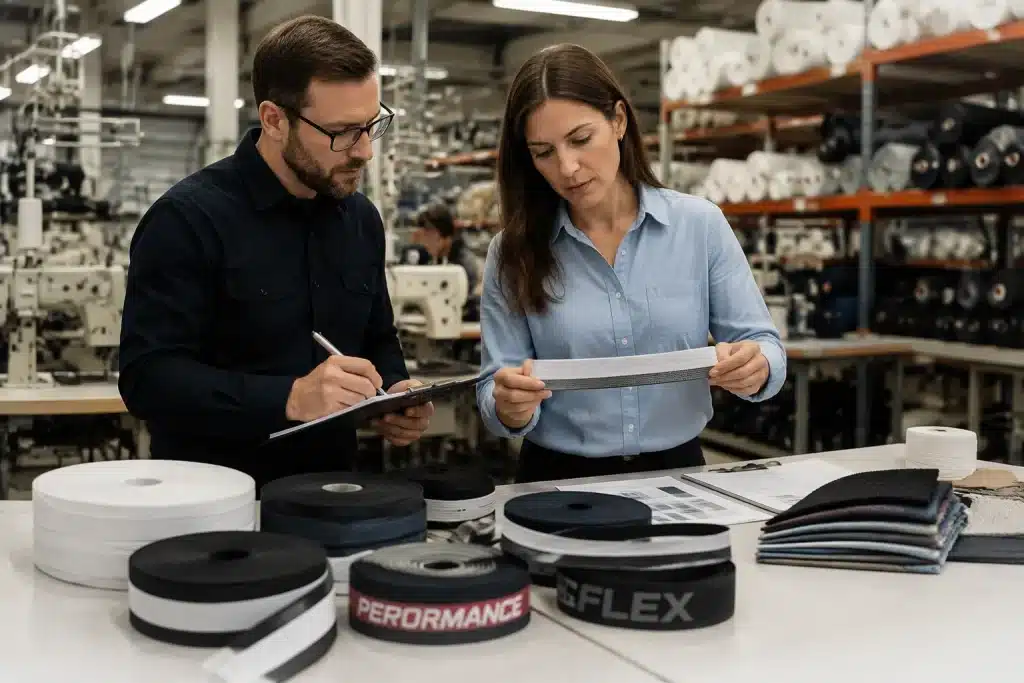
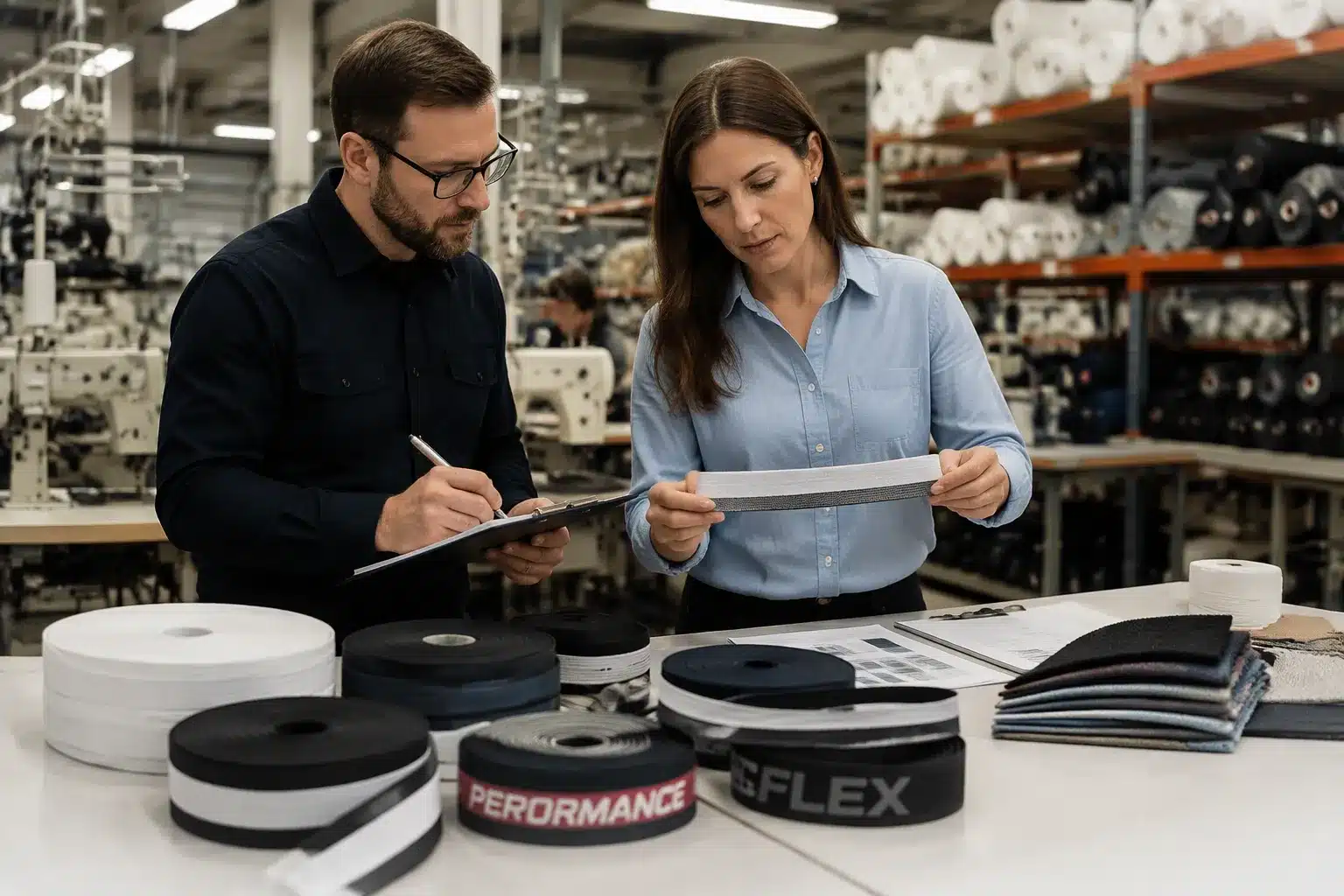
Finding a custom waistband underwear manufacturer starts with the right search. Regular searches often show retail product pages, not suppliers. Use B2B sourcing platforms and special private-label or wholesale keywords, like “custom waistband supplier,” to connect straight with factories.
That first search is important. Your waistband specs—elastic type, rise, and branding—help decide which partners fit. Also check private label underwear packaging needs early. Before you commit, confirm all separate garment, waistband, and packaging minimums. Ask about artwork, size ratios, sampling charges, and packing instructions. The path ahead covers defining requirements, searching suppliers, evaluating samples, comparing quotes, avoiding red flags, and finalizing your contract.
Key Takeaways
Start by deciding what you need for your waistband. Pick the elastic type, material mix, waist height, and branding.
Search B2B platforms with specific keywords. Use words like ‘custom waistband supplier‘ to find factories.
Check the smallest order amounts for the garment, waistband, and packaging separately. Make sure you know these numbers early.
Look at manufacturers closely. Check their certifications, ask for samples, and test how well they communicate.
Compare quotes, lead times, and flexibility. Avoid prices that seem too good to be true.
Pay attention to warning signs like bad communication or not being open. Trust your gut.
Begin with a test order. Approve a final sample before full production.
Sign a contract that includes payment, quality rules, and shipping terms. Keep your brand safe.
Define Your Waistband Needs
Choose Waistband Type and Material
Elastic, Jacquard, or Printed
Most pull-on underwear uses an elastic waistband. So you should state the elastic material and build before you contact any supplier. Do you want a simple woven elastic? Or a soft, plush-backed band for more comfort?
Jacquard and printed waistbands give you more design choices. A jacquard band weaves your logo right into the fabric. A printed band puts graphics onto the elastic surface. Think of these like custom-developed parts, such as branded metal snaps. They are made just for your product, not taken from a catalog.
Cotton, Nylon, Spandex, or Blends
The fiber mix changes how the waistband feels and works. Cotton breathes well and fits everyday wear. Nylon adds strength and a smooth finish. Spandex gives the stretch and recovery your band needs.
Blends mix these benefits. A cotton-spandex mix feels soft and keeps its shape. A nylon-spandex blend dries faster and lasts longer. Tell your manufacturer the exact blend you want. This detail affects comfort, durability, and cost.
Set Order Quantity and Budget
Estimating MOQ and Initial Investment
Every factory sets a minimum order quantity, or MOQ. This number changes by waistband type and material. Printed and jacquard bands often have higher minimums because they need custom tooling.
Ask about separate minimums for the garment, the waistband, and the packaging. These three can differ. A factory might require one quantity for underwear and another for custom boxes. Knowing this early stops surprises.
Setting a Realistic Budget
Your budget must cover more than the unit price. Sampling charges, artwork setup, and shipping all add up. Confirm these fees before you commit.
Plan for a first run that tests the market without overstocking. A realistic budget balances quality with quantity. Do not chase the lowest quote. A cheap waistband may lose its stretch after a few washes.
Specify Fit and Branding
Waist Rise: Low, Mid, or High
Waist rise is a key fit specification. Low-rise sits below the hip bone. Mid-rise rests at the navel. High-rise covers the waist and offers more coverage.
Communicate your chosen rise clearly. Send measurements and reference samples. This step avoids fit disputes later.
Logo, Colors, and Private Label Underwear Packaging
Branding goes beyond the logo itself. Decide where your logo sits on the band. Choose thread colors that match your palette. Confirm size ratios across your size run.
Private label underwear packaging matters too. Specify labeling, hang tags, and polybag instructions. Ask the factory to confirm artwork files and packing details in writing. These small choices shape how customers see your brand.
Search for a Custom Waistband Underwear Manufacturer
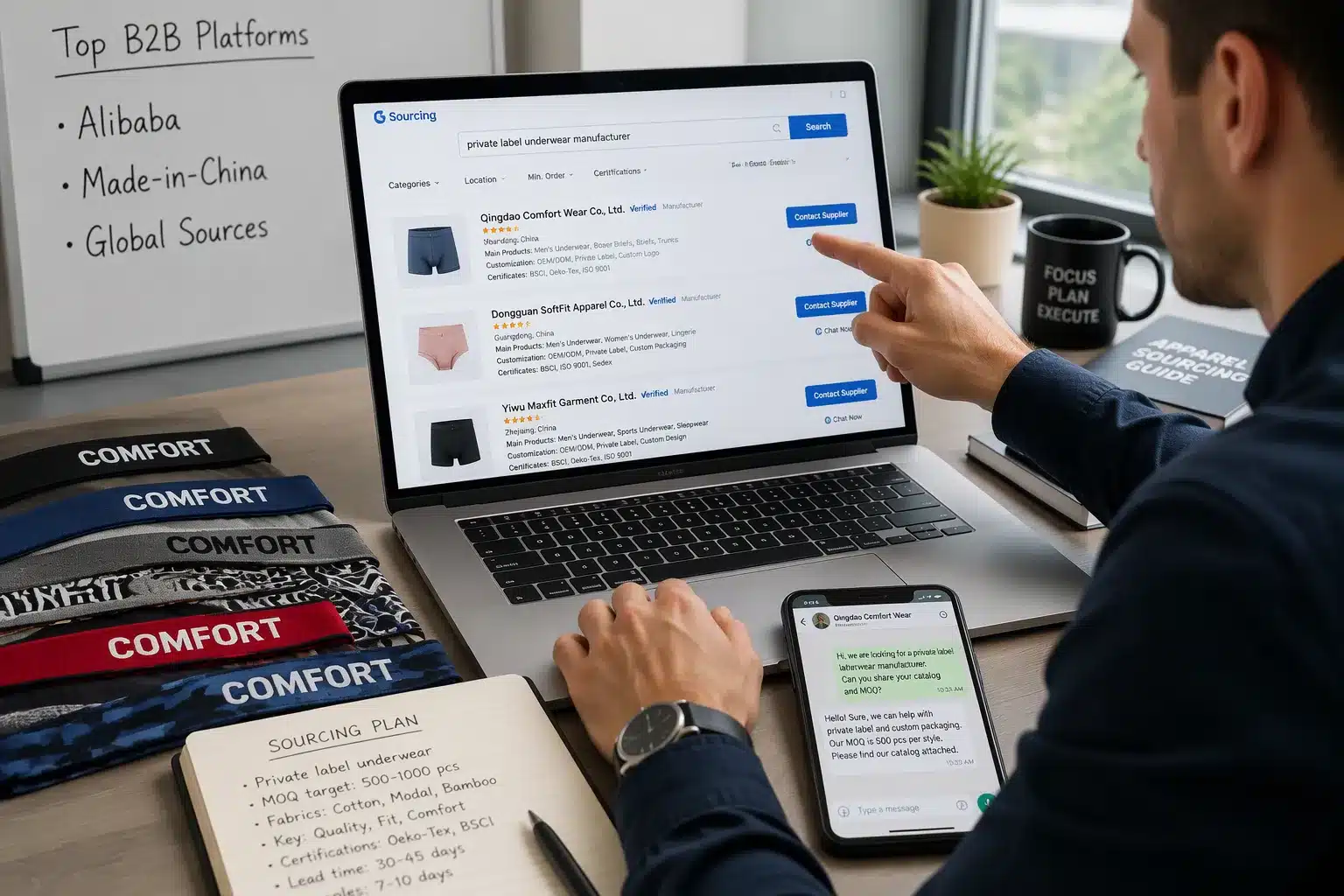
When you search online, you often get retail pages. That can be frustrating when you need a factory. Skip the consumer-facing sites and head straight to B2B sourcing platforms instead. Use specific keywords like “private label underwear manufacturer,” “custom waistband supplier,” or “wholesale underwear manufacturing.” These phrases connect you with factories, not stores.
Your waistband specs can also work as search filters. If you need a jacquard elastic band with a mid-rise cut, type those words into the search bar. Add your material preference too. Searching “nylon-spandex jacquard waistband manufacturer” narrows the field fast. This saves hours of scrolling through irrelevant listings.
Use B2B Directories and Marketplaces
Alibaba, Made-in-China, Global Sources
These three platforms lead B2B sourcing. Each one works a bit differently.
Platform | Best For | Watch Out For |
|---|---|---|
Alibaba | Wide supplier range, trade assurance | Varying quality, verify certifications |
Made-in-China | Vetted manufacturers, industrial focus | Fewer small-batch options |
Global Sources | Electronics and textiles, trade show tie-ins | Higher MOQs on some listings |
Filter by your waistband type. Look for suppliers who specialize in elastic waistband construction. Check their past sales and how quickly they answer. Contact several at once. Compare their answers to your technical questions.
When you contact suppliers, check the separate minimums for the garment, the waistband, and the private label underwear packaging. These three numbers often differ. Confirm artwork needs, size ratios, sample costs, and packing instructions before going further. A factory that answers these clearly is worth your time.
Niche Apparel Sourcing Platforms
Some platforms only deal with apparel and textiles. These niche sites often have stricter quality control. They draw in factories that focus on underwear and intimate apparel. You will find fewer generalists and more specialists. So you get better answers about elastic recovery and waistband construction.
Attend Trade Shows and Events
Key Apparel and Textile Shows
Trade shows let you meet factory reps in person. You can touch waistband samples. You can feel the elastic quality. You can also ask about production capacity right on the spot.
Major shows include Interfilière, Première Vision, and the Canton Fair. Interfilière is about lingerie and swimwear materials. Première Vision covers fabrics and accessories. The Canton Fair in Guangzhou brings in thousands of suppliers from many product categories.
Take your waistband specs to the show. Ask each supplier about their elastic construction options. Ask for samples on the spot. Collect business cards and follow up within a week.
Networking Strategies
Talk to other people at the event, not just the exhibitors. Designers and brand owners often share supplier recommendations at these shows. Ask about their experiences. A quick conversation can save you months of trial and error.
Get ready with a short pitch about your brand. Know your waistband needs by heart. When someone asks what you are looking for, you can answer in one sentence. That makes you memorable.
Seek Referrals and Recommendations
Fellow Brand Owners and Designers
Other brand owners are your best source. They have already done the hard work. Ask them which factories they trust. Ask about communication, quality, and lead times. A referral from someone like you means more than any directory listing.
Join brand owner groups online. Many designers share their supplier lists for free. They know how hard it is to find a reliable custom waistband underwear manufacturer. Pay it forward when you find a good one.
Social Media and Professional Groups
LinkedIn groups for apparel sourcing and private label manufacturing are goldmines. Post your needs. Ask for recommendations. You will get responses from factory reps and fellow buyers alike.
You can also use Instagram and Facebook groups for lingerie and underwear brands. Search for hashtags like #underwearbrand or #privatelabel. Follow the conversations. Contact people who post about their manufacturing experiences.
Evaluate Manufacturers
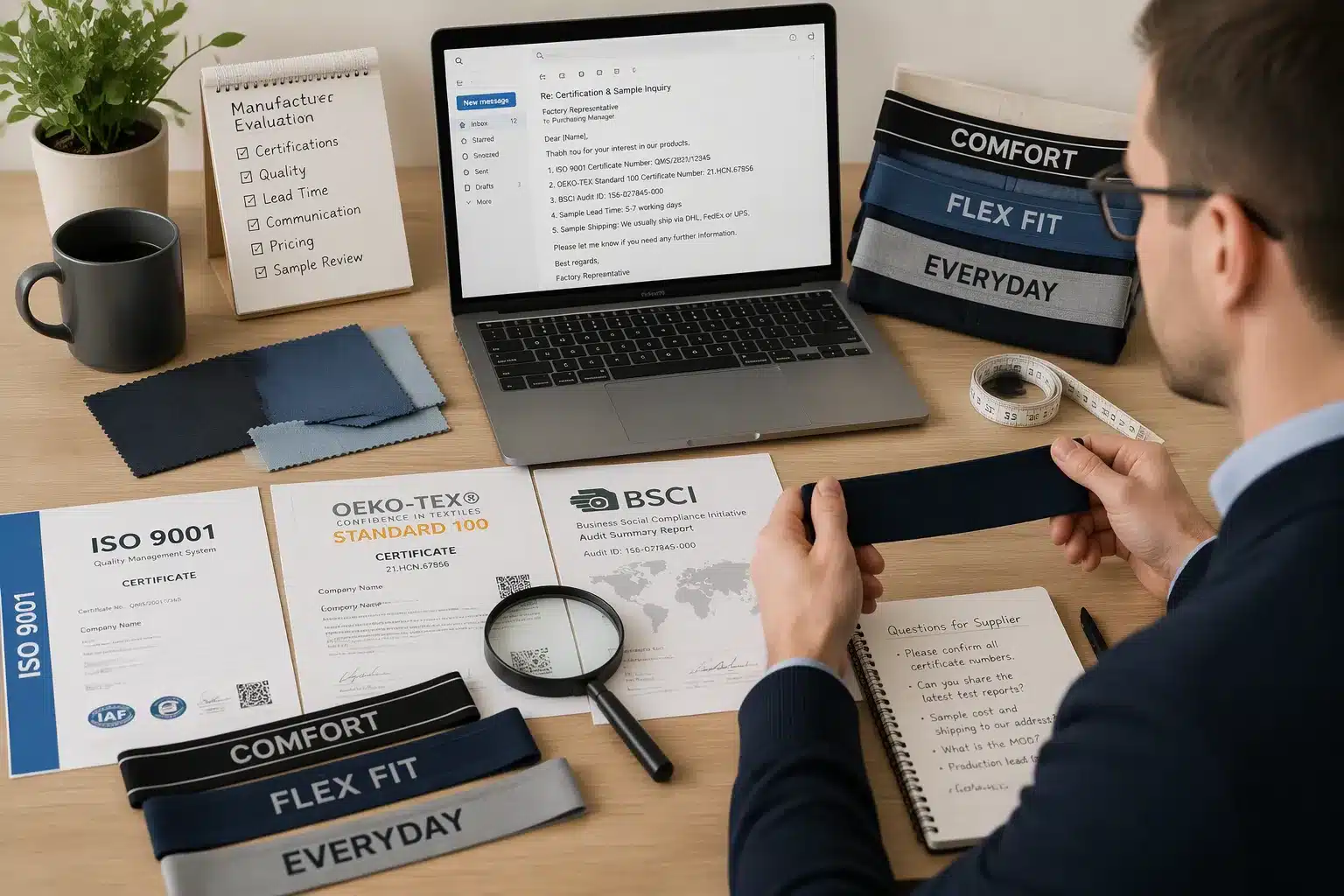
You have your shortlist. Now comes the hard part. How do you tell a great factory from a mediocre one? The answer lies in three areas: certifications, samples, and communication. Dig into each one before you commit.
Check Certifications and Compliance
ISO, OEKO-TEX, BSCI
Certifications tell you a factory meets certain standards. They are not just pieces of paper. Each one covers a different area.
Certification | What It Covers | Why It Matters |
|---|---|---|
ISO 9001 | Quality management systems | Shows consistent production processes |
OEKO-TEX Standard 100 | Harmful substance testing | Proves materials are safe for skin contact |
BSCI | Social compliance and labor practices | Confirms ethical working conditions |
Ask for copies of these certificates. Then verify them. Go to the issuing body’s website. Check the certificate number. A real factory will gladly share this information. A fake one will make excuses.
OEKO-TEX matters most for underwear. This product touches skin all day. You want proof that the elastic, fabric, and dyes are safe. Ask specifically about the waistband materials. Some factories hold OEKO-TEX for their fabric but not their elastic. That gap matters.
Local and International Regulations
Your target market sets the rules. Underwear sold in the US must meet Consumer Product Safety Commission requirements. The EU has its own textile labeling and chemical restrictions. Japan and Australia have separate standards.
Ask your potential custom waistband underwear manufacturer which markets they serve. A factory with US clients knows US rules. One focused on Europe understands REACH regulations. Match their experience to your market.
Request and Assess Samples
Physical Samples for Quality
Never trust photos alone. Request physical samples. You need to touch the fabric. You need to stretch the elastic. You need to wash the sample and see what happens.
Evaluate each sample against clear criteria. Check the stitching quality. Look for loose threads or uneven seams. Feel the fabric softness. Compare it to your reference sample. A good factory will send samples that match your specs closely.
Waistband Elasticity and Print Quality
The waistband deserves special attention. Stretch it several times. Does it snap back to its original shape? Or does it stay stretched out? Good elastic recovers well after repeated use.
Check color fastness too. Rub the waistband with a damp cloth. See if color transfers. Wash the sample and check for fading. For printed waistbands, inspect the print quality. Look for blurry edges or uneven coverage. The logo should be crisp and clear.
Test the elastic recovery after washing. A quality waistband bounces back. A cheap one sags. This single factor affects how customers judge your brand.
Assess Communication and Responsiveness
Response Times and Language Skills
How fast does the factory reply? A good partner responds within one business day. Slow replies during the sales phase often mean slow replies during production.
Language skills matter too. Can they understand your technical questions? Do they answer clearly? Some factories use translation tools. That works for simple messages. Complex discussions about elastic construction need real understanding.
Willingness to Collaborate
Pay attention to how they handle questions. Do they welcome your input? Or do they seem annoyed? A collaborative factory suggests improvements. They ask about your target customer. They want to help you succeed.
Test them with a technical question. Ask about their elastic waistband construction process. Ask how they prevent the band from twisting during sewing. A factory that knows their craft will answer with confidence. One that does not will give vague replies.
Before you move forward, confirm the separate minimums for the garment, the waistband, and the private label underwear packaging. Ask about artwork files, size ratios, sampling charges, and packing instructions. A factory that answers these clearly is worth your time. One that dodges these questions is not.
Compare Key Factors
After you evaluate, compare suppliers side by side. Check price, lead times, flexibility, and capacity before you pick a custom waistband underwear manufacturer.
MOQ and Pricing
MOQ Tiers and Impact
Minimums vary. Most factories have three or four tiers. A smaller first run costs more per unit. Increase the order size and the price drops.
The waistband often sets the minimum. Custom jacquard bands need loom setup and yarn preparation. Printed bands need ink and plate costs. Both mean higher MOQs than plain elastic. Ask about tiered pricing early.
Small details matter. Check the garment, waistband, and private label underwear packaging for separate minimums. These numbers often differ. Review the artwork approval process. Ask who approves the digital proof. Confirm size ratios, sampling charges, and packing instructions.
Comparing Quotes and Hidden Costs
A low unit price can become a costly deal because of setup fees, sampling charges, shipping, and tariffs. Ask for a breakdown that includes freight and customs.
Read what each quote includes. Some may offer a free pre-shipment inspection. Others may charge extra. Ask every supplier the same set of questions. Put the answers in one spreadsheet.
Lead Times and Capacity
Standard vs. Rush Orders
Custom waistbands are slower than standard ones. Jacquard weaves need pattern creation and loom setup. Printed bands need artwork approval. Standard elastic may ship fast from stock.
Rush orders are real, but they cost. Factories must pull workers from other jobs. They may move your order ahead. Get the extra cost first. Factor it into your decision.
Ability to Scale with Your Brand
A factory that can make 500 pieces may struggle with 5,000 pieces later. Ask about monthly capacity, production lines, and advance notice.
A good partner will honestly show their capacity limits. Unclear replies mean they have not planned for growth.
Customization Flexibility
Range of Waistband Designs
Open the factory’s catalog. Do they have many widths, colors, and edge finishes? Can they make jacquard, printed, and plain elastic? A wide range proves production skill. A narrow range means limited equipment.
Ask for a list of current waistband designs. Not to copy them, but to judge their skill. Give one or two ideas and watch their reaction.
Accommodating Unique Requests
Customization extends beyond waistband patterns. Requests could include an unusual rise height, a special edge treatment, or custom texture. Will they say “we can’t” or “let’s try”? Their attitude shows flexibility.
This also includes your private label underwear packaging. Ask if they can work with your own boxes, polybags, and labels. Ask if they can handle extra services like folding and tagging. A flexible factory helps your brand story.
Avoid Red Flags
Some factories look great on paper. Then the problems start. Learn the warning signs before you sign anything.
Poor Communication
Delayed Responses and Unclear Answers
You ask about elastic waistband construction. The factory takes four days to reply. Their answer dodges your question. That pattern rarely gets better after you pay.
Test them early. Ask how they stop the waistband from twisting during sewing. Ask about their elastic recovery testing. A real manufacturer answers with details. A bad one sends vague promises.
Reluctance to Provide References
Ask for two or three current clients. A confident factory shares them easily. A hesitant one makes excuses about confidentiality. Some factories protect client names, and that is fair. But they can still offer a general portfolio or a video tour of their line.
Unrealistic Pricing and Terms
Prices Too Good to Be True
A quote far below every other supplier should make you cautious. Custom jacquard and printed waistbands need loom setup, yarn prep, and artwork plates. Those costs are real. A rock-bottom price often means cheap elastic, thin dye, or skipped quality checks.
If one quote sits far below the rest, ask what they left out — not what they cut.
Full Payment Upfront Demands
Standard terms look like a deposit before production and the balance after inspection. A factory demanding 100% upfront takes away your leverage. If the goods arrive wrong, you have no holdback. Push for staged payments tied to milestones.
Lack of Transparency
No Certificates or Audit Reports
Ask for ISO 9001, OEKO-TEX Standard 100, or BSCI documents. Then verify each certificate number on the issuing body’s website. A factory that cannot produce these has something to hide. This matters most for waistbands, which touch skin all day.
No Verifiable Business Presence
Check that the factory has a real address, a working website, and a traceable business license. Request a virtual factory tour. Watch how they handle the camera. A genuine operation shows you the floor without hesitation.
Before you commit, validate the separate minimums for the garment, the waistband, and the packaging. Confirm artwork files, size ratios, sampling charges, and packing instructions in writing. A supplier who avoids these details is waving a red flag. One who answers clearly earns your trust.
Finalize the Partnership
You have done the hard work. Now it is time to lock in your custom waistband underwear manufacturer and start production.
Conduct a Trial Order and Sampling
Placing a Small Test Order
A trial order protects you before mass production. It lets you see real results, not just promises. Order a small batch first. You will see how the factory handles your waistband specs, timing, and private label underwear packaging.
Before you commit, check the separate minimums for the garment, the waistband, and the packaging. These three numbers often differ. Confirm artwork files, size ratios, sampling charges, and packing instructions in writing. A factory that gives clear answers earns your trust.
Approving the Final Sample
The final sample is your main reference. After you approve it, that sample becomes the standard for every piece. Check the elastic recovery, print clarity, and stitching. Wash it, stretch it, and make sure it matches what you ordered.
Approve it only when you are satisfied. Keep a copy for yourself. This sample settles any quality disputes later.
Negotiate Terms and Sign a Contract
Payment, Penalties, and Exclusivity
Normal terms mean a deposit before work starts and the balance after inspection. Ask for staged payments based on progress. Never pay all upfront.
Your contract should cover quality penalties, exclusive rights, and keeping information private. If waistbands are wrong, you need a fix. If you designed a unique band, protect it.
Quality Standards in Writing
Write every standard into the contract. Be clear about elastic recovery, color fastness, and stitch density. Vague promises won’t help when problems happen. Written standards will.
Arrange Quality Checks and Logistics
Third-Party Inspections
Hire an outside inspector to verify your order before it leaves the factory. Ask for lab tests on elastic recovery. Check the packaging as well. A good inspection finds problems early.
Shipping and Delivery Terms
Agree on delivery terms and dates. Decide who pays for shipping, customs, and taxes. Get everything in writing. Clear shipping plans prevent costly delays.
A trial order and a strong contract can turn a promising supplier into a reliable partner.
Finding the right custom waistband underwear manufacturer takes patience and care. Define your needs first. Then search B2B platforms with specific keywords. Evaluate samples, certifications, and communication carefully. Compare quotes, lead times, and flexibility. Avoid red flags like unrealistic pricing. Finally, sign a contract that protects your brand.
Always check separate minimums for the garment, the waistband, and the private label underwear packaging. Confirm artwork files, size ratios, sampling charges, and packing instructions in writing before you commit.
Start with your waistband specifications today. Reach out to partners like Hongku Underwear. With careful effort, you can build a successful, long-term partnership that grows with your brand.
FAQ
What is a custom waistband underwear manufacturer?
A factory that makes underwear with waistbands made to your specs. That includes elastic type, material blend, rise, and branding. They make products for your label, not for retail shelves. You give the design, and they handle the weaving, printing, and sewing.
How do I find one without wading through retail pages?
Skip consumer search results. Use B2B platforms like Alibaba, Made-in-China, or Global Sources. Try keywords such as “private label underwear manufacturer” or “custom waistband supplier.” Trade shows and referrals from other brand owners work well too.
What waistband details should I decide before contacting suppliers?
Pick your elastic type first. Choose jacquard, printed, or plain. Then set the fiber blend, waist rise, and logo placement. Knowing these upfront helps you filter factories fast and get accurate quotes.
Why do separate minimums matter for garment, waistband, and packaging?
Each one can have its own MOQ. A factory might require one quantity for underwear and another for custom boxes. Confirm all three numbers early. This step prevents surprise costs and delays before you commit.
Which certifications should a factory hold?
Look for ISO 9001, OEKO-TEX Standard 100, and BSCI. OEKO-TEX matters most because waistbands touch skin all day. Always verify certificate numbers on the issuing body’s website. A real factory shares them without hesitation.
How long does a custom waistband order take?
Jacquard and printed bands take longer than plain elastic. Pattern creation, loom setup, and artwork approval all add time. Ask about standard and rush options. Get the extra cost for rush orders before you decide.
What payment terms are normal?
A deposit before production and the balance after inspection is standard. Never pay everything upfront. Staged payments tied to milestones protect you. If goods arrive wrong, you still have leverage.
What should I confirm in writing before production starts?
Confirm artwork files, size ratios, sampling charges, and packing instructions. Also lock in separate minimums for the garment, waistband, and packaging. A factory that answers these clearly earns your trust. One that dodges them is a red flag.
See Also
Selecting The Best Private Label Men’s Underwear Maker For 2026
How To Pick A Modal Boxer Briefs Maker For Your Brand
What To Look For In Men’s Underwear Manufacturers During 2026