
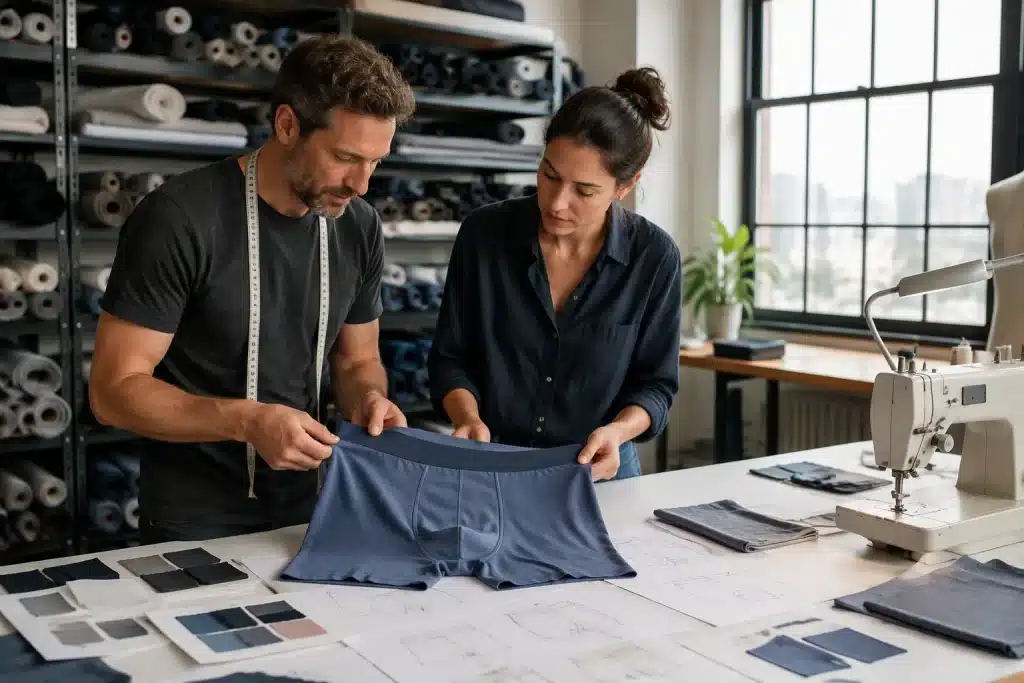
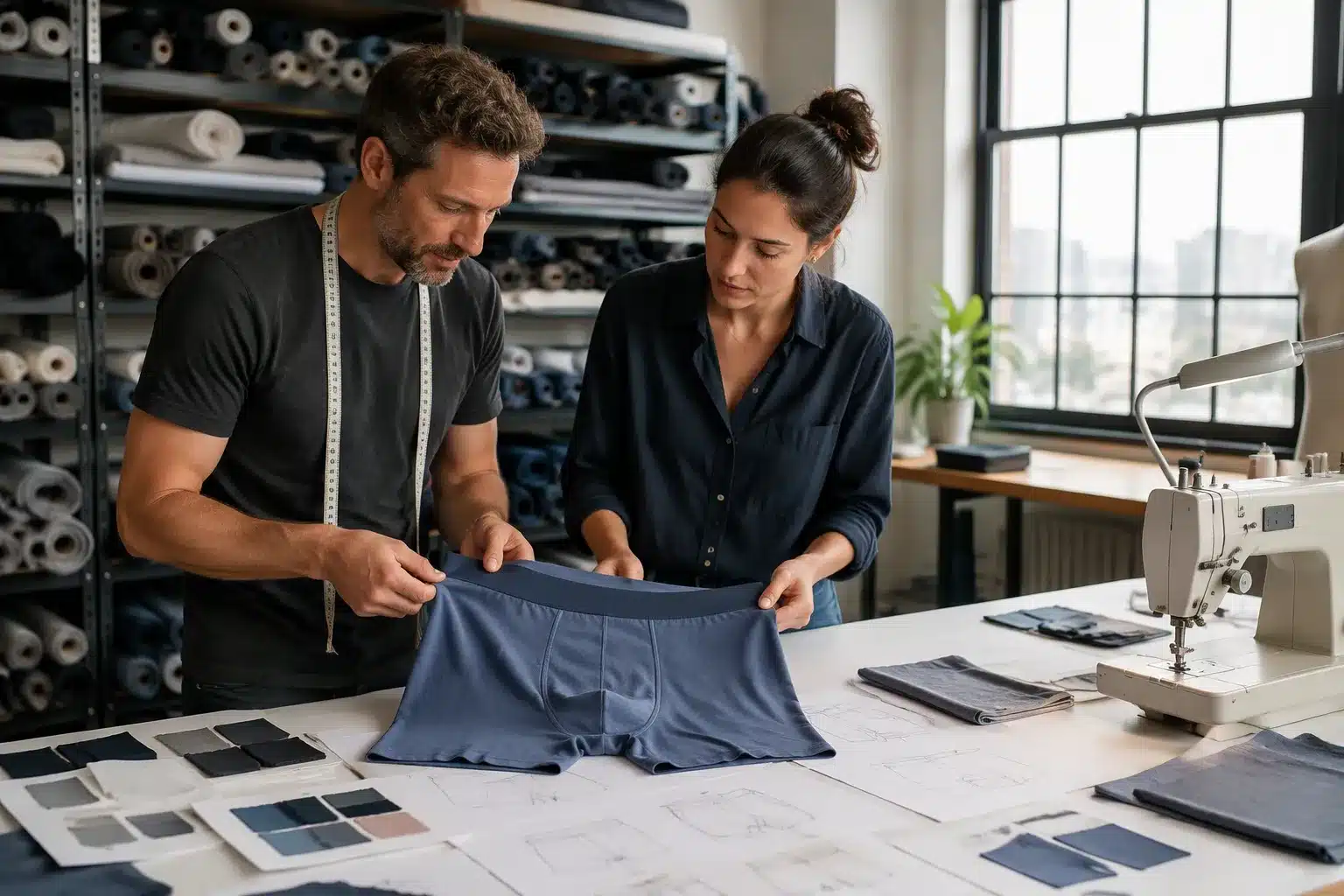
Anti-chafing boxer briefs demand more than a standard factory can deliver. You need a real anti chafing boxer briefs manufacturer, not a performance underwear OEM that treats fit as an afterthought.
So how do you confirm a manufacturer truly understands performance fabrics, seam construction, and men’s boxer briefs fit? Ask about inseam length, seam construction, and pouch support first.
This article is a practical roadmap. It covers specialization, vetting, underwear manufacturing cost factors, and the final decision. You will learn to validate anti-chafing claims and avoid expensive sourcing mistakes.
Expect honest talk about MOQ, underwear manufacturing costs, and red flags. A weak manufacturer costs you returns, reviews, and repeat buyers.
Key Takeaways
Choose a manufacturer who specializes in anti-chafing boxer briefs. They know performance fabrics and flatlock seams.
Agree on inseam length, seam construction, and pouch support before production. These three things define a comfortable fit.
Ask for wear-test evidence and certifications. Real data proves anti-chafing and moisture-wicking claims.
Understand your manufacturing costs. MOQ, customization, and payment terms affect your budget and risk.
Partner with a manufacturer who communicates well and scales with you. They help you avoid returns and build your brand.
What Defines an Anti-Chafing Boxer Briefs Manufacturer
A true anti chafing boxer briefs manufacturer and performance underwear oem does more than cut and sew. They build the product from the ground up. That means fabric selection, color matching, structure, finishing details, and packaging get attention. A general factory might handle some of these tasks. A specialist handles all of them with your brand in mind.
Performance Fabric Knowledge and Flatlock Seams
Fabric and materials choices drive comfort. The right technical fabrics balance breathability with friction reduction. Here is how common options compare:
Fabric / blend | Breathability & moisture performance | Friction-reduction role |
|---|---|---|
Nylon + spandex | Durable, quick-drying; smooth feel with stretch | Snug fit moves with the body, reducing friction |
Mesh fabrics | Superior ventilation reduces heat and moisture | Panels keep air moving, lowering moisture-related chafing |
Modal / MicroModal | Breathable, moisture-wicking, cool and dry | Exceptionally soft, reducing friction against skin |
Absorbent, breathable, temperature-regulating | Soft hand-feel and anti-bacterial properties avoid irritation | |
Cotton + elastane | Breathable cotton with stretch for shape retention | Elastane keeps the garment in place, limiting movement |
Flatlock seams matter as much. These seams lie flat against the skin. A raised seam rubs and causes chafing. Ask your manufacturer to show you seam samples. Good technical fabrics paired with flatlock construction solve most friction problems.
Inseam Length, Pouch Support, and Fit Testing
Fit is a system, not a single number. Inseam length, front construction, and pouch support work together. The boxer brief style already extends leg coverage, which helps reduce chafing. But the wrong inseam rides up or bunches.
Pouch support shapes the profile and keeps things in place. A well-designed pouch reduces movement. Less movement means less friction. Your OEM partner should test these performance requirements on bodies, not just mannequins.
Before you approve any anti-chafing or moisture-management claim, agree on inseam length, seam construction, and pouch support. Then request wear-test evidence. An underwear manufacturer with real capabilities will share this data without hesitation. They may also suggest antimicrobial blends for odor control. That step shows they understand the category.
How to Evaluate a Performance Underwear OEM
Request Wear-Test Evidence and Certifications
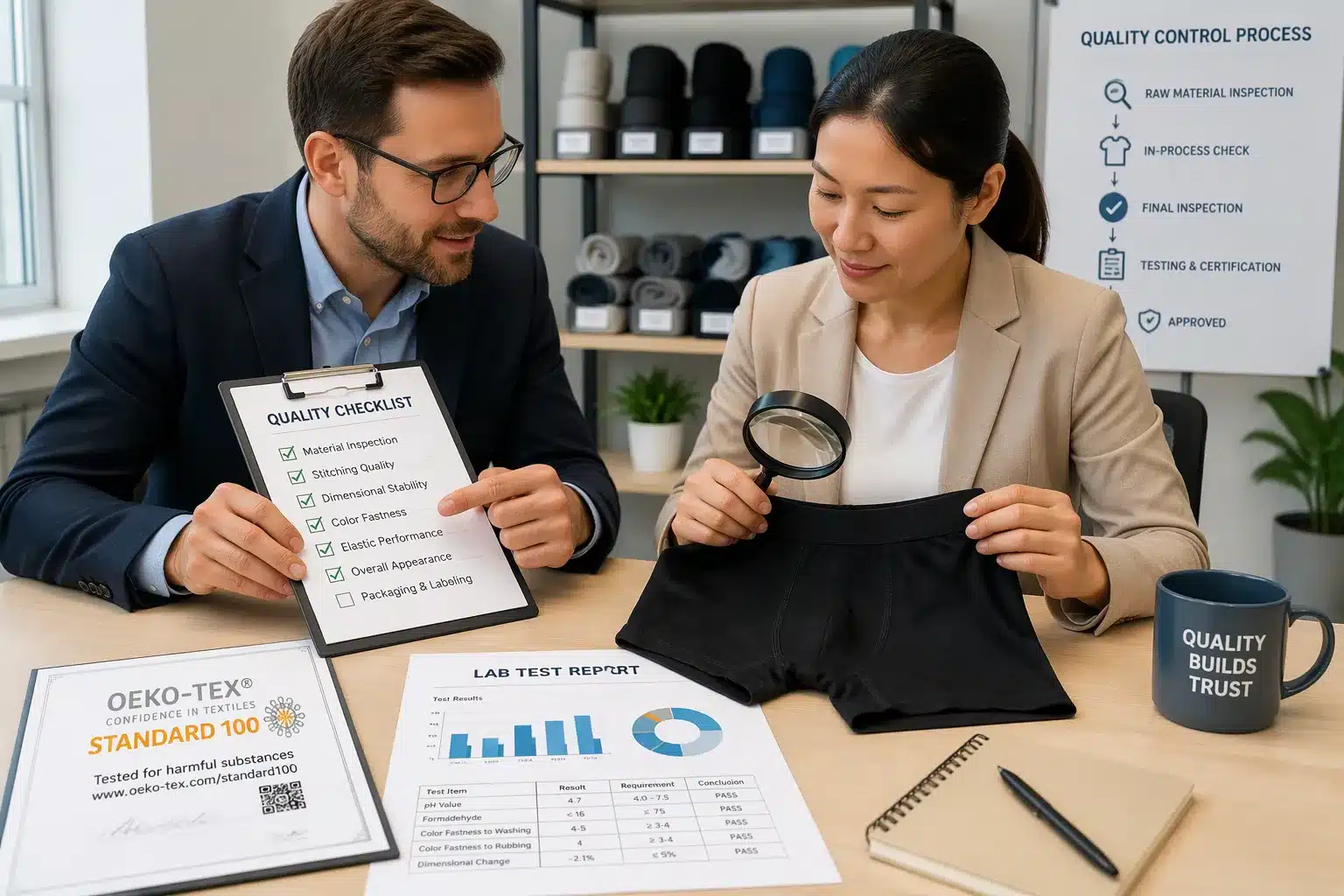
You cannot accept anti-chafing or moisture-wicking claims on faith. Ask for wear-test evidence first. A serious manufacturer will document how the fabric performs on real bodies over time. They will also validate inseam length, seam construction, and pouch support before you approve anything.
Compliance and certifications separate real specialists from pretenders. Request these documents and verify them:
Certification | What it verifies | Why your OEM should provide it |
|---|---|---|
OEKO-TEX Standard 100 | Screens for hazardous substances in skin-contact textiles | Directly verifies fabric safety for underwear |
GOTS | Covers organic textile standards and bans PFAS | Verifies safe, environmentally sound production |
Bluesign | Responsible chemical use and PFAS bans | Verifies chemical management |
WRAP | Ethical manufacturing standards | Verifies ethical factory conditions |
Fair Labor Association | Fair labor and ethical trade practices | Verifies ethical manufacturing |
A manufacturer evaluation framework without these documents is incomplete. Ask for third-party lab reports too. Colorfastness testing follows AATCC 61-2020. Seam strength should exceed 15 lbs of force. Fabric pilling resistance should rate 4+ on the ASTM D3512 scale. Stitch-per-inch density needs a minimum of 12 for lace. Gusset construction integrity and trim durability must survive wash testing.
Check Logistics, Communication, and Client Proof
Your manufacturer evaluation should cover more than product specs. Review sourcing practices and quality control processes. Ask about in-line inspections during cutting and sewing. Final random inspection rates matter too. AQL Level II is common. Request testing reports for fabric composition, pilling resistance, and colorfastness. Ask for samples so you can judge stitch quality and fabric hand feel yourself.
Quality assurance benchmarks include shrinkage under 3% after repeated washes and elasticity retention over time. Third-party lab results should show minimal shrinkage and robust seam strength. ISO 9001 certification signals a solid quality management system. Test samples should withstand at least 50 wash cycles without notable deformation.
Now look at the business side. Where is the factory located? How do they handle shipping and customs? What is their communication workflow? Do they respond within a day or disappear for a week? Ask for their portfolio and client testimonials. A manufacturer with real capabilities will share references without hesitation.
MOQ matters here. A low MOQ sounds great. But a low MOQ with poor communication costs you more. Ask about MOQ, MOQ flexibility, MOQ per color, MOQ for private label, and MOQ for custom packaging. Each MOQ tier affects your upfront investment. A good partner explains these clearly.
Key Factors Affecting Underwear Manufacturing Costs
Money talks. Several key factors affecting underwear manufacturing costs deserve your attention before you sign anything. The biggest one? MOQ. A low MOQ keeps your upfront risk small. A high MOQ lowers your per-unit price. You must balance both against your budget.
MOQ, Pricing, and Payment Terms
MOQ drives everything. Ask every oem underwear manufacturer for their minimum order quantity per style, per color, and per size. A low MOQ manufacturing partner might start at 50 pieces per style. That number comes from real industry guidance for new brands. Pricing structures vary too. Some factories quote per piece. Others bundle fabric, labor, and trims into one rate. Payment terms usually split into a deposit and a balance. Ask for the exact split before you commit. Get every quote in writing.
Customization changes your underwear manufacturing cost fast. Embroidery costs more than printing. Tagless labels cost more than woven ones. Each choice adds up. Ask for a full cost breakdown before you commit.
Customization, Private Label, and Production Scalability
Private label and custom oem/odm services open real doors. Here is what most factories offer:
Customization Area | Options Offered |
|---|---|
Private labeling | Woven labels, printed labels, tagless labels |
Packaging | Custom poly bags, custom boxes, eco-friendly packaging with branding |
Logo application | Embroidery or printing for logos/designs |
Prototyping follows a clear path. A proto sample validates construction. A fit sample checks measurements against your size chart. A revised sample fixes problems. A pre-production sample uses bulk fabric with final trims. Written approval then unlocks bulk production. Production never starts against a proto or fit sample.
Launching a clothing brand? Start from about 50 pieces per style with no tech pack, an NDA before you share designs, and a sample approved before bulk.
Full custom oem/odm and oem/odm solutions scale with you. Full-package production covers fabric, cut-and-sew capabilities, and packaging under one roof. Before you scale, validate inseam length, seam construction, and pouch support. Request wear-test evidence before trusting any anti-chafing or moisture-management claim.
Red Flags and the Final Decision Checklist
Not every factory that calls itself a performance underwear specialist deserves your order. Some have limited experience with technical fabrics. Others hide behind vague claims and weak processes. Spotting these problems early saves you from a bad batch, chargebacks, and unhappy customers.
Quality Control Gaps and Vague Performance Claims
Vague language is the first red flag. Some suppliers say “we make quality products” yet cannot name a test standard or show a result. Walk away. A credible factory talks in specifics: fabric composition, shrinkage limits, seam strength values. Even better, they share third-party lab reports that back those numbers. They might even offer a performance comparison against a standard cotton brief.
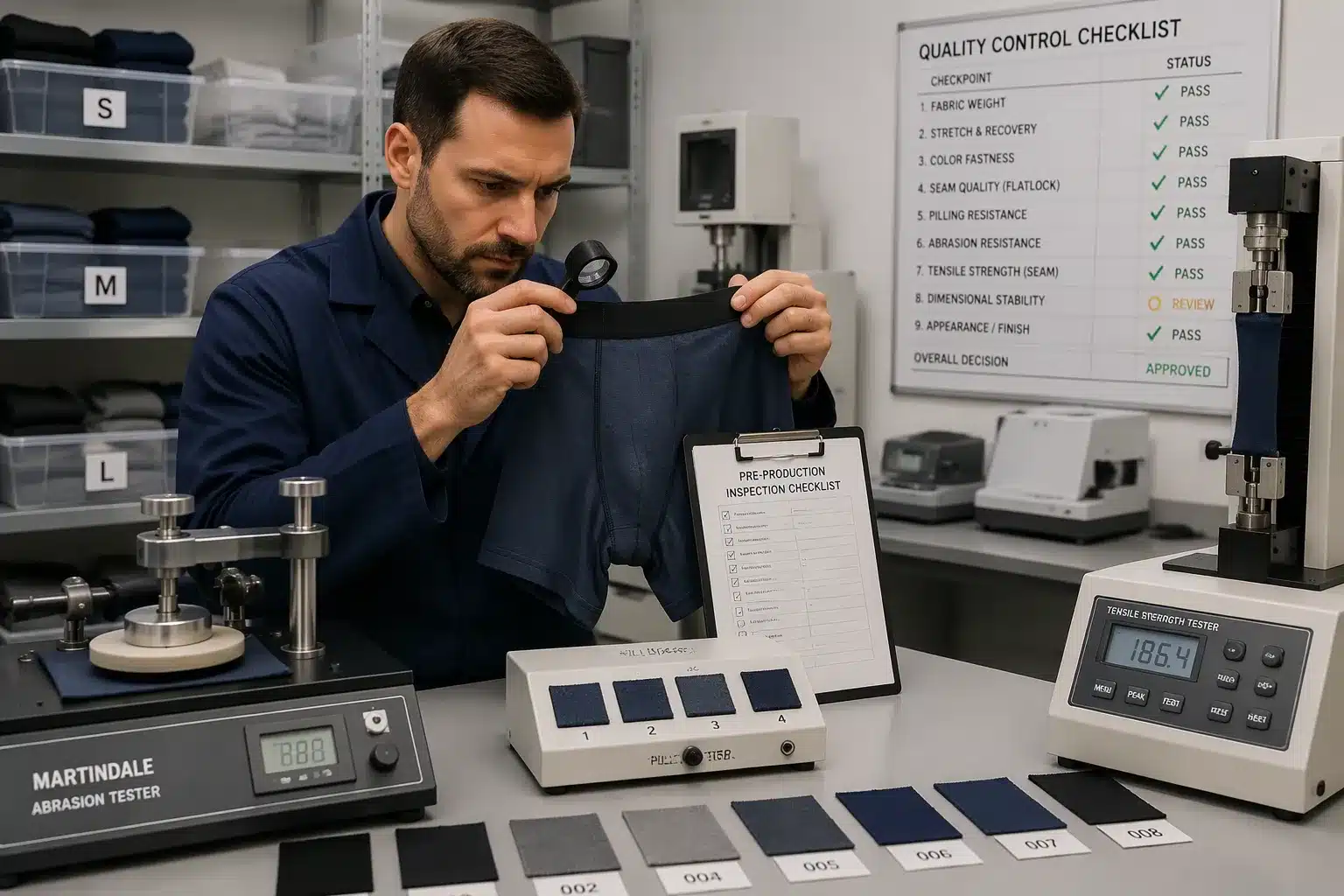
Look at how a factory tests seams, pilling, and stitching before you trust a single anti-chafing promise. The gaps in their process show up quickly.
Quality Concern | Specific QC Test / Inspection |
|---|---|
Seam abrasion / wear | Abrasion tests simulating daily wear and tear; workmanship inspection of seams |
Fabric pilling | ASTM D3512 pilling resistance test; ISO 6330 domestic washing/drying procedure |
Stitching failure | Tensile seam strength testing; inspection of reinforced stitching |
A factory that skips these tests cannot back up an anti-chafing claim. Flatlock seams need abrasion testing to prove they won’t rub during a long run. Knit panels need pilling checks after laundering. Stitching needs strength checks under repeated stress and washing. Refusal to share test data settles the question. Treat it as the final answer. Ask for their sampling plan too. AQL Level II is common for apparel. That plan tells you how many pieces they inspect and when they reject a lot.
No test data, no purchase order. That rule filters out most pretenders in one conversation.
Some suppliers promise moisture-wicking without any lab result to support it. Others quote a low MOQ to win your business, then miss every deadline. A low MOQ only helps if quality control holds up at that volume. Ask exactly how they inspect seams, check fabric hand feel, and evaluate finished garments before they ship.
Choose a Partner, Not Just an OEM
Before you approve anything, agree on inseam length, seam construction, and pouch support. These three choices define the fit. Settle them before you move to color approvals or packaging. Then request wear-test evidence before you accept any anti-chafing or moisture-management claim. A good performance oem shares this data without resistance.
A reliable underwear manufacturer does more than fill orders. It flags problems in your design. It suggests better fabrics for your price point. It tests samples against recognized standards. It treats your brand like its own.
More red flags: limited performance underwear experience, refusal to share client references, and slow communication. A factory that cannot name its clients or show a portfolio deserves a hard question. Slow responses during sourcing mean slow responses during production. The oem you choose should answer technical questions about seam construction and pouch support without checking with a supervisor.
View the manufacturer as a long-term partner. The right one scales with you. It offers clear MOQ tiers, honest pricing, and realistic timelines. Check those terms early, then recheck them as your volume grows. A rigid minimum with no flexibility can strangle a growing brand.
Pick a partner that practices strict quality control. Ask for quality assurance documents. Require wear-test proof before you sign off. That combination protects your reputation and cuts returns. A true anti chafing boxer briefs manufacturer partner beats a cheap supplier every time.
Choosing the right anti chafing boxer briefs manufacturer, or performance underwear oem, protects your brand and cuts costly returns. Before you sign, agree on three things: inseam length, seam construction, and pouch support. These choices define fit, and fit drives comfort.
Never trust moisture-wicking or anti-chafing claims without wear-test evidence. Ask for the data first.
Watch underwear manufacturing costs, moq tiers, and payment terms as you grow. A good manufacturer flags design problems and scales with you. Treat that manufacturer as a partner, not a supplier. That mindset lowers underwear manufacturing costs over time and keeps your moq flexible.
FAQ
What should I agree on with a manufacturer before production starts?
Lock down three things first: inseam length, seam construction, and pouch support. These define how the boxer brief fits and fights friction. Settle them before color approvals or packaging talks. Any serious manufacturer will walk you through each one and show samples.
How do I verify anti-chafing and moisture-wicking claims?
Ask for wear-test evidence. Real data beats marketing talk every time. Request third-party lab reports on seam strength, pilling, and shrinkage too. If a factory won’t share test results, that silence tells you plenty. No proof, no purchase order.
What moq should a new brand expect?
Most factories set a moq per style, per color, and per size. A low moq might start around 50 pieces per style, which suits new brands testing the market. Ask about moq flexibility, moq for private label, and moq for custom packaging. Each tier changes your upfront risk.
Does customization raise my underwear manufacturing cost?
Yes, every choice adds up. Embroidery costs more than printing. Tagless labels cost more than woven ones. Custom oem/odm services bundle fabric, labor, and trims into one quote. Ask for a full cost breakdown. Full custom oem/odm gives you more control, but expect higher minimums and longer timelines.
What separates a real partner from a basic oem?
A real partner flags design problems, suggests better fabrics, and tests samples against recognized standards. A basic oem just fills orders. Look for clear communication, client references, and honest moq tiers. Choose full custom oem/odm support that scales as your brand grows. That partnership protects your reputation and cuts returns.
See Also
How Your Brand Can Select A Modal Boxer Brief Manufacturer
Producing Small Batch Boxer Briefs With Low Minimum Order Quantities
Selecting A Private Label Men’s Underwear Maker For 2026
What To Prioritize When Choosing Men’s Underwear Factories In 2026