
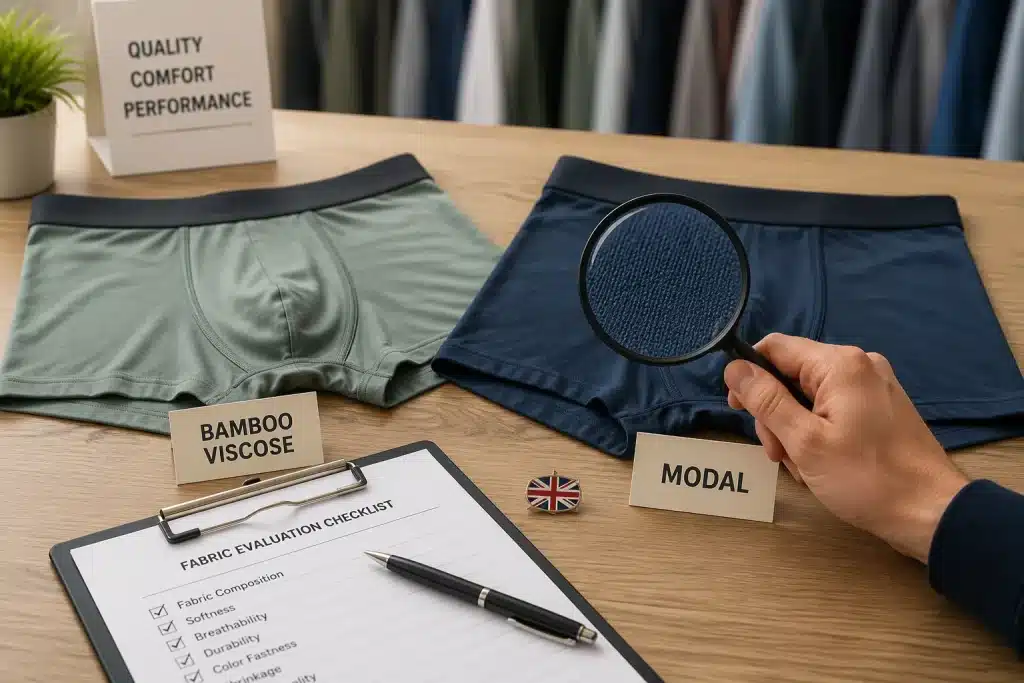
UK retail buyers should check several things before choosing bamboo viscose or modal boxers: verified fibre provenance, relevant eco-certifications, fabric performance, and supplier commercial terms. That’s the short answer.
This guide compares the two fibres on evidence, not marketing claims. Bamboo viscose and modal both come from cellulose, yet they behave differently in men’s underwear. A sustainable label means little without product-specific proof. Buyers who source bamboo boxers wholesale UK or modal underwear wholesale should demand that proof before signing anything.
Key Takeaways
UK retail buyers should verify fibre provenance for each boxer fabric before ordering.
Buyers need to match every certificate to the exact product batch.
Wash-test fabric samples at least five times before judging quality.
Compare MOQs, pricing, lead times across several suppliers.
Demand product-specific proof for every sustainability claim.
Bamboo Viscose and Modal Underwear Explained
Both fabrics share one starting point: cellulose. The source plants differ, though, and that alters how each yarn behaves in men’s boxers. The fibre choice shapes not just comfort, but also the garment’s lifecycle. Retail buyers should understand the distinction before comparing samples.
What Bamboo Viscose Is
Bamboo viscose is, in essence, regenerated bamboo cellulose. Manufacturers dissolve bamboo pulp and spin it into yarn. That makes it a manufactured regenerated cellulose fibre. If a buyer asks what is viscose more broadly, the answer is the same chemistry, often labelled viscose rayon. The bamboo considered natural or synthetic question keeps appearing in buyer briefs. The accurate reply: the plant is natural, but heavy chemical processing leaves the yarn semi-synthetic.
The characteristics of viscose explain its appeal in bamboo fabrics. A viscose fabric drapes well, feels smooth against the skin and breathes easily — all useful traits for men’s underwear fabrics. Yet a viscose fabric’s handle doesn’t reveal wash performance. That depends on pulp quality and spinning controls. Buyers who ask what is viscose worth as a boxer fabric should therefore inspect the mill’s process, not just the label.
What Modal Is
Modal is regenerated beech wood cellulose. Makers pulp the wood, purify the cellulose and spin a tougher yarn than typical viscose. This is why buyers often group modal and lyocell together as second-generation cellulosic fibre options. If someone compares modal and microfibre, keep the categories separate: microfibre is synthetic polyester, while modal is plant-based.
This difference matters for fit and longevity. Underwear buyers should check both fibres carefully before committing. Modal resists pilling and keeps its shape through repeat washes, whereas bamboo viscose softens quickly. Neither fibre wins outright. Some technical datasheets use the American spelling “regenerated cellulosic fibre”, and the cellulose fibre origin drives shrinkage and moisture-wicking. The practical buyer check comes down to certified test data rather than the name printed on the pack.
Eco-claims attached to either fibre need product-specific evidence before buyers treat them as fact.
Why Fibre Choice Matters for Boxers
Feel and Performance
Bamboo viscose feels incredibly soft against the skin. That softness comes from the viscose fibre structure, which drapes smoothly and breathes well. Men’s underwear made from this viscose fabric suits warm climates and everyday wear. Yet viscose fibres lose some strength when wet. A viscose yarn also pills faster after repeated washing. Buyers who prioritise immediate comfort often love what viscose delivers.
Modal behaves differently. It keeps a smooth handle but holds shape better over time. The fibre resists shrinkage and pilling far more effectively than standard viscose. That durability matters for underwear that faces daily washing. A modal boxer might cost more upfront. It often lasts longer, though, which changes the true cost per wear.
What UK Buyers Should Note
UK buyers should test both fabrics against real performance data. Ask suppliers for wash-test results, shrinkage figures and pilling scores. A sustainable claim means nothing without product-specific proof. Request certificates that tie directly to the exact viscose batch or modal batch being offered.
Fibre choice also affects fit consistency. Viscose can stretch out of shape after a few cycles. Modal tends to recover its original dimensions. Buyers serving the UK market should compare samples side by side. They should wash those samples multiple times before judging quality. That simple step reveals more than any marketing brochure. Cellulose origin alone doesn’t predict performance. Processing controls and fibre blending do. So buyers must verify every claim with evidence, not assume the fibre name guarantees results.
Always request product-specific test data before accepting any environmental or performance claim.
Sustainable Fabric Certifications to Verify
Essential Certifications
Buyers can’t treat a logo as proof. They need to match every certificate to the actual product. Here are the checks that matter most:
OEKO-TEX Standard 100 tests each component, from the main viscose fabric to elastics and trims, against safety limits.
A valid OEKO-TEX certificate lists the product class, certificate number, holder, issuing institute and validity period. Buyers should confirm the number through the official OEKO-TEX Label Check.
The certificate covers only the named articles. Every material must appear on that article list.
Certified Lenzing Modal gives a reliable marker of genuine modal fibre.
Suppliers without test reports or certificates offer no verifiable proof of composition, weight or durability. That gap matters for any sustainable fabric claim. A buyer who accepts a vague eco-friendly promise risks greenwashing. So request documentation that ties directly to the batch on offer.
Viscose Processing Concerns
The viscose process raises real environmental questions. Turning cellulose into viscose rayon involves chemical steps that can release emissions if a mill runs poorly. Buyers should ask how the factory manages solvent recovery and waste treatment. A sustainable fibre claim means little without that detail.
Some suppliers lean on the plant origin alone. They say bamboo or beech wood makes the garment sustainable. That logic skips the chemistry. A buyer who asks what is viscose will learn the yarn is regenerated cellulose, not a raw plant fibre. The cellulose fibre source matters, yet processing controls decide the footprint.
Vague green claims deserve scrutiny. Terms like “natural” or “eco” carry no fixed meaning on a label. Buyers serving the uk market should demand product-specific evidence for every environmental statement. Ask for the mill’s audit reports and chemical management records. Check whether the viscose fabric supplier holds current certification for the exact article. A sustainable fabric earns that label through proof, not packaging. Without verified data, the claim stays unproven.
Product Quality: Breathability and Durability
Softness Versus Wash Durability
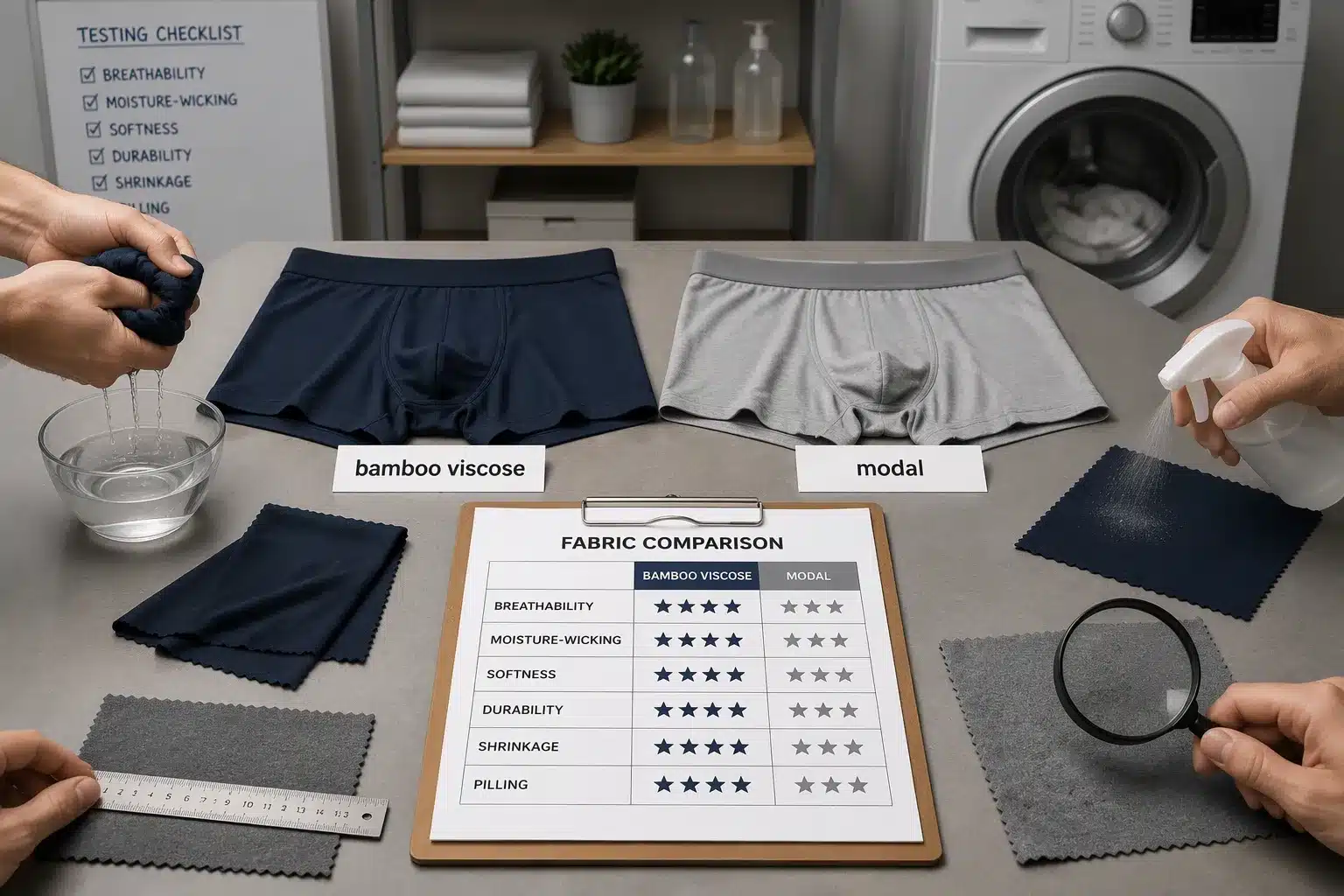
Softness sells boxers. Durability keeps customers coming back. A buyer who tests only the first touch misses half the story.
Bamboo viscose wins the opening round. The viscose fibre structure drapes smoothly and feels silky against skin. Shoppers notice that instantly on a hanger. Yet viscose loses strength when wet. Wash after wash, the fabric thins and stretches. That softness fades faster than buyers expect.
Modal plays a longer game. It feels smooth too, but the fibre holds its shape through repeated cycles. A modal boxer often costs more upfront. It survives more washes, so the cost per wear drops.
Fibre composition drives this gap. Viscose rayon spins from shorter cellulose chains. Those chains break down under heat and agitation. Modal’s longer, stronger chains resist that stress. So a buyer should wash samples repeatedly before judging quality. Compare the handle before and after. That simple test reveals more than any brochure.
Pilling, Shrinkage and Moisture-Wicking
Pilling tells a similar story. Viscose pills faster because loose fibres migrate to the surface. Modal resists pilling far better. Shrinkage follows the same pattern. Viscose can stretch out of shape, while modal tends to recover its original dimensions.
Moisture-wicking matters for men’s underwear fabrics. Both fibres absorb moisture well. Neither wicks as fast as synthetic options. For everyday wear, that’s fine. For gym use, buyers should check test data.
Property | Bamboo Viscose | Modal |
|---|---|---|
Breathability | High | High |
Moisture-wicking | Moderate | Moderate |
Softness | Very soft initially | Soft, consistent |
Durability | Lower when wet | Higher |
Shrinkage | Can stretch out | Recovers shape |
Pilling | Pills faster | Resists pilling |
The table shows no clear winner. Each fibre trades one strength for another. Buyers serving the uk market should match the fibre to the end use. A lounge boxer suits viscose fabric. A daily-wear boxer suits modal.
Here’s the catch. A sustainable claim means nothing without product-specific proof. Buyers should request wash-test results, shrinkage figures and pilling scores for the exact batch. Ask for certificates that tie to the viscose batch on offer. Without that evidence, the claim stays unproven.
Cellulose origin alone doesn’t predict performance. Processing controls and fibre blending do. So validate every softness claim against wash durability and composition. Test the samples. Check the data. Then decide.
A soft hand-feel means little if the boxer fails after repeated washes.
Bamboo Boxers Wholesale UK and Modal Underwear Wholesale Checks
MOQs, Pricing, Samples and Lead Times
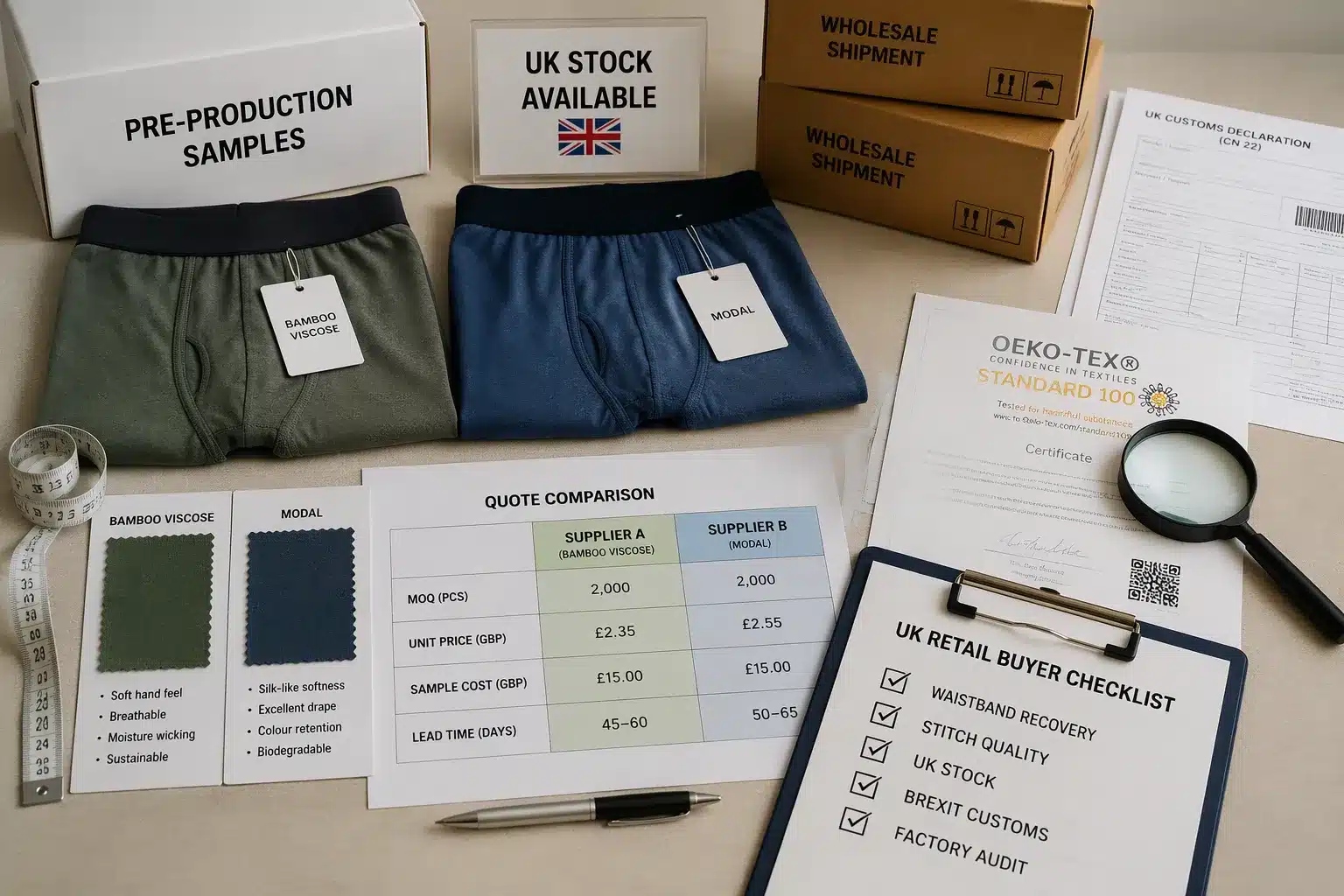
Supplier-specific comparisons need targeted searches. A buyer can’t just Google “bamboo boxers wholesale uk” and expect useful results. Sourcing platforms help. So do private-label and OEM manufacturers. These channels let buyers collect quotes side by side and compare them properly.
Minimum order quantities vary wildly between suppliers. Some factories ask for a few hundred pieces per colourway. Others demand thousands. Buyers should ask early, because MOQs shape the whole costing model. A low MOQ suits a test launch. A high MOQ lowers unit price but ties up capital.
Pricing follows the same logic. Modal costs more than viscose at the yarn stage. That gap shows up in the quote. Buyers comparing modal underwear wholesale against viscose options should break down the price per unit, not just the headline figure. Ask what’s included: fabric, trims, packaging, labelling.
Samples matter more than spreadsheets. A buyer should order pre-production samples from multiple suppliers. Wash them. Wear them. Check the waistband recovery and stitch quality. Lead times deserve the same scrutiny. Ask for a realistic production window, not a best-case promise. Add buffer for shipping delays.
UK Stock, Brexit Customs and Factory Audits
Brexit changed the maths for UK buyers. Goods arriving from the EU now face customs declarations, import VAT and possible duty. A supplier holding stock in the UK avoids those headaches. But UK stock usually costs more upfront. Buyers should weigh that premium against faster delivery and simpler logistics.
Factory audits separate serious suppliers from middlemen. Buyers should request documentation that ties to the exact product on offer. Here’s what to check:
Certification / Standard | What It Verifies | How UK Buyers Should Verify |
|---|---|---|
OEKO-TEX STANDARD 100 | Proves product safety (harmful substance testing) | Request the certificate and confirm the certificate number via official label checks |
GOTS | Proves organic fibre claims | Verify the GOTS certificate number through official label checks |
Lenzing Modal certification | Confirms authentic Lenzing Modal fibre content | Ask for Lenzing certification documentation from the supplier |
Fabric specification audit | Fiber percentages, GSM, stretch recovery, wash tests | Request full fabric specs and independent wash test results before comparing suppliers |
Factory equipment & capacity audit | Knitting machines, monthly output, quality control standards | Ask about equipment lists, output capacity, and QC procedures to ensure scalability |
Trial order verification | Stitch quality, waistband recovery, delivery timing | Place a trial order and inspect samples before scaling |
Communication reliability decides whether a partnership survives. A supplier who answers emails slowly before the order will vanish after it. Buyers should test responsiveness during the sampling stage. Ask follow-up questions. See how long replies take.
Every sustainability claim needs product-specific proof. A certificate covering a different article proves nothing. Buyers should match each document to the exact batch. That discipline protects the brand and the customer.
A supplier who dodges audit questions before the order will dodge them after it too.
So, what should UK retail buyers do next? Run this checklist before placing any order:
Confirm fibre provenance for viscose and modal.
Match every certificate to the exact batch.
Wash-test samples repeatedly.
Compare MOQs, pricing and lead times.
Audit the factory, not the brochure.
Fibre popularity won’t save a bad supplier. Verified evidence will. A sustainable claim needs product-specific proof, every single time.
Buyers who check viscose, cellulose sourcing and men’s underwear test data sleep better at night. That’s the real sustainability win.
FAQ
Which fibre suits men’s underwear better?
Neither wins outright. Modal holds shape and resists pilling through repeat washes. Viscose feels softer at first but weakens when wet. Buyers should match the fibre to the end use, then confirm performance with wash-test data for that exact batch.
Do bamboo viscose boxers deserve a sustainable label?
Only with proof. The viscose process uses chemicals, so buyers should ask about solvent recovery and waste treatment. A plant name alone proves nothing. Request audit reports and certificates tied to the exact article before accepting any environmental claim.
What is viscose, in plain terms?
It’s regenerated cellulose. Makers dissolve wood or bamboo pulp and spin it into yarn. That makes viscose semi-synthetic, not a raw plant fibre. This matters for men’s underwear because processing controls, not the plant source, decide how the fabric performs.
How many washes should a buyer test?
Wash samples repeatedly before judging quality. Check the handle, shrinkage and pilling after each cycle. Compare viscose against modal side by side. This simple step reveals more about men’s underwear durability than any brochure or sales pitch.
What should UK buyers check before ordering?
Confirm fibre provenance, match certificates to the exact batch, and audit the factory. Compare MOQs, pricing and lead times across suppliers. UK stock avoids customs hassle, but costs more. Test communication during sampling. A slow reply now predicts a slow reply later.
See Also
Selecting A Modal Boxer Brief Manufacturer For Your Brand
Find Boxer Shorts Manufacturers With Low MOQ Today
Private Label Men’s Underwear Sourcing Made Simple In The UK
A Complete UK Buyer’s Guide To Wholesale Men’s Underwear
Key Qualities To Seek In Men’s Underwear Manufacturers For 2026