
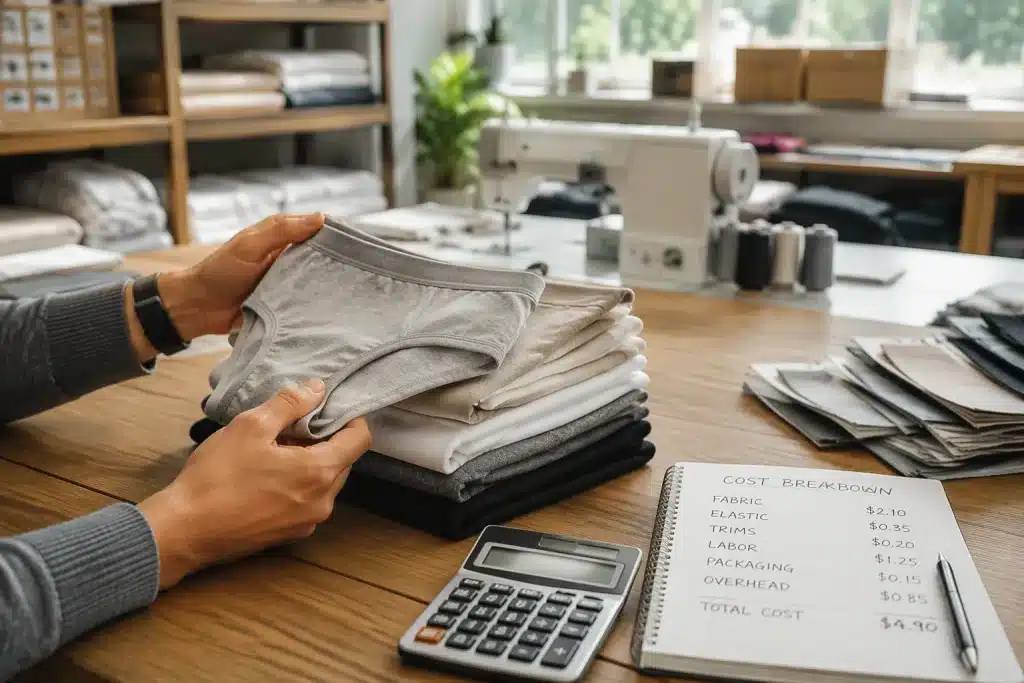
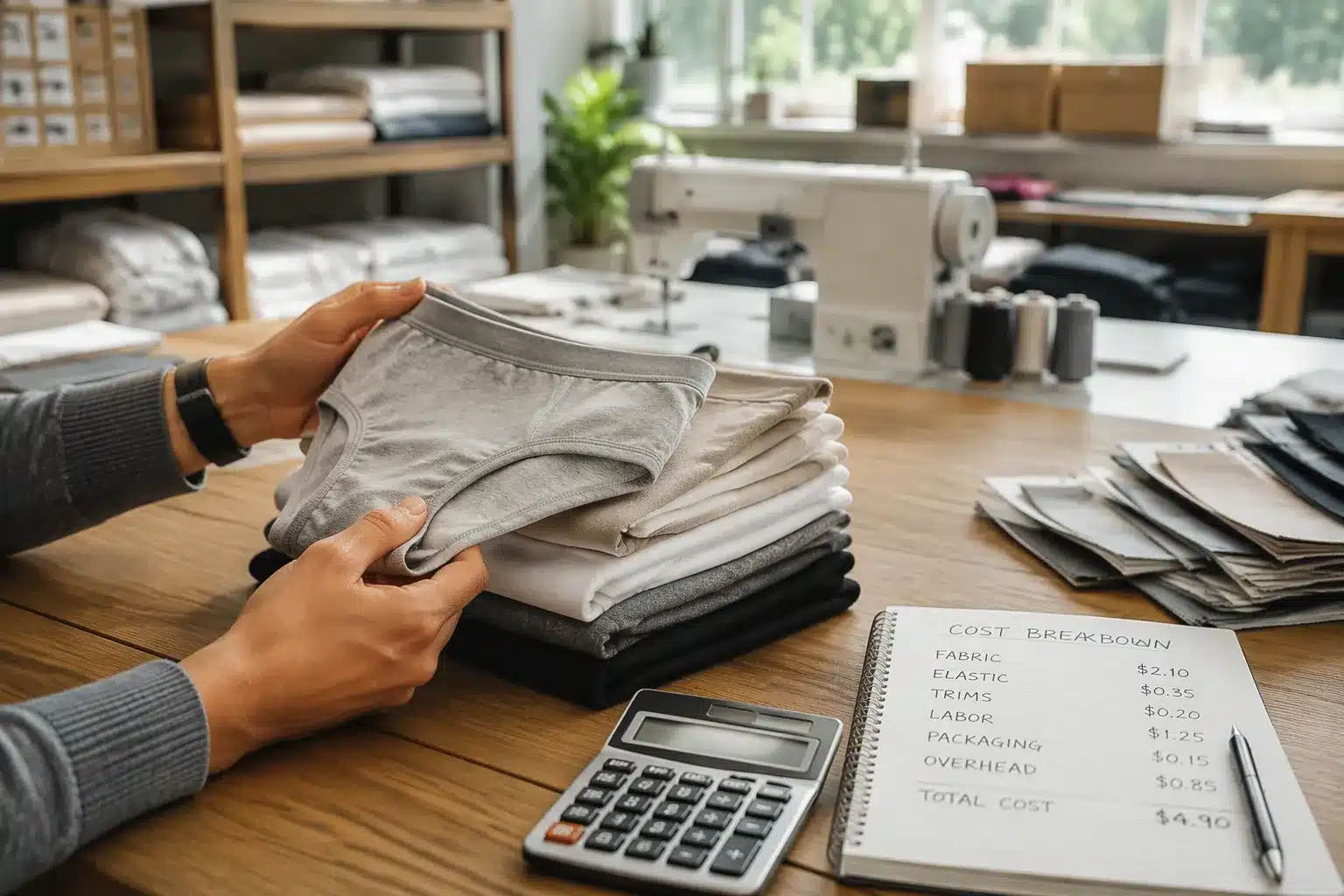
So how much does it cost to manufacture underwear? Most pairs run roughly $2 to $10 to make. Basic briefs at high volume sit near the bottom. Complex styles in small batches land near the top.
Five things drive that number: fabric, labor, design complexity, order quantity, and manufacturing location. Change any one and your quote moves. You’ll find per-unit cost ranges for each piece of the puzzle here, plus a simple method for turning a factory quote into a real landed cost. That way you compare production options on equal footing, not on sticker price alone.
Key Takeaways
Most underwear costs $2 to $10 per pair to make.
Simple designs at high volume cost less per pair.
Complex styles at low volume cost more per pair.
You pay some costs once, like patterns and samples.
You pay other costs for every pair, like fabric and labor.
Landed cost includes freight, duties, and inspection.
Compare landed cost, not just the factory price.
Ordering more pieces lowers the cost per pair.
Quick Answer: How Much Does It Cost to Manufacture Underwear?
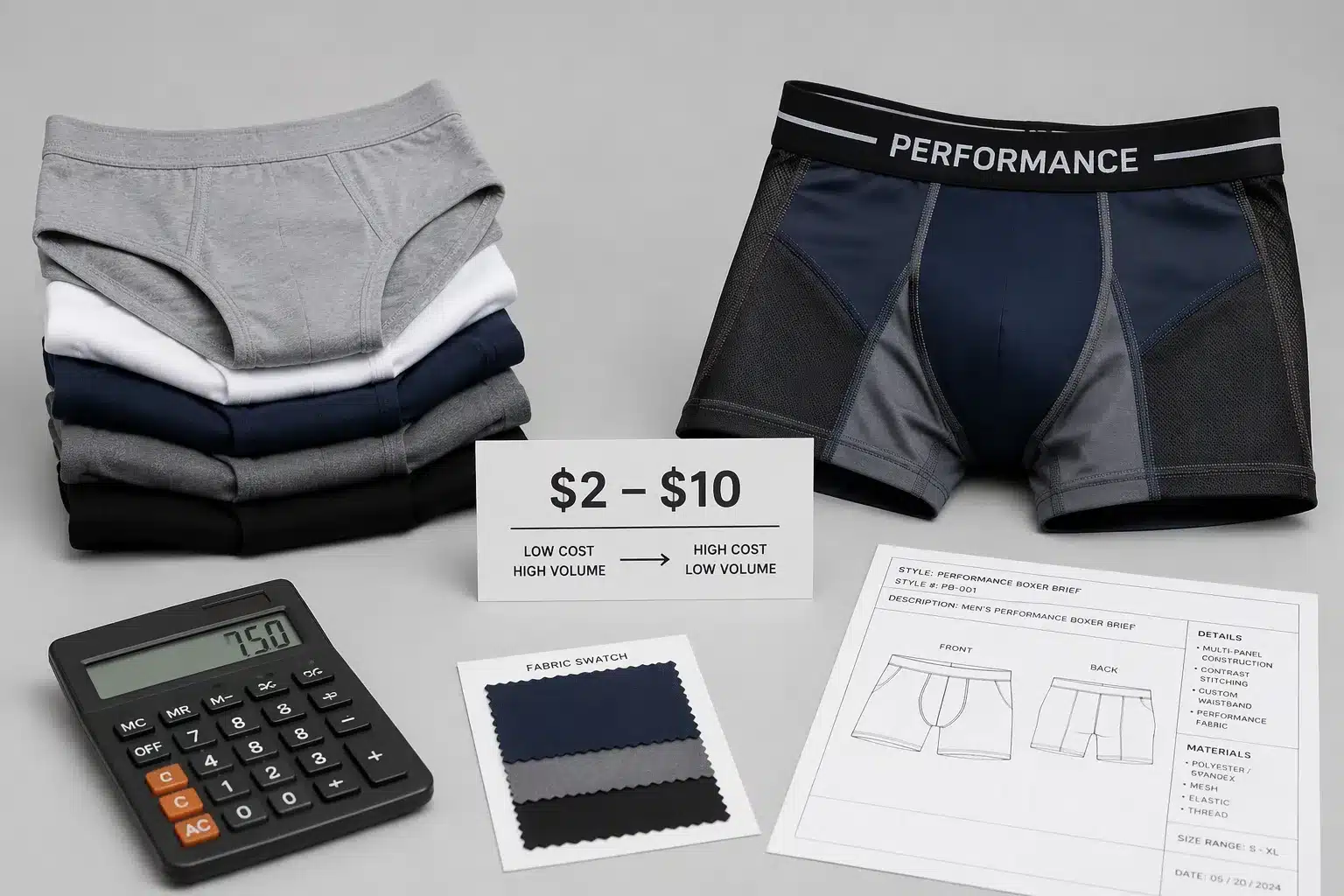
Short answer: most pairs land between $2 and $10 to make. That range covers the whole spectrum, from a plain brief rolling off a high-volume line to a multi-panel style built in a small batch. Your number depends on where your design sits inside that window.
The $2–$10 Per-Pair Range
Think of the range as a dial, not a fixed price. Two levers turn it: how simple the style is, and how many pieces you order.
Low End: Basic Briefs at Volume
A basic brief or boxer brief with a standard fabric and a simple waistband sits near the bottom. High order quantities push it lower still. The factory spreads setup work across thousands of units, so each pair carries very little overhead. Long production runs also let the factory buy fabric in bulk and cut more layers at once.
High End: Complex Styles at Low Volume
A complex style at low volume sits near the top. Think multiple panels, a custom waistband, special stitching, or a print. Small batches carry more setup cost per pair. Every pattern change, color switch, and trim addition adds a step to the line. A first order of 300 pieces of men’s boxer briefs will always price higher per pair than the same style at 3,000 pieces.
One-Time vs. Recurring Costs
Here’s where a lot of first-time buyers get surprised. The factory quote usually mixes two very different kinds of money. Keep them apart and the math gets much clearer.
What You Pay Once
These are development costs. You pay them before bulk production starts, and they don’t repeat with each reorder. Pattern making and grading, sample rounds, fit sessions, and tech pack development all live here. Some factories charge sample fees and rebate them against the bulk order later. Ask about that policy early.
What You Pay Per Unit
These are the recurring costs. They hit every order, every time. Fabric, waistband elastic, cut-and-sew labor, printing, finishing, poly bags, hang tags, and cartons all count. Freight, duties, and inspection fees also attach to each shipment. This bucket is what people usually mean by underwear manufacturing costs, and it’s the number that scales with quantity.
Why Your Quote May Differ
Your quote will almost certainly differ from the average, and that’s normal. Spec drives it first: fabric weight, blend, panel count, and trim quality all move the price. Quantity drives it second, since setup work spreads across more units as volume grows. Factory type matters too. A small workshop, a mid-size cut-and-sew operation, and a large export-oriented manufacturer each carry different overhead and minimum order rules. None of these is better or worse in the abstract. Each fits a different buyer at a different stage. The real comparison isn’t unit price anyway. It’s landed cost, and that’s the figure to chase through every quote you collect.
Splitting Unit and Development Manufacturing Costs
Every quote you get mixes two kinds of money. One kind you pay once, before bulk production starts. The other kind repeats on every order. Mix them together and your math gets muddy fast. Keep them apart and underwear manufacturing costs become much easier to read.
Per-Unit Cost Components
These are the recurring costs. They attach to every pair you order, and they scale with quantity.
Materials, Cut-and-Sew, and Trims
Fabric is usually the biggest line here. A basic cotton blend costs less per pair than a performance knit or a modal blend. Waistband elastic and trims add a smaller but real amount. Cut-and-sew labor is the other major piece, and it tracks style complexity. More panels and more stitching mean more minutes on the line.
Finishing, Pressing, and Folding
Finishing covers the last steps before packing: trimming threads, pressing, folding, and bagging. These steps are small per pair, but they never disappear. A crisp fold and a clean press protect the product’s look on the shelf. Skipping them saves a little and shows up in the unboxing.
One-Time Development Components
These are your startup costs. You pay them before the first bulk unit exists, and they don’t repeat on a reorder of the same style.
Pattern Making and Grading
Someone has to turn your design into cuttable patterns. Grading then scales those patterns across your size range. This work happens once per style, and the factory or patternmaker charges for it up front.
Sample Rounds and Fit Sessions
Most styles need more than one sample. Each round means materials, sewing time, and shipping. Fit sessions add your own review time. Some factories rebate sample fees against the bulk order, so ask early.
Tech Pack Development and Size Set
A tech pack documents your spec: fabrics, measurements, construction, and trims. A size set then proves the grading works across sizes. Both are initial costs you pay before production.
Amortizing Development Cost
Here’s the good news. Development cost doesn’t vanish. It spreads across your order.
The Divide-by-Order-Quantity Formula
Take your total one-time development cost and divide it by your order quantity. That gives the development cost carried by each pair. At 300 pieces, a fixed development bill adds a noticeable amount per unit. At 500 pieces, that same bill spreads thinner. At 1,000 pieces, it shrinks again. The bulk unit costs stay roughly the same across tiers. The development share is what drops.
Underwear Manufacturing Costs by Category
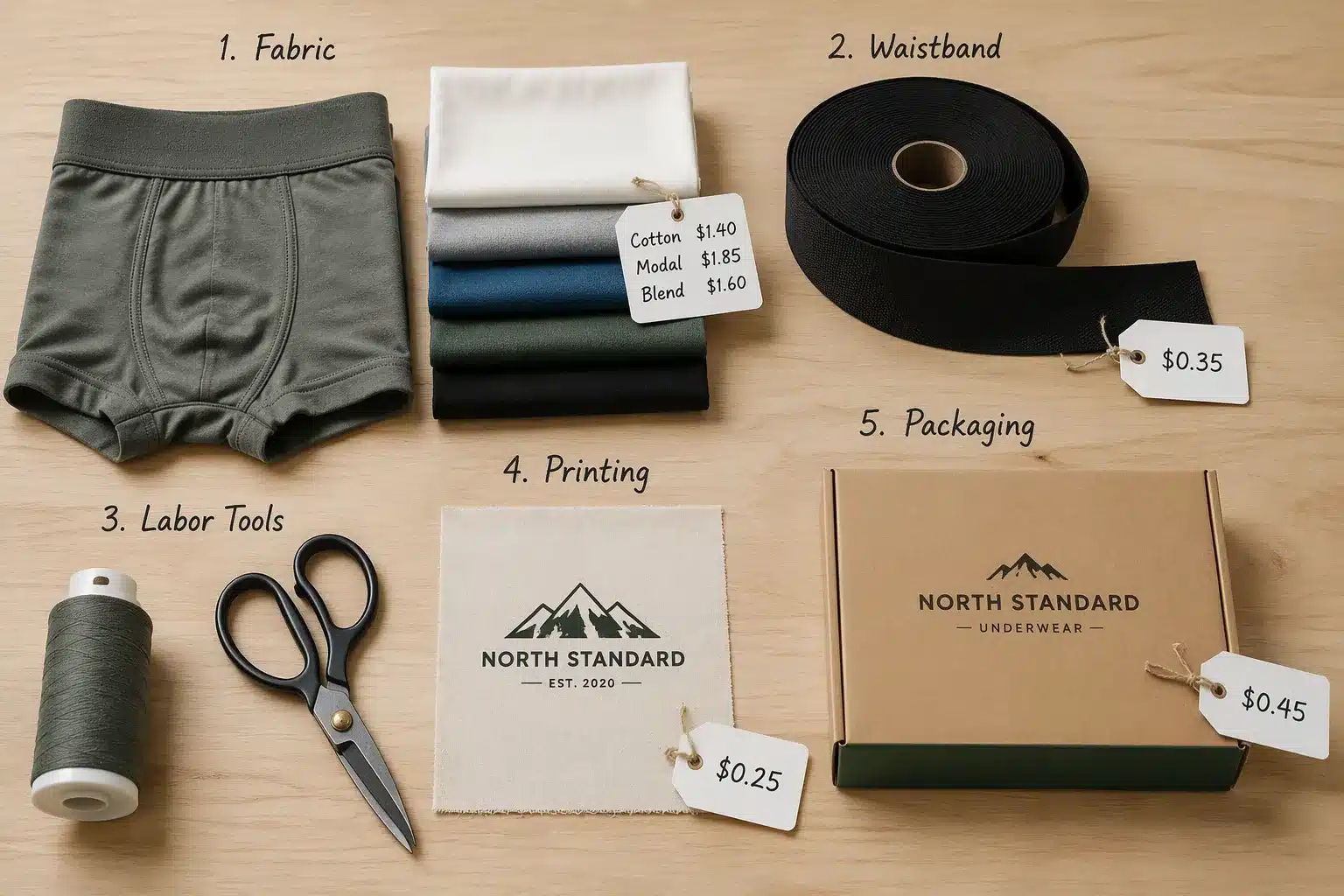
Now let’s open the quote and look at each line. Every field below carries a dollar range per pair, and each one nudges the final number up or down in its own way. Read them separately and you can see exactly where your money goes.
Fabric and Waistband Costs
Fabric Cost Per Pair by Material
Fabric is usually the largest single line in underwear manufacturing costs. A basic cotton or cotton-blend knit typically runs about $0.80 to $1.50 per pair. Performance synthetics and modal blends climb higher, often $1.50 to $3.50. Heavier fabric weight and tighter knit construction push the figure up, while lighter weights pull it down. Here’s how the common options compare:
Material | Typical Cost Per Pair |
|---|---|
Basic cotton blend | $0.80–$1.50 |
Combed cotton | $1.20–$2.00 |
Modal blend | $1.80–$3.00 |
Performance synthetic | $1.50–$3.50 |
Elastic and Waistband Ranges
Waistband elastic adds roughly $0.15 to $0.60 per pair for a standard woven elastic. A jacquard logo band or a soft-touch brushed band can reach $0.80 to $1.20. Wider bands and custom branding move the number up. Plain narrow elastic keeps it low. This line is small, but it’s one every pair carries.
Labor, Printing, and Packaging
Cut-and-Sew Labor by Region
Cut-and-sew labor typically lands between $0.40 and $2.50 per pair. The spread tracks style complexity and production region. A simple brief in a high-volume region sits near the bottom. A multi-panel style with detailed stitching sits near the top. Each region fits a different buyer: some prioritize speed and volume, others flexibility on smaller runs. Match the region to your order profile rather than chasing the lowest line.
Print Method Cost Comparison
Printing is optional, and the method sets the price. Screen printing runs about $0.10 to $0.40 per pair at volume. Heat transfer and sublimation sit higher, roughly $0.30 to $0.80, and suit all-over or photographic designs. Embroidery adds another step and typically costs more than either. A no-print style removes this line entirely.
Poly Bag, Hang Tag, and Box Costs
Packaging runs about $0.10 to $0.50 per pair. A plain poly bag sits at the low end. A printed hang tag, a branded box, or a retail-ready poly bag pushes toward the top. Packaging protects the product and carries your brand, so right-size it to your sales channel.
Samples, Inspection, and Logistics
Sample Fees and Rebate Policies
Sample fees are one-time costs, not per-pair charges. A factory typically bills a fee per sample round, and many rebate that fee against the bulk order once production starts. Ask about the rebate policy before you commit. A rebate turns a sample cost into a deposit; no rebate means it stays a sunk cost.
Third-Party Inspection Fees
Third-party inspection is billed per shipment, not per pair, so its effect on cost per unit shrinks as order size grows. A typical inspection fee is a few hundred dollars per visit. On a 300-piece run that fee weighs heavily on each pair. On a 1,000-piece run it spreads thin. Skipping inspection saves the fee but removes an independent check.
Freight, Duties, and Landed Cost
Freight and duties attach to every shipment, and they’re where unit costs and landed cost part ways. Ocean freight is cheaper per unit but slower. Air freight costs more and moves faster. Duties depend on the destination country and the product classification. Add freight, duties, and inspection to the factory unit price and you get landed cost — the only figure worth comparing across quotes. A low factory price with heavy freight can lose to a higher price with efficient logistics.
Every line above fits a different buyer need. The goal isn’t to minimize each one in isolation. It’s to build a total that matches your spec, your volume, and your channel.
Comparing Quotes at 300, 500, and 1,000 Pieces
Three quotes, three tiers, one style. Run the same men’s boxer brief spec through a factory at 300, 500, and 1,000 pieces and a pattern appears. The bulk per-pair charges barely budge. What moves is the share of development work each pair carries.
How Unit Price Drops With Volume
Typical Price Breaks Between Tiers
Picture a fixed development bill: patterns, grading, samples, and a size set. Divide that bill by 300 and each pair carries a heavy slice. Divide it by 1,000 and the slice shrinks to a fraction. That’s the main price break between tiers. Fabric, labor, and trims stay close to flat, though factories sometimes shave a little off cut-and-sew at higher volume. The jump from 300 to 500 usually delivers the biggest drop. The step from 500 to 1,000 is smaller but still real. Watch the minimum order quantity too — some factories won’t quote below a set floor, and that floor shapes which tier you can even request.
Reading a Quote Line by Line
Spotting Missing Cost Fields
Before you compare totals, check that every field from the earlier breakdown appears. Fabric, waistband elastic, cut-and-sew labor, finishing, packaging, and printing should each show up as a separate line. Freight, duties, and inspection belong on the quote too, even as estimates. A quote that lumps everything into one number hides where your costs sit. A missing freight line isn’t a saving — it’s a bill waiting for you later.
Questions to Ask Before Comparing Totals
Ask the manufacturer three things. Is the quote FOB or does it include freight? Are sample fees rebated against bulk? What is the true cost per unit once duties and inspection land? Those answers turn a stack of numbers into a fair comparison.
When a Smaller Order Makes Sense
Test Runs, Cash Flow, and Landed Cost
A 300-piece run fits a first launch. You test the market, protect cash flow, and learn what sells before committing to volume. The higher unit costs buy you flexibility. At 1,000 pieces, volume pricing wins on landed cost — provided the style sells through. Match the tier to your stage, not to the lowest sticker.
Cost Decisions That Protect Your Spec
You can trim spending without gutting the product. The trick is knowing which lever to pull and when. Here are six decisions that lower costs while keeping your spec intact.
Material and Construction Choices
Fabric Weight and Blend Selection
Fabric is the biggest line in underwear manufacturing costs, so small changes here pay off fast. Dropping to a lighter knit weight cuts the per-pair fabric bill without changing the fit. Swapping a premium blend for a solid basic cotton blend moves you toward the lower end of the $0.80–$1.50 range. This fits best when your customer buys on fit and feel, not on fiber story. Keep the premium fabrics for your hero style.
Simplifying Seams and Panels
Every extra panel adds cutting, sewing, and handling time. A two-panel construction sews faster than a five-panel one, and the labor line drops with it. This choice fits best on core basics where clean lines matter more than visible stitching. Save the complex panel work for statement pieces.
Order and Sourcing Choices
Consolidating SKUs and Colors
Fewer colors mean fewer fabric buys, fewer cutting setups, and less waste. Running three colors instead of eight lets the manufacturer buy fabric in larger lots. This fits best at launch, when you’re still learning what sells. Add colors once a style proves itself.
Choosing a Production Region
Labor ranges from about $0.40 to $2.50 per pair depending on region and complexity. Some regions suit high-volume basics; others handle smaller, flexible runs. Match the region to your order profile. A region built for volume fits a 1,000-piece run; a flexible region fits a 300-piece test.
Packaging and Logistics Choices
Right-Sizing Packaging
Packaging runs about $0.10 to $0.50 per pair. A plain poly bag fits e-commerce; a branded box fits retail shelves. Pick the format your channel actually needs. Skipping a box you don’t need removes a real cost from every pair.
Planning Shipment Mode Early
Ocean freight is cheaper per unit; air is faster. Decide the mode before production ends, not after. Early planning lets you book space and avoid rush charges. This fits best on tight launch timelines, where a small freight premium beats a missed season.
These six levers work together. Pull them in the right order and your underwear production stays on spec while the total comes down.
Building Your RFQ Line-Item Template
A good RFQ does more than ask for a price. It asks for the same price, in the same shape, from every factory you contact. Build the template once and you can send it to any underwear manufacturer and compare answers side by side.
Fields for Every RFQ
Spec, Quantity, and Size Breakdown
Start with the product itself. List the style, fabric and weight, waistband type, panel count, stitch details, and any print or label placement. Attach your tech pack if you have one. Then state the order quantity and the size breakdown — how many smalls, mediums, larges, and so on. A factory can’t quote accurately without the size curve, because grading and cutting time depend on it. Add your target ship date and destination country too. Those two fields shape freight and duty estimates later.
Required Cost Line Items
Ask every factory to price each field separately. A single lump sum hides where your money goes. The table below covers the fields from the earlier breakdown, plus the development and logistics lines that belong on any complete quote.
Cost Field | What to Request |
|---|---|
Fabric and trims | Per-pair cost by material |
Waistband elastic | Per-pair cost by band type |
Cut-and-sew labor | Per-pair cost |
Finishing and packing | Per-pair cost |
Printing | Per-pair cost by method, or “none” |
Packaging | Poly bag, hang tag, carton, per pair |
Development fees | Pattern, grading, samples, size set |
Sample rebate policy | Yes or no, and how it applies |
Inspection | Per-visit fee, if used |
Freight and duties | Estimate to your destination |
Submitting and Comparing Responses
Normalizing Quotes to Landed Cost
Send the same template to two or three factories at two or three order tiers. When replies come back, don’t compare the factory unit price. Add freight, duties, inspection, and the per-pair share of development fees to reach landed cost. Divide total development fees by order quantity to get that share. Now every quote sits on the same footing. The lowest sticker price often loses once shipping and setup enter the math. This step turns a pile of numbers into a real estimated budget you can defend. It also shows which factory understands your spec, since a careful reply usually mirrors your line items. Compare landed cost across tiers, pick the tier that fits your stage, and you have a complete quote framework for your underwear manufacturing plan.
So how much does it cost to manufacture underwear? Plan on about $2 to $10 per pair. Order quantity and material choice move that number most. A basic brief at 1,000 pieces sits near the floor. A complex style at 300 sits near the ceiling.
Keep your underwear manufacturing costs in two buckets. Development fees — patterns, samples, size sets — you pay once. Fabric, labor, trims, and packaging you pay on every pair. Add freight, duties, and inspection, and you have landed cost. That’s the figure to compare, not the factory unit price.
Here’s your next step. Build a line-item RFQ, then request quotes at 300, 500, and 1,000 pieces. Compare landed cost across all three tiers before you commit to production. A complete quote beats a low sticker every time.
FAQ
What does a first order of 300, 500, or 1,000 men’s boxer briefs actually cost?
There’s no single sticker price. A complete quote separates factory unit price, one-time development fees, packaging, inspection, and freight. Development fees spread thinner as quantity grows, so the per-pair figure drops from 300 to 1,000 pieces even when bulk charges stay flat.
How much does it cost to manufacture underwear if I only need a small test run?
Expect the higher end of the $2–$10 range. A 300-piece run carries more setup cost per pair. You pay for flexibility and market testing. That trade-off often beats committing to volume before you know what sells.
Which line items should every manufacturer quote separately?
Ask for fabric, waistband elastic, cut-and-sew labor, finishing, printing, packaging, development fees, sample rebate policy, inspection, and freight with duties. A lump sum hides where your money sits. Separate lines let you compare quotes fairly and spot missing fields before totals mislead you.
Do sample fees get refunded?
Often, yes. Many factories rebate sample fees against the bulk order once production starts. Ask about the policy before you commit. A rebate turns a sample cost into a deposit. No rebate means it stays a sunk cost.
Why do quotes for the same style vary so much between factories?
Spec, quantity, and factory type all move the number. Fabric weight, panel count, and trim quality change the materials bill. Order size changes how setup work spreads. Each factory carries different overhead and minimum order rules, so compare landed cost, not unit price.
How do I compare two quotes that look completely different?
Normalize both to landed cost. Add freight, duties, inspection, and each pair’s share of development fees to the factory price. Divide total development fees by order quantity for that share. The lowest sticker often loses once shipping and setup enter the math.
Does fabric choice really change the final price that much?
Yes. Basic cotton blends sit near $0.80–$1.50 per pair. Modal and performance fabrics climb to $1.50–$3.50. Fabric is usually the largest single line in underwear manufacturing costs, so a blend swap moves your total fast.
When should I skip third-party inspection?
Inspection is billed per visit, not per pair. On a 1,000-piece run the fee spreads thin. On a 300-piece run it weighs heavily. Skipping saves money but removes an independent check, so weigh the risk against the fee.
See Also
Comparing USA Private Label Underwear Makers: MOQ, Pricing, and Services
How US Brands Should Choose OEM vs ODM for Private Label Men’s Underwear
How to Choose a Low-MOQ UK Underwear Manufacturer for Your Brand
Low MOQ Underwear Manufacturing for Small Batch Boxer Briefs Production