
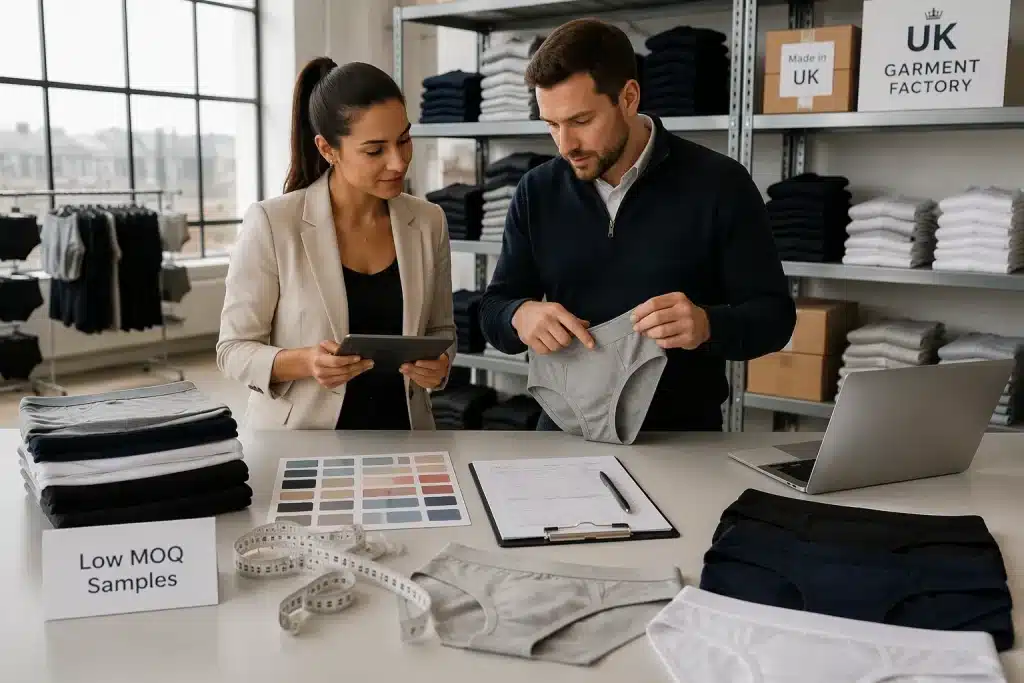
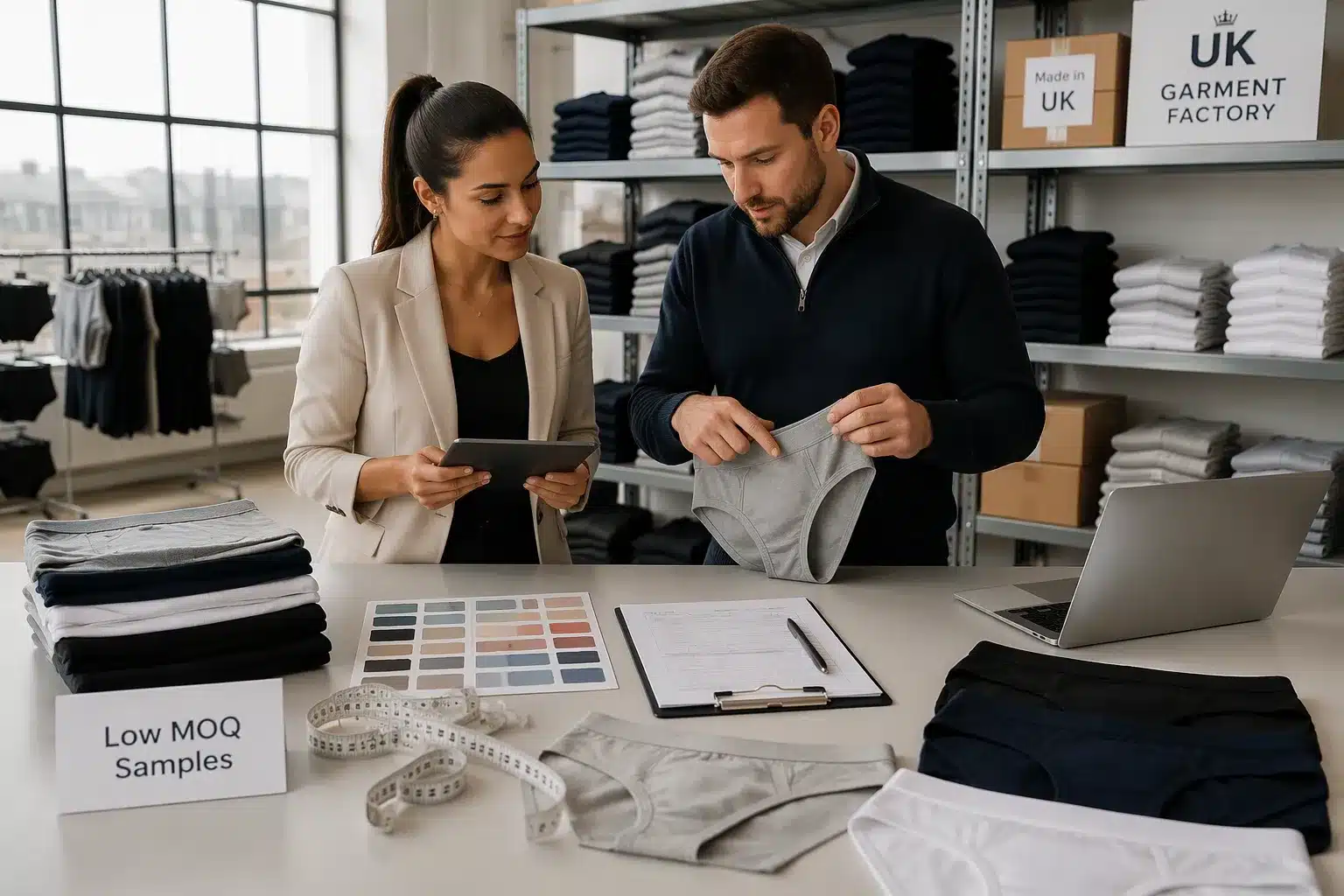
Many small brands assume that underwear manufacturing in the UK demands huge minimum orders. They fear high upfront costs. They also dread wasted stock that sits unsold. There is a better way: a three-step process of research, vet and negotiate.
This guide delivers actionable advice for finding underwear low minimum order UK production. It also covers hidden minimums for branded waistbands and packaging. Those extras often trap brand owners.
Private label underwear MOQ deals are real. Thoughtful underwear sourcing starts with honest volume estimates. Every underwear colour and size affects the factory’s number. Smart underwear brands ask for written breakdowns. They protect their underwear budget before signing anything. The right underwear partner answers quickly.
Key Takeaways
Define your needs: styles, colours, sizes, and budget for samples and packaging.
Find suppliers through directories, trade shows, and referrals for low MOQs.
Vet manufacturers: get MOQ breakdowns in writing and order samples first.
Compare costs: check unit prices at different volumes and confirm lead times.
Negotiate: offer trade-offs like longer lead times for lower minimums.
Avoid red flags: vague contracts, unusually low prices, and slow communication.
Confirm all MOQ terms in writing, including separate minimums for waistbands and packaging.
Plan packaging and reorder lead times to keep your brand stocked and cash flow healthy.
Define Your Low-MOQ Underwear Requirements
Before a brand emails a single factory, it needs a clear picture of what it actually wants. Vague briefs invite vague quotes. A founder who knows their numbers walks into every conversation with leverage.
Estimate Volumes Per Style, Colour and Size
Start with the styles a brand plans to sell. A core brief, a hipster and a thong are three separate styles. Each one carries its own minimum. Factories rarely let a brand split one minimum across several designs.
Next, break each style down by colour and size. A run of 300 pieces sounds generous until it splits into three colours and six sizes. That leaves roughly sixteen pieces per variant. Many factories treat every colour as its own order. So a brand might need 300 pieces per colour, not 300 in total. This is where a low minimum order quantity can quietly become a large one.
Set a Budget for Samples, Packaging and Branding
Sampling eats cash before any sale happens. Pattern making, fit samples and revisions all cost money. A brand should ring-fence a sample budget early. Otherwise the first production invoice arrives with unwelcome surprises.
Packaging and branding deserve their own line too. Custom boxes, tissue paper, stickers and hang tags all carry minimums. Branded waistbands often demand a separate order from the underwear itself. A hundred pieces production run of garments might need a thousand waistbands. That mismatch ties up cash in components a brand cannot use yet.
List Fabric Preferences and Compliance Needs
Fabric choice shapes everything downstream. Cotton, modal, microfibre and bamboo each behave differently on a sewing line. Some fabrics need specific machinery or extra handling. A brand should name its preferred composition and weight before requesting quotes.
Compliance matters just as much. Underwear touches skin, so UK rules on fibre labelling and chemical safety apply. A responsible manufacturer will confirm which tests it runs and which certificates it holds. Ask about fibre content labels, care labels and any restricted substances testing. Brands selling to the EU need to think about similar rules there too.
Small production runs work best when the brief is tight. A brand that lists fabrics, sizes, colours and compliance needs upfront saves weeks of back-and-forth. That clarity also makes it easier to compare quotes fairly across suppliers.
Find UK Underwear Suppliers with Low Minimum Orders
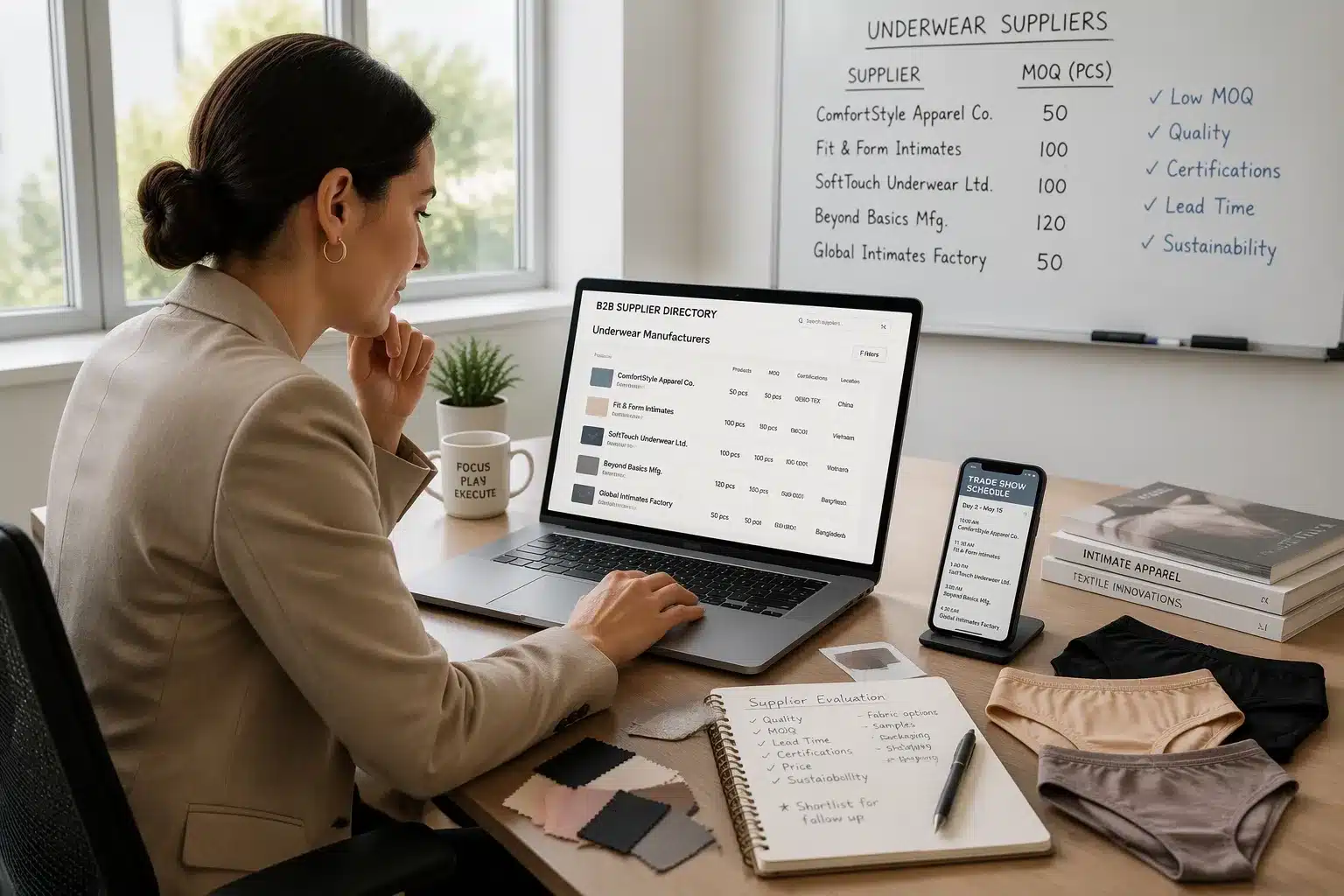
MOQs vary widely by product type and customisation. Standard stock products with private-label options tend to have lower minimums. A new underwear brand that buys a basic brief in a factory’s existing colour palette faces tiny numbers. If a brand requests the same factory to create a unique seam, bespoke fabric and branded waistband, those numbers climb fast. Private label underwear MOQ deals sit in the sweet spot. They let a brand add its own label without commissioning an entirely new garment.
Search Directories and B2B Platforms
The best starting point is B2B platforms and trade directories. They let a founder filter by location, product type and MOQ. A search for “underwear low minimum order uk; private label underwear moq” returns the usual names, yet few suppliers publish true minimums for underwear. Directory listings only provide hints; a brand should confirm numbers in writing. Sorting results by MOQ separates high-volume factories from flexible newcomers. More transparency upfront saves time later. A founder should bookmark each promising profile and note which platforms show verified reviews or sample policies. The more a supplier shares before contact, the easier the negotiation becomes.
Three examples show how suppliers differ. Nipa Stock GmbH offers stylish underwear from 50 pieces with prices from €2.60 per piece. This is a viable route for a reseller within the UK. Sunspice Lingerie provides pattern making and sample development with style-dependent minimums. JRS Industrial lets brands build a bundle, upload a logo once and receive a free proof by email. JRS operates as a direct cut & sew clothing manufacturer with no middleman in sight. Smart brands compare all three and look for hidden extras before committing.
Attend Trade Shows and Networking Events
Trade shows still matter. Events such as Pure London and Moda attract agents, factories and small ateliers. Walking the aisles lets a founder touch fabrics, examine stitching and ask about minimums face to face. Many exhibitors state that their ranges are manufactured in England. Those manufacturers understand small brands and cash flow constraints. Asking about their manufacturing setup reveals whether they run a factory floor or broker orders. For luxury lingerie and accessories, specialist shows around London Fashion Week offer tailored options. These events also create room for follow-up meetings after the show. Founders should bring business cards, take photos of samples and ask for direct factory contacts. Many suppliers only sell to people they have met in person.
Networking is about the right questions. A founder should ask how many machines a factory runs and whether cutting, sewing and finishing happen in one building. They should ask which part of the underwear order is outsourced. They should also ask about reorder fees and typical turnaround times. Trade conversations show whether a supplier can handle a low underwear MOQ without treating it as a nuisance. The best sign is a supplier who explains minimums without frustration.
Ask for Referrals to Private Label Underwear MOQ Options
Referrals remain the fastest route to flexible minimums. A founder who knows two or three other small underwear brands can simply ask who they use. Personal introductions shorten response times. A recommendation confirms trust before any sample order. Founders shouldn’t underestimate seeing actual garments from the line they recommend. They should also ask how quickly the supplier replies, whether reorders arrive on time, and what happens when a style underperforms. A founder should trust a friend’s underwear supplier only after reading an invoice.
Some of the best low-MOQ suppliers hide in plain sight. They don’t advertise loudly because they already serve a steady roster of small clients. Others offer production with zero MOQ’s on basic styles. A few promise no minimum order requirements at all for selected colours and sizes. These offers still deserve checks. Fabric minimums often sit separate from garment minimums. The brand should ask the supplier to name exact styles, colours and lead times. It should ask whether a 500-piece figure applies per style, per colour or per order. It should check if branded waistbands and packaging carry their own minimums. Referrals open the door; a clear contract keeps it open.
Vet UK Garment Manufacturers for Low-MOQ Suitability
Vetting is not just about confirming a number. It is about understanding how that number works in practice for sampling and production, and for reorders later. A supplier might quote a friendly minimum, then reveal awkward terms once money changes hands. Careful checks now save a brand from nasty surprises.
Request MOQ Breakdowns in Writing
Ask every supplier to put the minimum order quantity in writing. A verbal promise means nothing when a dispute arises. The written breakdown should state whether the figure applies per style, per colour or per order. That single detail changes everything. A 500-piece minimum per order is manageable. The same 500 pieces per colour across four colours is a different beast entirely.
The breakdown should also cover components. Branded waistbands, woven labels and custom packaging often carry their own minimums. A brand should confirm these before committing inventory. Otherwise it ends up with 500 garments and 5,000 waistbands gathering dust. A good manufacturer answers these questions without hesitation. A vague reply is a warning worth heeding.
Order Samples Before Production
Never approve a full run without holding a sample first. A single garment sampling order reveals more than any brochure. The founder can check stitching, elastic recovery, seam placement and fabric hand-feel. They can wash the sample and see how it survives. They can wear it for a day and note where it rubs or rides up.
Sampling also exposes how the factory handles garment sampling, grading and production as a connected process. A sample that fits perfectly in one size tells a brand little about the size range. Ask how the factory grades patterns across sizes. Ask whether the sample price comes off the production invoice. These small details show whether a supplier values long-term relationships or just quick sales.
Test Communication and Response Times
Response speed predicts production reliability. A supplier who takes a week to answer a simple email will likely miss deadlines too. Send a few questions before ordering anything. Note how long each reply takes. Note whether the answers actually address the questions. Vague or evasive responses signal trouble ahead.
Good UK garment manufacturers reply within a day or two during normal working hours. They give straight answers about lead times, reorder fees and capacity. They flag problems early instead of hiding them. A brand should also test how a supplier handles a tricky question. Ask what happens if a batch fails quality checks. The answer separates honest manufacturers from hopeful ones. Trust builds through small exchanges long before the first invoice.
Compare Private Label Underwear MOQ and Costs
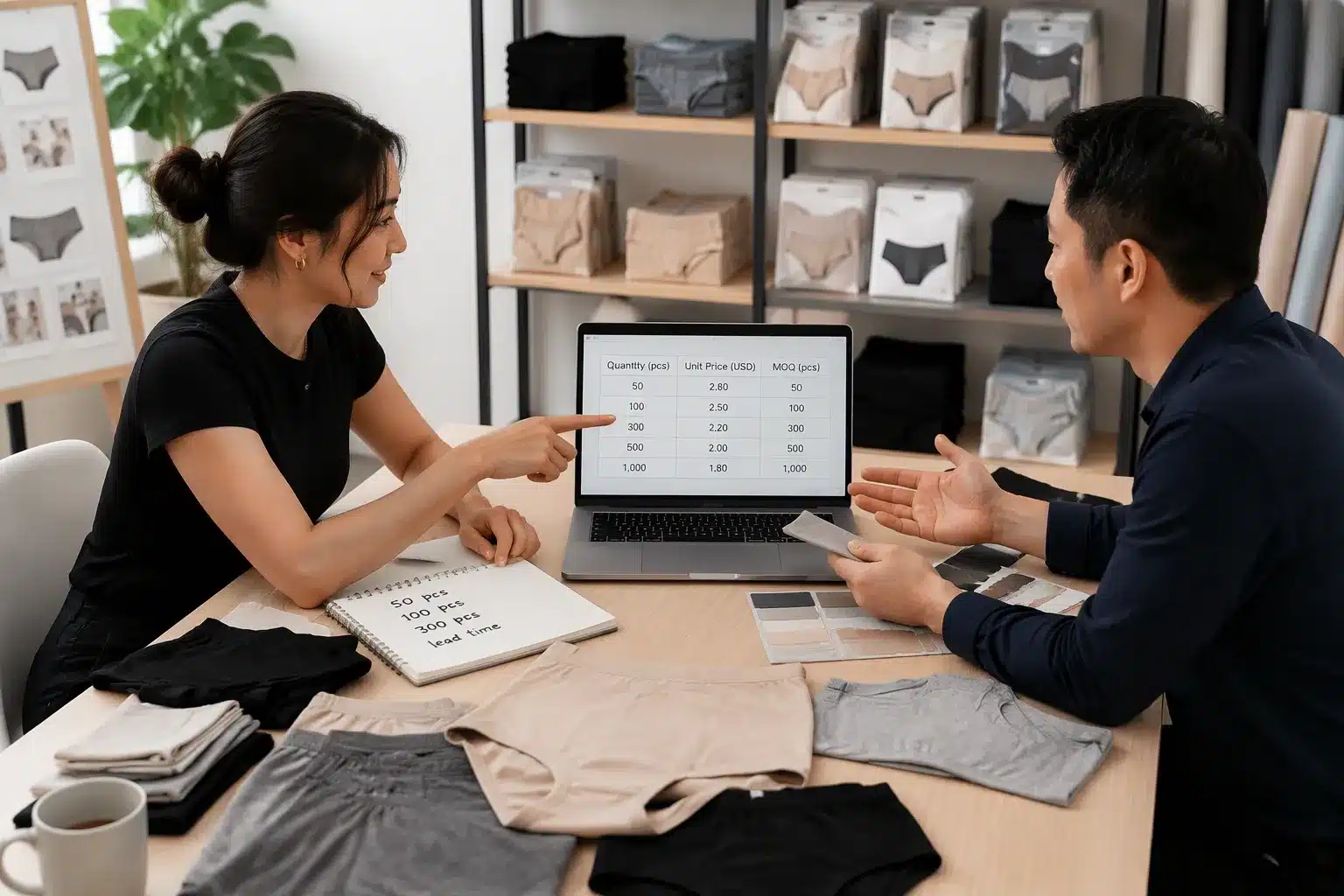
A low unit price catches the eye. Yet that price often arrives with strings attached. Separate minimums for branded waistbands, labels and packaging can quietly inflate the true cost of an underwear order. Smart brands compare the full picture, not just the garment per unit. A founder searching for “underwear low minimum order uk; private label underwear moq” will spot many suppliers, yet the real comparison happens at the negotiation table.
Check Unit Prices at Different Volumes
Unit prices shift with volume. A factory might quote £8 per piece at 50 units, £5.50 at 100 units, and £4.80 at 300 units. Those differences change an underwear brand’s margin dramatically. A founder should request a price ladder from every shortlisted supplier. That means asking for a written price at three or four volume points before choosing anyone.
The earlier research phase surfaces useful benchmarks. Nipa Stock GmbH, for instance, offers stylish underwear from 50 pieces with prices from €2.60 per piece. Comparison only works when a brand compares like for like. Each quote must state what it includes: fabric, trims, cutting, sewing, finishing and basic packaging. A quote that leaves out trims will look cheap until the invoice arrives.
Volume discounts also hide a trap. The 500-piece figure in a quote sounds simple, yet a founder must confirm what it covers. Does the minimum apply per style, per colour or per whole order? A 500-piece minimum per order lets a brand mix styles and colours freely. The same number per colour across five shades means 2,500 pieces. That changes cash flow dramatically.
Confirm Lead Times and Reorder Flexibility
A low MOQ loses its appeal when reorders take months. The initial run might involve sampling, pattern grading and fabric sourcing. A factory might quote eight weeks for that first delivery. Reorders should move faster once the pattern exists. Yet some manufacturers treat every small underwear order as a fresh project. A brand should ask, in writing, how long a reorder of the same style takes.
Reorder fees matter just as much. Some suppliers charge a new setup fee every time. Others waive it for repeat customers. A brand should ask whether the same unit price applies to reorders, or whether small reorders cost more per piece. These details reveal how much the factory values ongoing relationships.
Fabric holding makes a real difference too. A factory that stocks fabric for a core colour can cut and sew within days. One that orders fabric per run adds two or three weeks to every lead time. A founder should ask which fabrics the supplier keeps in stock. That answer shapes underwear reorder planning for the whole season.
Review Samples, Certifications and Compliance
Samples carry more information than any spreadsheet. The stitching, elastic recovery and seam placement tell a story. A brand should wash a sample, wear it, and tug every seam before approving a production run. A sample that curls at the edges or loses its shape after one wash signals trouble ahead.
Certifications deserve equal attention. Underwear sits against the skin, so British fibre labelling rules apply to every garment sold in this market. Fibre content labels, care labels and country-of-origin labels must meet these rules. Chemical safety also matters. A responsible manufacturer runs restricted substance tests and shares the results.
Brands selling beyond Britain should check compliance for those markets too. EU rules for textile labelling and chemical limits differ in places. A factory exporting to Europe usually handles this smoothly. A factory serving only domestic clients might not. The certificate list should match the brand’s sales plans, not just the factory’s claims.
Time spent comparing samples side by side pays off. A brand should lay samples from two or three factories on the same table. The differences in fabric weight, trim quality and stitching density become obvious quickly. That comparison reveals which supplier produces underwear the brand actually wants to sell.
The final check returns to the hidden minimums. By the time a brand compares unit prices, it should also have written confirmation of every separate minimum. The branded waistband, woven labels and custom packaging each carry their own figures. A founder who confirms these numbers before committing inventory avoids the classic trap: five hundred finished pieces of underwear and thousands of unused waistbands.
Negotiate Low Minimum Orders with UK Suppliers
Open with a Realistic MOQ Proposal
Opening with an impossible figure wastes everyone’s time. The factory expects a realistic number. A request for fifty pieces when the floor sits at three hundred signals inexperience. That tone poisons the negotiation before it starts.
The smarter route: ask for the factory’s lowest viable number first. Then propose a figure slightly above that floor. A founder who asks for two hundred units shows serious intent. The factory sees a repeat customer, not a tyre kicker. The mood shifts from refusal to problem-solving.
Offer Trade-Offs such as Longer Lead Times
Flexibility on delivery unlocks lower minimums. Factories run lines in batches. A small underwear run squeezed between bigger orders disrupts their workflow. A brand that offers to wait three weeks gives the factory room to plan. That patience often yields a friendlier figure.
Fabric offers another trade-off. A brand willing to accept stock cloth removes an entire sourcing step. Fabric minimums from mills often dwarf garment minimums. Every metre saved helps the factory. It returns that favour by lowering the bar for the next underwear order.
Clarify MOQ Scope and Hidden Charges
Confirm whether the 500-piece MOQ applies per style, colour or order
The number on the quote rarely tells the whole story. A factory might treat five hundred pieces as its low underwear minimum order. Another might mean five hundred per colour. A third might allow a brand to mix styles and colours within a single five-hundred-piece order.
The difference matters enormously. One order lets a brand test three styles in three colours. The same number per colour across four shades means two thousand pieces. That gap can wreck an underwear budget. Ask the question directly and get the answer in writing. The manufacturers who welcome that question deliver clear contracts. Hedging signals danger.
Check separate minimums for branded waistbands and packaging before committing inventory
The garment figure is only part of the cost picture. Branded waistbands carry their own minimums, often far higher than the underwear runs they serve. A factory might happily produce three hundred briefs yet require a thousand waistbands. That leaves seven hundred unused.
Packaging behaves the same way. Printed boxes, tissue paper and hang tags each carry their own order floors. A brand that orders five hundred garments might face a thousand-piece minimum on mailer bags. The inventory footprint expands far beyond the underwear itself.
The search term “underwear low minimum order uk; private label underwear moq” surfaces many suppliers, yet the cheapest quote often hides the biggest extras. The fix is a single written document listing every minimum. Ask about elastic, waistbands, labels and packaging. Include those numbers in the final comparison. A flexible underwear supplier loses its appeal when branded extras triple the stock commitment. The right underwear partner explains these charges before the invoice, not after.
Avoid Red Flags When Choosing UK Clothing Manufacturers
Some suppliers look perfect on paper. Their quotes arrive fast. Their prices sit below everyone else. Then the problems start. A brand that spots the warning signs early saves itself months of stress and a pile of unsellable stock.
Watch Out for Vague Contracts and Verbal Promises
A supplier who avoids written terms is hiding something. That friendly phone call means nothing when a batch arrives wrong. Ask for every detail in writing. A reluctance to put numbers on paper is a warning sign, even when the offered MOQ looks attractive.
The written quote must answer one key question. Does the 500-piece figure apply per style, per colour or per order? A brand should also check separate minimums for branded waistbands and packaging before committing inventory. A supplier who dodges these questions will dodge them again when a dispute arises.
If a factory won’t confirm the scope of its minimum in writing, treat that silence as the answer.
Question Unusually Low Prices Without Samples
A price far below the market deserves suspicion, not excitement. Every garment carries real costs: fabric, labour, elastic, thread and finishing. A quote that undercuts everyone else usually cuts something the brand cannot see. Maybe the fabric is thinner. Maybe the stitching skips a step.
Samples settle the argument. A brand should order one before approving anything. The sample reveals fabric weight, elastic recovery and seam quality. A supplier who refuses to provide a sample before a bulk order is not a partner. That supplier is a gamble.
Walk Away from Slow or Evasive Communication
Response times tell a story. A supplier who takes a week to answer a simple email will miss production deadlines too. Slow replies during the sales phase become silence during a crisis. Brands should test this early with a few straightforward questions.
Evasive answers matter even more than slow ones. Ask what happens when a batch fails quality checks. Ask who covers the cost of a remake. Honest manufacturers answer directly. They flag problems before they grow. Startups and small businesses deserve that same respect from every supplier they approach.
The best UK clothing manufacturers and British clothing manufacturers share one trait. They welcome hard questions. They put terms in writing. They treat small brands as future partners, not as inconveniences. A founder who holds out for that standard protects both their budget and their sanity.
Complete Your UK Underwear Manufacturer Checklist
A checklist turns a messy search into a clear decision. It also protects a brand from the small print that ruins a good deal. Here is what to tick off before signing anything.
Confirm Every MOQ Term in Writing
Get every number on paper. A verbal promise about a low minimum means nothing when a batch arrives wrong. Ask the underwear manufacturer to confirm whether 500 pieces applies per style, colour or order. That single detail changes the whole budget. Five hundred per order lets a brand mix styles freely. Five hundred per colour across four shades means two thousand pieces.
Check separate minimums for branded waistbands and packaging before committing inventory. A factory might sew 300 briefs yet demand 1,000 waistbands. That leaves 700 unused. Printed boxes and hang tags carry their own floors too. A brand that confirms these numbers early avoids a warehouse full of mismatched components. The right uk supplier answers these questions without flinching.
Validate Quality, Compliance and Ethical Standards
Order a sample before any bulk run. Wash it, wear it, and tug every seam. A sample that curls or loses shape after one wash signals trouble. Check fibre content labels, care labels and country-of-origin labels against British rules. Underwear touches skin, so chemical safety tests matter too. Ask which certificates the factory holds and whether those cover the brand’s sales markets.
Ethical standards deserve the same scrutiny. Ask about working hours, pay and factory audits. A manufacturer who welcomes these questions treats small brands as partners. One who dodges them is hiding something. The best uk clothing manufacturers share audit reports openly.
Plan Packaging and Reorder Lead Times
Packaging carries its own timeline. Custom boxes, tissue paper and stickers each need design approval and production time. A brand should order these alongside the underwear, not after. Otherwise finished garments sit in a warehouse waiting for boxes.
Reorder speed shapes the whole season. Ask how long a repeat run of the same style takes once the pattern exists. Some manufacturers keep core fabrics in stock and cut within days. Others order cloth per run and add weeks to every lead time. Confirm whether reorder fees apply and whether the unit price holds. A brand that plans reorders early keeps shelves stocked without tying up cash in dead inventory.
The journey is simple. Define your low-MOQ needs, find UK underwear suppliers, vet them, then negotiate clearly. Ask whether 500 pieces applies per style, colour or order. Check separate minimums for branded waistbands and packaging before committing inventory.
Low-MOQ manufacturing in the UK is realistic. You just need to avoid vague agreements and hidden minimums. So make a shortlist of three suppliers and request written quotes this week. One sample enquiry is a fine first step. Take it today, and your underwear brand moves closer to production.
FAQ
What counts as a low MOQ for underwear in the UK?
It depends on the supplier and the level of customisation. Some factories start at 50 pieces for stock styles with private-label options. Others set their floor at 300 or 500 pieces. Always confirm the exact figure in writing before committing.
Does a 500-piece minimum apply per style, colour or order?
That single detail changes everything. A 500-piece minimum per order lets a brand mix styles and colours freely. The same figure per colour across four shades means 2,000 pieces. Ask the supplier to confirm the scope in writing.
Do branded waistbands carry their own minimums?
Yes, and they often sit far higher than the garment run. A factory might sew 300 briefs yet demand 1,000 waistbands. That leaves 700 unused. Check this before committing inventory, or cash gets tied up in components.
How long does a reorder take once the pattern exists?
It varies. A factory that stocks core fabrics can cut and sew within days. One that orders cloth per run adds weeks to every lead time. Ask which fabrics the supplier keeps in stock before planning a season.
Should a brand order a sample before full production?
Absolutely. A sample reveals stitching, elastic recovery and seam quality. Wash it, wear it, and tug every seam. A supplier who refuses a sample before a bulk order is not a partner worth keeping.
What hidden costs should a brand watch for?
Separate minimums for branded waistbands, woven labels and packaging top the list. Printed boxes and hang tags carry their own order floors too. A cheap unit price means little once these extras triple the stock commitment.
How can a small brand negotiate a lower minimum?
Offer trade-offs. A brand willing to wait longer gives the factory room to plan. Accepting stock cloth removes a sourcing step. Ask for the factory’s lowest viable number first, then propose a figure slightly above that floor.
Is low-MOQ underwear manufacturing in the UK realistic?
Yes. Plenty of suppliers serve small brands without treating them as a nuisance. The key is avoiding vague agreements and hidden minimums. Get every term in writing, and the whole process stays manageable.
See Also
Selecting The Right Private Label Men’s Underwear Maker For 2026
Simplified Guide To Sourcing Private Label Men’s Underwear In UK
Low Minimum Order Underwear Production For Small Batch Boxer Briefs
Seven Best Low MOQ Boxer Briefs Makers For Small Enterprises
UK Underwear Low Minimum Order: A Straightforward Guide For You