
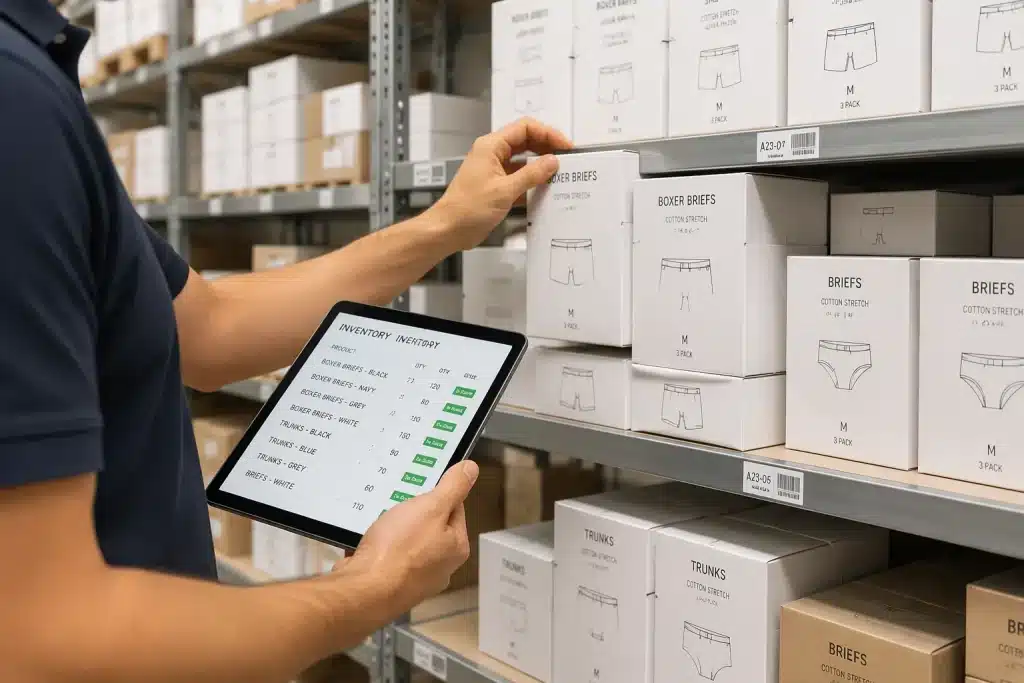
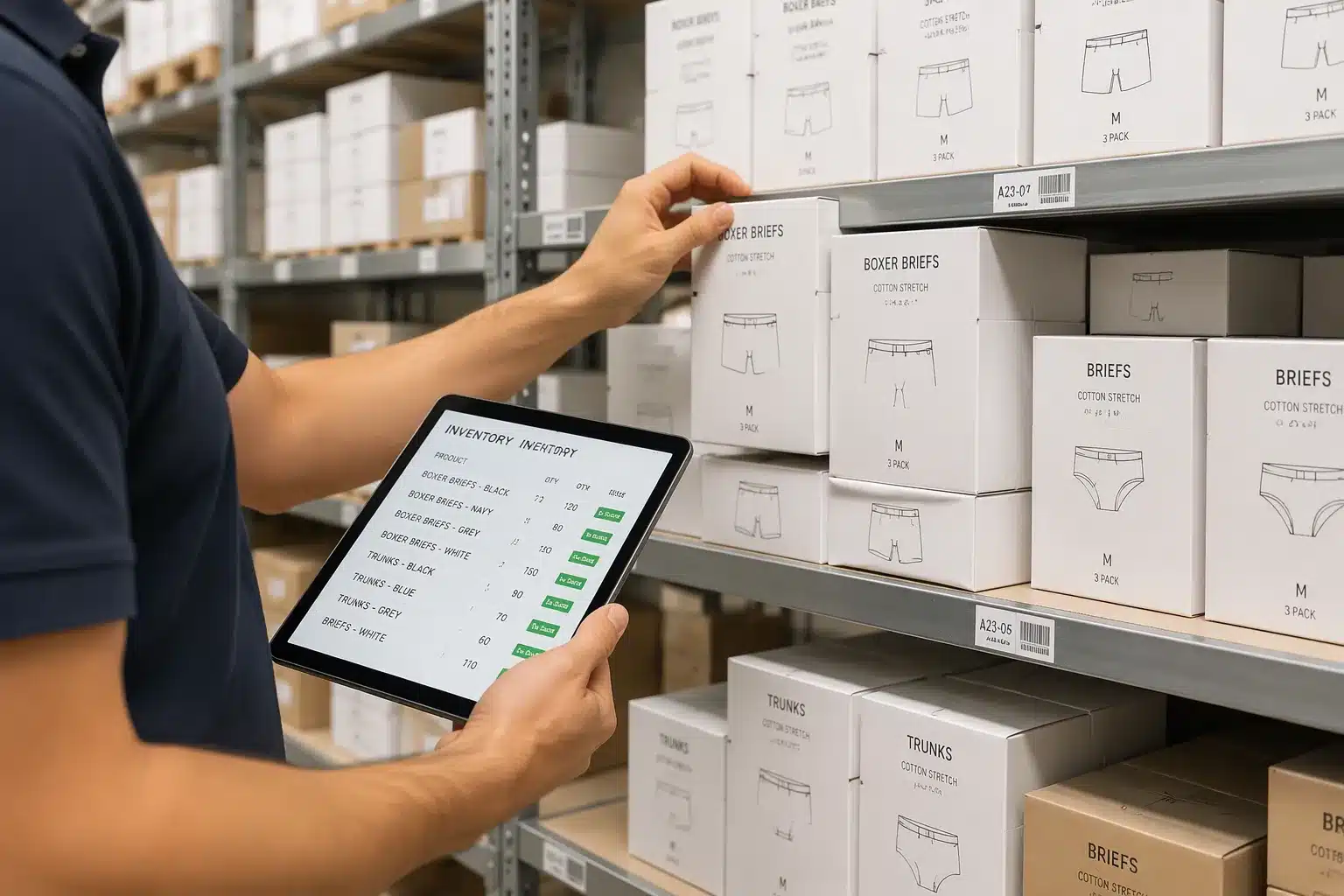
Restocking underwear wholesale is always a headache. Order too much, and cash sits on shelves. Order too little, and shelves are empty. Data-driven decisions, not guesswork, solve this problem.
What if a buyer could cut holding costs, avoid stockouts, and never leave cash sitting in extra stock? That’s exactly what a data-first approach delivers. Sales history, sell-through rates, and lead times turn a wholesale boxer shorts multipack order into a calculation, not a gamble. This post shows how to make that underwear wholesale restock loop work, one data point at a time.
Key Takeaways
Use past sales data to predict demand accurately.
Check sell-through rates each week to plan order volumes.
Set up live stock tracking to keep accurate stock levels.
Set up automatic reorder alerts to stop you running out of stock.
Schedule deliveries to match the peak seasons.
Using sales data, negotiate bulk discounts with suppliers.
Set reorder points using lead time and demand.
Count each piece of clothing and each pack that can be sold on its own separately.
Forecast Wholesale Boxer Shorts Multipack Demand
Demand forecasting starts with numbers, not gut feelings. A buyer who guesses at order volumes will eventually get burned. One season they sit on pallets of unsold packs. The next season they scramble to fill shelves. Historical sales data changes that story. It shows what actually moved, when it moved, and in what quantities.
Efficient inventory management supports this work behind the scenes. Teams can locate products quickly, prepare mixed orders accurately, and support restocking when necessary. Without that foundation, even good forecasts fall apart at the picking stage.
Plan Underwear Wholesale Restock with Past Sales
Past sales records are the backbone of any underwear wholesale restock plan. Pull at least twelve months of data. Look for patterns across seasons, promotions, and price changes. A spike in December might reflect holiday gifting. A dip in July might just be normal summer slowdown.
Compare year-on-year figures rather than month-on-month ones. This smooths out short-term noise and reveals the real trend. If a particular boxer brief style sold steadily for three years, that’s a signal. If another style faded after one season, that’s a warning.
Segment Sales Data by Style, Size, and Pack Mix
Aggregate numbers hide the details that matter. Break sales down by style, size, and pack configuration. A three-pack of medium boxers might fly off the shelf while the same style in small sits untouched. That gap tells a buyer something important.
Size curves vary by region and customer base. Some markets skew toward larger sizes. Others favour smaller ones. Pack mix matters too. A two-pack appeals to trial buyers. A five-pack attracts loyal customers. Segmenting the data reveals which combinations drive volume and which ones drag.
Use Sell-Through Rates to Set Order Volume
Sell-through rate measures how quickly stock moves. The formula is simple: sell-through = units sold / units received x 100. A high rate means demand is strong. A low rate means the product is sitting.
Buyers should track this metric weekly, not just at season end. A declining sell-through rate signals trouble early. That’s the moment to slow replenishment. A rising rate justifies a larger order. Sales velocity works the same way. It shows how fast a product sells per day or per week. Pair velocity with sell-through and the right order volume becomes clear.
Adopt Inventory Management Practices for Real-Time Tracking
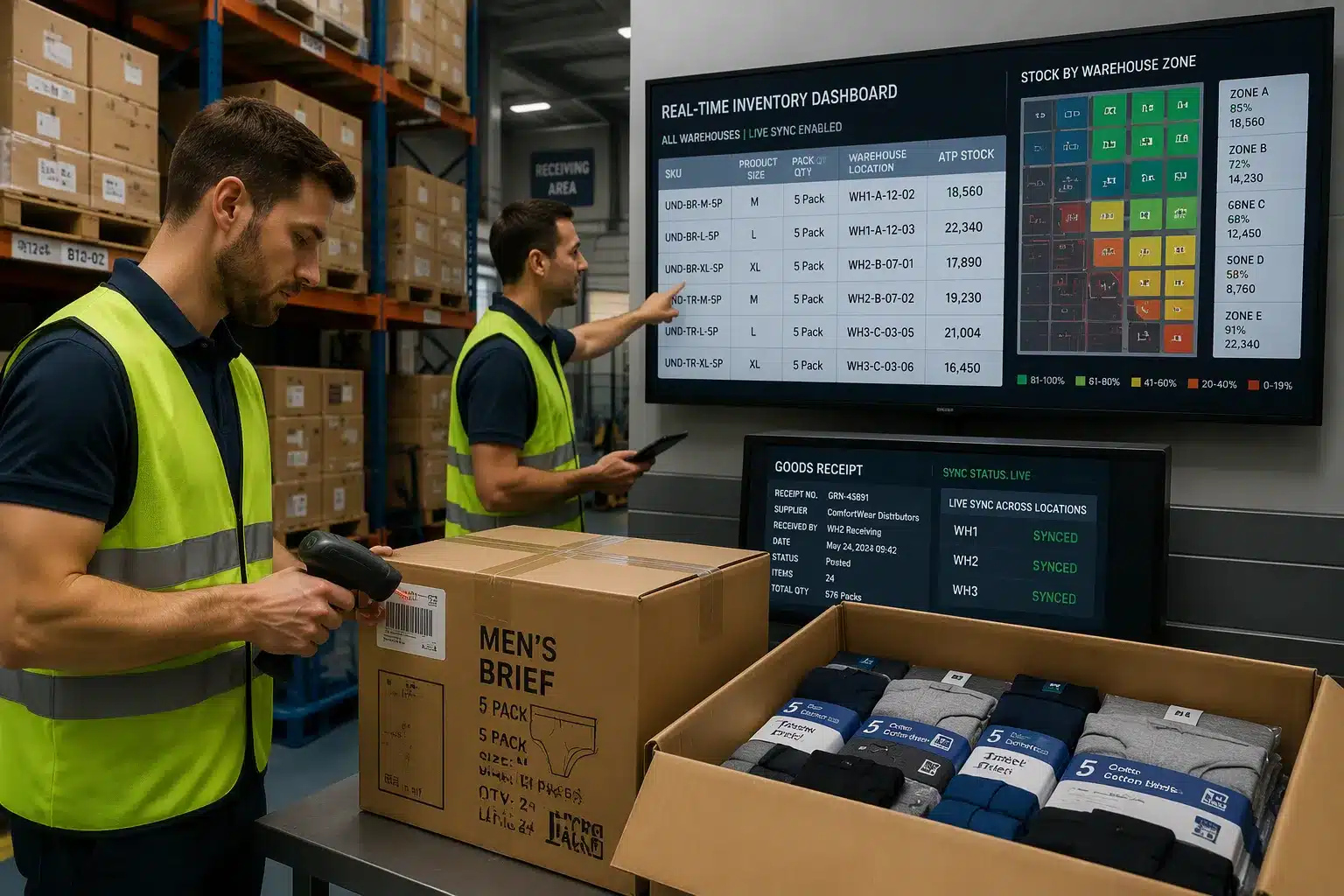
Real-time tracking makes a big difference for underwear wholesale buyers. A spreadsheet updated once a day cannot keep up with orders coming in from many channels. Modern inventory management practices give teams a live view of every SKU, every size, and every pack.
The numbers support this. HC Brands raised its inventory accuracy from 60% to 95% across two warehouses after linking warehouse management with a real-time system. A UK composites manufacturer reached 98% accuracy after giving up disconnected spreadsheets. Those gains matter for underwear, where size curves and pack mixes create endless variations.
Track Stock Across Warehouses and Channels
A buyer running three warehouses and an online store needs one clear picture. Real-time goods receipt lets warehouse staff scan incoming stock and sync it straight away. Automated picklists reserve inventory with one tap, which stops double allocation and speeds up fulfilment.
Inventory visibility across locations gives centralised oversight. Teams can watch stock at zone or bin-level detail. They can also allow inter-site transfers with full tracking. Sales teams see exactly what is available to promise. Warehouse teams get instant notice of incoming orders. Purchasing teams view accurate stock levels alongside historic usage patterns.
Build a Single Source of Truth for Underwear Inventory
A single source of truth means every department works from the same data. When a picker logs a shipment with a handheld scanner, that information syncs across the whole business at once. Customer service, purchasing managers, and digital storefronts all see the same numbers.
This live visibility allows proactive decision-making. Teams can spot fast-moving stock versus slow-moving units right away instead of waiting for monthly reports. For businesses selling bundle items, the moment a kit is ordered, stock allocation for every underlying component updates across the whole network. That greatly cuts unexpected stockouts and delivery delays.
“The system transformed how we work. Everything’s now on scanners – no guesswork, no back-and-forth. Picking and replenishment are clear, guided, and automatic. We’ve seen huge improvements in stock accuracy, which has made procurement much more confident and efficient.” — Les, Operations Manager
Automate Reorder Alerts Before Out-of-Stocks
Manual reordering invites mistakes. Someone forgets to check a bin. A popular size sells out before anyone notices. Automated replenishment triggers solve this problem. Teams set item or bin-specific thresholds. The system sends alerts or auto-starts replenishment when stock drops below that line.
Modern inventory management software logs the exact bin location of every incoming product SKU. It automatically works out optimised walk routes for pickers. This workflow saves a lot of staff resources and increases daily order capacity. Precise minimum stock thresholds can be set for key products. When an item drops below that line, the system flags it or automatically creates a supplier purchase order. For anyone organising inventory across multiple sales channels, this level of automation keeps shelves full without tying up cash.
Restock Underwear Wholesale Just in Time
Just-in-time restocking keeps cash flowing and shelves stocked. The idea is simple. Stock arrives when customers need it, not months before. Buyers who strike this balance avoid empty shelves and packed warehouses.
Match Deliveries to Demand Windows
Underwear demand is not flat all year. Sales rise before holidays, during back-to-school season, and when cold weather drives thermal sales. A smart buyer plans deliveries around those windows. They ensure shipments land just before demand peaks, not after.
This timing needs discipline. A load that arrives three weeks early sits in storage and ties up cash. A load that arrives three weeks late misses the rush completely. Looking at weekly sales from past years helps buyers predict rising demand. Then they can schedule deliveries to fit.
Use Lead Times to Set Replenishment Minimums
Lead time is the gap between placing an order and receiving it. Suppliers need time to make, pack, and ship goods. A buyer who ignores lead times will run out of stock before the next delivery arrives.
Replenishment minimums should match that gap. If a supplier needs four weeks to deliver, the reorder point must cover four weeks of sales plus a buffer. Buyers should confirm production lead times with every supplier and update those numbers when they change. This simple habit prevents nasty surprises.
Cut Holding Costs While Avoiding Stockouts
Holding costs eat into profit. Every box of underwear in a warehouse costs money for space, insurance, and handling. Reducing dead stock starts with tighter ordering. Buyers who order only what they need avoid the slow drain of unsold inventory.
But cutting too deep creates stockouts. The goal is balance. Data on sell-through rates and sales velocity shows how much stock to carry. Then a buyer can set order volumes that keep shelves full without drowning in extra stock.
Bundle Multipacks for Cost-Effective Restocking
Multipacks are a clever way to restock efficiently. A wholesale boxer shorts multipack puts several units into one saleable pack. This cuts handling costs per garment and makes inventory counts easier. Buyers can order fewer SKUs while still offering variety.
Bundling also helps shift slower sizes. Pair a popular medium with a slower small in a mixed pack. The bundle sells as one unit, and dead stock shrinks. For any underwear wholesale restock, multipacks cut complexity and keep products moving.
Negotiate Bulk Discounts with Suppliers Using Data
Buyers who come to a negotiation with real numbers get better deals. Suppliers take a wholesaler seriously when that person knows their own sales well. Data turns a hopeful ask into a strong business case.
Share Sales Velocity to Win Better Terms
Sales velocity shows how fast a product sells each day or week. When a buyer shares this figure, the supplier has a reason to offer a lower price. Fast-selling lines deserve bulk discounts. The supplier knows those units will sell, not sit in a warehouse.
Being honest matters here. A buyer who makes numbers look bigger will lose trust quickly. Share real sell-through data instead. Show the supplier which styles do well and which ones struggle. That openness builds a partnership. Suppliers often reward loyal buyers with priority production slots and flexible payment terms.
Align Order Sizes with Demonstrated Demand
Order too little and the discount is gone. Order too much and cash gets stuck in slow-moving underwear. The best point is where order volume matches proven demand. Past sales records show that point.
Look at the size curve for each style. If medium and large sizes sell best, order more of those. Cut the order for sizes that rarely sell. A supplier will gladly change a size mix when the buyer explains why. This approach keeps stock lean and protects margins. Retailers notice the difference too. They get the sizes their customers really want, which keeps reorders coming.
Agree Lead Times and Replenishment Minimums
Lead times and replenishment minimums belong in every supplier agreement. A buyer should confirm production lead times in writing. Then they can set reorder points that cover that gap. If a supplier needs four weeks, the reorder point must cover four weeks of sales plus a buffer.
Both sides should also agree on how to count stock. Count inventory in single garments and in saleable packs. A multipack of three boxers counts as one saleable unit but three garments. Mixing those numbers causes confusion. Agree size mixes, barcodes, replenishment minimums and production lead times upfront. Clear barcodes speed up goods receipt. Defined size mixes prevent disputes. Fixed minimums stop small, costly orders. This groundwork pays off every season. A supplier who knows exactly what to expect delivers on time. A buyer who tracks quality against those terms catches problems early. Good data on both sides makes the whole supply chain stronger.
Follow Underwear Market Trends and Seasonality

Seasons shift demand for everything. A buyer who watches the calendar and the numbers together avoids the usual surprises. The next three habits turn vague hunches into a clear restock plan.
Spot Seasonal Demand Patterns in Sales Data
Look at last year’s weekly sales figures. They show exactly when underwear moves fastest. Thermal underwear spikes when the temperature plummets. The same rise appears every autumn. A buyer who spots that trend can order before the rush.
Do not rely on memory. Pull the actual spreadsheets or reports. Compare week by week. You will find smaller spikes too. A school holiday might boost sales, or a heatwave might slow them down. These patterns help you predict the next season.
Track Style, Fabric, and Sizing Trends
Styles change faster than people think. Boxer briefs might dominate for years, then suddenly fade. The data shows the shift. Track which cuts sell best each quarter. Then adjust orders before the old styles turn into dead stock.
Fabrics matter just as much. Organic cotton underwear keeps growing in popularity. Customers like the softness and the eco-friendly story. Sizing trends shift too. Some regions now order more large sizes than before. Organic cotton underwear once sat in a niche. Now it draws loyal buyers every season. Customers wear these all year round, and the fabric feels good during daily wear. A buyer who tracks these details keeps the range fresh.
Adjust Restock Timing Before Demand Shifts
Timing makes or breaks a season. Order thermal wear too late, and the cold snap catches you empty. Order it too early, and cash sits idle. The data tells you the right moment. Watch weather forecasts and past sales side by side. A slight chill in October often predicts heavy demand in November. Thermal comfort becomes the main driver. Retail buyers see this pattern every year.
Retail shelves need stock before demand rises. Shoppers do not wait for a restock. They buy when the need hits. A buyer adjusts timing based on data. Look at sell-through rates from the same period last year. If the thermal range surged in week 45, plan for week 44. Give yourself a buffer for shipping delays. Thermal protection matters most during the first cold snap. Once that week passes, sales level off. When the cold front hits, stock moves fast. The goal is to have enough product ready to move off your shelves before the peak. That means checking stock levels in individual garments as well as saleable packs. Also agree size mixes, barcodes, replenishment minimums and production lead times.
Plan for the total cold season, not just one week. Thermal wear sells across several months. Keep reordering until the chill fades. Some buyers set a cut-off date in late winter. They switch to spring lines before the stock stops moving. Data shows exactly when the curve flattens. That is the moment to slow down and avoid leftover stock.
Set Reorder Points and Safety Stock Levels
Reorder points and safety buffers make an underwear restock plan run smoothly. If the trigger is set well, then the right goods arrive just as shelves run low.
Calculate Reorder Points from Lead Time and Demand
The reorder point answers one question: when should a new order go out? Two things decide this. Lead time is the gap between placing an order and receiving it. Demand shows how much product usually sells during that gap.
A buyer finds the reorder point by multiplying average daily demand by lead time in days. Then add a safety buffer. Every supplier has a different lead time, so recalculate when one changes. Even a delay of a few days can ruin the calculation. Keep supplier lead times current.
Set Safety Stock to Cover Demand Variability
Safety buffers protect you when demand changes. A cold snap can double weekly sales. A supplier may run late. Without a buffer, shelves go empty. With too big a buffer, cash sits tied up in storage.
The right buffer size comes from sales history. Compare normal weeks with peak weeks. The wider the gap, the larger the safety net. Check delivery history too. Suppliers who miss dates often need a bigger buffer. Too large a buffer causes dead stock, so review buffer levels every season.
Validate Stock Units and Supplier Parameters
Even a perfect reorder point can fail if the count behind it is wrong. Buyers must check product counts and supplier parameters.
Count Individual Garments and Saleable Packs
To validate, count stock in individual garments and saleable packs. Every underwear style needs two figures: one for individual pieces, one for ready-to-sell packs. A multipack holds several garments and one saleable unit. Counting only individual garments hides how many packs can be sold. Counting only packs hides how many replacement units a supplier must produce.
Log both numbers in the inventory system every time goods arrive. A handheld scanner can record both automatically.
Agree Size Mixes, Barcodes, and Lead Times
Next, agree size mixes, barcodes, replenishment minimums, and production lead times. Every supplier needs these four points in writing before the first order ships. If the size mix ignores actual sales, the wrong sizes arrive. If a barcode cannot scan, it delays goods receipt and hides slow-moving items in the wrong bin. A high replenishment minimum forces a buyer to order too much. A lead time that nobody owns destroys reorder points.
Buyers should put these details in the supplier agreement and review them each season. Parameters change as sales grow or styles fade. Keep the data current and the reorder point stays dependable.
Underwear wholesale restock never ends: forecast, track, restock, review. Each season, buyers use sales data to predict demand, monitor stock in real time, and time deliveries. They negotiate with facts and follow trends. They check by counting garments and saleable packs, then agree size mixes, barcodes, replenishment minimums, and production lead times. All this turns a wholesale boxer shorts multipack order into an exact calculation. Start with one product category or warehouse, test the method, measure results, and expand. Data removes costly guessing, so buyers feel confident, shelves stay full, and cash keeps moving. That is the real win. It never really ends.
FAQ
How often should buyers review their restock data?
Buyers should check their sell-through rates weekly. They can also watch sales velocity and reorder alerts. This helps catch slowdowns early. Waiting until the season ends hides problems.
What does the sell-through rate tell a buyer?
The sell-through rate shows how fast stock moves. It’s a simple calculation: units sold divided by units received, multiplied by 100. A high rate means strong demand. A low rate means the product is sitting.
How much safety stock should a buyer keep?
That depends on demand variability. Buyers should compare normal weeks with peak weeks. The larger the gap, the bigger the safety buffer. Suppliers who often deliver late require extra protection. Review this level each season.
Why count individual garments and saleable packs?
A multipack holds several garments but counts as one saleable unit. Buyers need both numbers. The garment count helps suppliers plan production. The pack count helps sell to retailers. Skipping one causes confusion and stockouts.
What terms should buyers agree with suppliers upfront?
Buyers should agree on size mixes, barcodes, replenishment minimums, and production lead times. Writing those terms prevents disputes. It keeps reorder points reliable. Clear barcodes speed up goods receipt. Fixed minimums stop small, costly orders.
How does lead time affect a reorder point?
Lead time is the gap between placing and receiving an order. The reorder point must cover that period’s sales plus a safety buffer. If the lead time changes, the reorder point changes too. Keep it updated.
Why are multipacks good for restocking?
Multipacks cut handling costs per garment. They also simplify inventory counts. Buyers can shift slower sizes by pairing them with popular ones. Fewer SKUs mean less complexity. They keep stock moving and cash flowing.
How can a buyer know when to order more?
Watch sell-through rates and sales velocity. A rising rate justifies a bigger order. A declining rate signals trouble. Automated reorder alerts also flag low stock. Those signals tell buyers to order before empty shelves cause problems.
See Also
A Complete Guide To Wholesale Men’s Underwear For UK Purchasers
Sourcing Wholesale Boxer Shorts Multipacks For Your Retail Trade Success
Selecting A Private Label Men’s Underwear Maker During 2026
Guide To Custom Waistband Underwear Manufacturers For Emerging Brands
My Quest For A Dependable UK Men’s Underwear Wholesale Supplier