
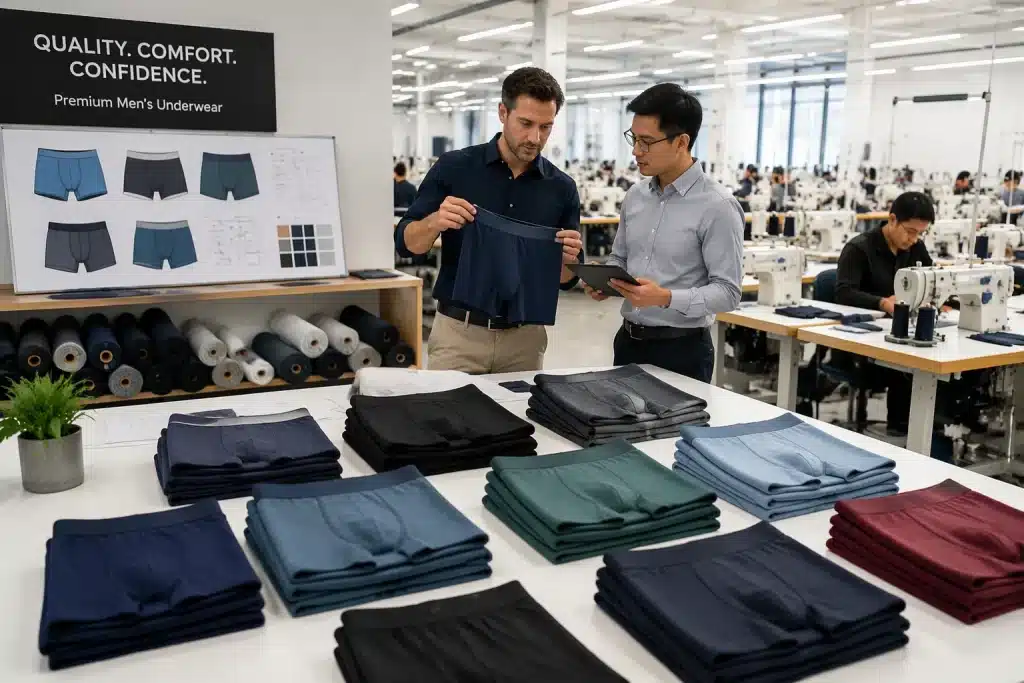
The best private label men’s underwear UK manufacturer balances quality, flexibility, reliability, and clear communication. A brand must check product development, MOQs, lead times, certifications, sampling, and pricing before committing. How can you tell a good supplier from a costly mistake?
A boxer briefs manufacturer for UK brands should provide samples, fabrics, branding, packaging, and delivery in one clear process. Britain’s market welcomes new labels, but a supplier serving the nation may not actually make its products there. Check the production origin early on. This article guides the reader through every stage of choosing a manufacturing partner, from the initial design briefs to the final contracts.
Key Takeaways
Begin with product development. Pick your styles, fabrics, and finishing touches. Set a sensible budget before you contact suppliers.
Know the difference between private label and white label. Private label creates custom designs. White label gives you speed and lower risk.
Look into suppliers with care. Pick three to five factories for your shortlist. Ask about their experience, client references, and audit reports.
Check quality. Inspect fabric, stitching, waistband, finish. Confirm early where it’s made.
Check delivery times and MOQs. A flexible partner helps new brands. Ask for written schedules and itemised costs.
Get samples, run wear trials. Test fit, comfort, durability after washing. Use honest feedback to improve the design.
Check certificates and rule-following. Ask for OEKO-TEX, REACH, audit reports. This keeps the brand safe in shops.
Make clear contracts. Protect patterns, designs, intellectual property. Agree payment stages. Put exclusivity in writing.
Private Label Men’s Underwear UK: Start With Product Development
Choose Styles, Fabrics and Finishing Details
Product development starts with the collection itself. A brand needs to pick styles, fabric mixes, colour matching, structure, finishing touches and packaging. These choices affect how the underwear feels, works and sells. A boxer briefs manufacturer for UK brands should offer samples, fabrics, branding, packaging and delivery as one clear service. The fabric choice affects breathability, stretch and durability. Colour matching keeps the range looking the same. Structure decides whether the fit suits different body types. Finishing touches, like flatlock seams or a soft waistband, cut down irritation. Packaging protects the product and carries the brand message.
A good manufacturer helps with custom design all the way to bulk production. This help covers custom fabrics, woven labels, printed waistbands and retail-ready packaging. The brand should check where production happens early. A supplier serving Britain may not actually make its goods there. Overseas production can cut costs, but it adds shipping time and customs steps. Domestic production gives shorter lead times and easier quality checks. The brand must weigh these trade-offs before signing anything.
Set a Realistic Budget and MOQ Range
A clear budget stops wasted talks. The brand should set its target customer, price range and delivery deadline before contacting manufacturers. A premium position allows higher fabric costs and smaller runs. A value position demands tight cost control and larger volumes. The minimum order quantity, or MOQ, sets the smallest run a factory will take. Low MOQs suit a new men’s underwear brand that tests the market. High MOQs lower the unit price but tie up cash and warehouse space.
The brand should ask each supplier how they balance low MOQs with steady quality. Some factories charge a higher unit rate for small runs. Others turn down small orders altogether. A realistic MOQ range keeps the search focused. The budget should also cover sampling fees, shipping, duties and marketing. Starting an underwear brand takes patience. A rushed order often leads to unsold stock.
Build Your Men’s Underwear Brand
Brand building starts with the product. A strong men’s underwear brand competes on comfort, fit and identity. The manufacturer plays a direct role in that identity. Custom labels, waistbands and packaging turn a generic garment into a branded item. The brand should ask for samples of each fabric and trim before approving bulk manufacturing. This step confirms the look and feel.
The brand should also plan its delivery schedule. Production timelines depend on fabric availability, printing and shipping. A clear brief helps the manufacturer quote accurately. Good communication during product development saves time later. The brand that defines its collection, budget and identity first will choose a better manufacturing partner.
Understand Private Label, White Label and OEM
Know What ‘Private Label’ Really Means
The term private label means different things in this industry. Some suppliers use it for designs they already make under a client’s label. Others build an underwear brand step by step, from the first sketch to the final box. A buyer must ask which model a factory follows before comparing prices. This one question shapes design control, minimum order quantities, lead times and pricing.
A true private label partner offers samples, fabrics, branding, packaging and delivery as one service. The buyer should check where production happens early. A supplier serving Britain does not always make its goods there. Overseas production may cut costs but adds shipping time and customs checks. Domestic production shortens lead times and makes quality checks simpler. Both routes work if the buyer knows the facts from the start.
Decide Between White Label and Full Custom Manufacturing
White label means the factory already has a finished design. The buyer adds a logo and sells the product as their own. This route suits new labels that need speed and low risk. Full custom manufacturing lets the buyer control fit, fabric weight, seam placement and waistband tension. That control costs more and takes longer to develop.
The choice affects moqs directly. White label orders often start smaller because the factory already runs the style. Custom work usually needs larger runs to cover pattern making and material sourcing. Lead times follow the same pattern. A white label order may ship in weeks, while a custom programme can take months from design approval to bulk delivery. Neither option is better. The right choice depends on the brand’s budget, timeline and ambition.
Ask About Custom Styles and Support
A men’s underwear brand should ask which custom styles a factory can make. Common requests include boxer briefs made for UK buyers, trunk cuts, briefs and period underwear. Each style brings its own pattern work, fabric needs and finishing requirements. A good manufacturer explains these details clearly and gives technical advice on fit and materials.
Support quality separates strong suppliers from weak ones. The best partners answer questions about fabric sourcing, label placement and packaging options. They give samples before bulk manufacturing and welcome feedback. Poor communication at this stage signals trouble later. A men’s underwear manufacturer that spends time at the enquiry stage will usually deliver a smoother production run. The buyer should treat this early talk as a test of the working relationship.
Research UK Underwear Manufacturer Options
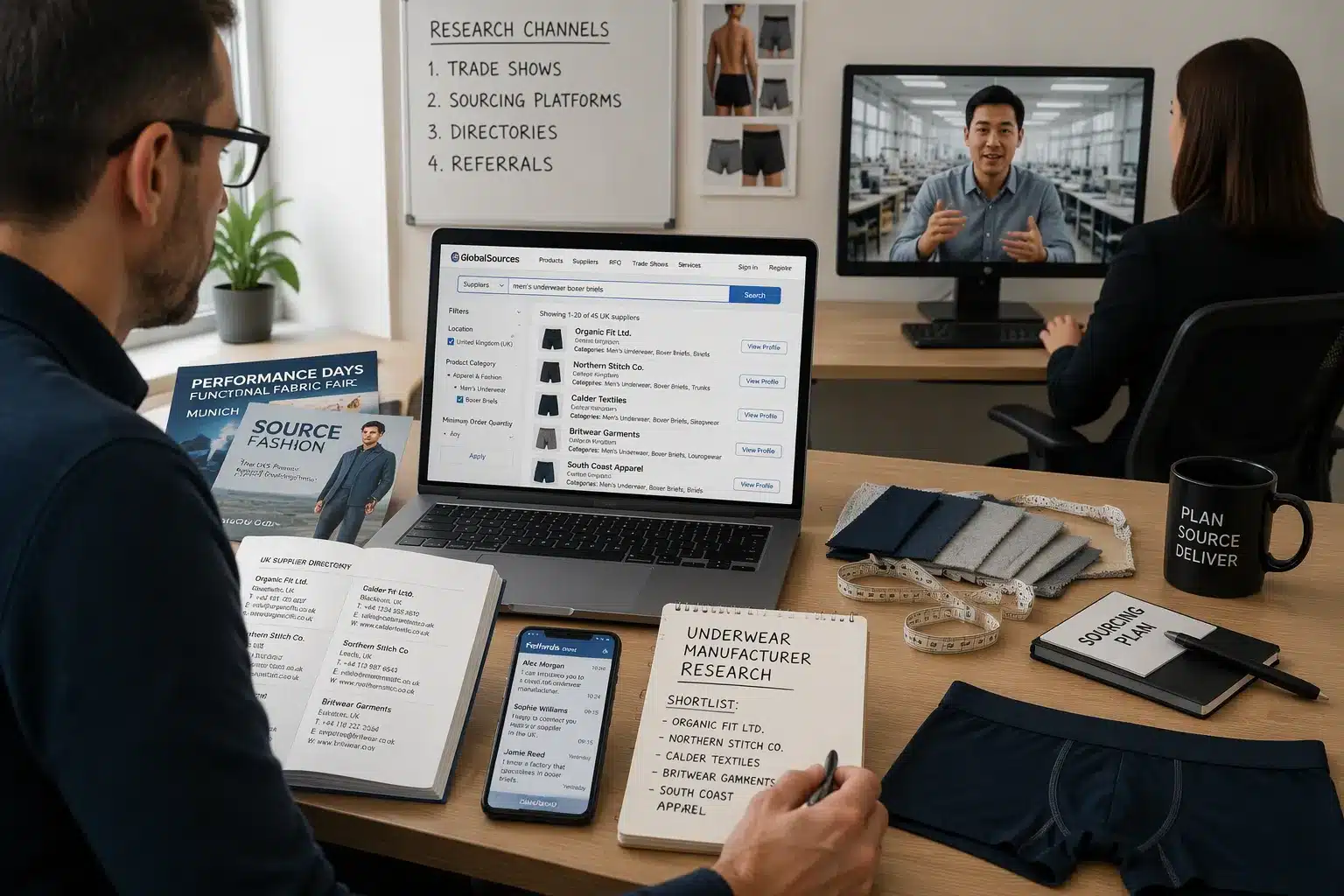
To find a trusted private label men’s underwear UK partner, start with an organised search. Brands should use different channels: industry trade shows, B2B sourcing platforms, online directories and professional networks. Each channel offers different options. A trade show lets a brand meet factory owners and sales teams in person. A sourcing platform gives access to a wide list of manufacturers. Online directories show contact details and product categories. Industry networks pass on referrals from brands that already run production lines. Using all four channels broadens the options. It also helps the brand notice the same names in different places.
Find a Boxer Briefs Manufacturer for UK Brands
A brand needs a supplier that focuses on the right product. Boxer briefs need special pattern work, fabric stretch and careful waistband construction. A boxer briefs manufacturer for UK brands must show experience with that exact item. The brand should ask what the factory mainly makes. A factory that only makes basic trunks may struggle with a complex boxer brief spec. The same idea applies to briefs and long-leg styles.
Look for factories that focus only on underwear. They understand gusset construction, elastic tension and seam placement. They also know how to find suitable fabrics and trims. A general clothing factory does not have this depth. The brand should list its target styles before searching. That list steers the search and saves wasted enquiry time.
Check Experience and Reputation
A factory’s client list shows its experience. The brand should ask how long the supplier has made men’s underwear and which brands it works with. Long-term relationships with known labels show steady performance. The brand should also check the product range. A wide range means flexible skills. A narrow range means deep focus in one area.
Reputation is more than marketing talk. The brand should ask for client references and contact them. Trade reviews and industry forums show common complaints or praise. The brand should confirm where production happens. A supplier serving the UK may not actually make its products there. Ask for factory addresses and audit reports. This step tells real UK production apart from importers pretending to be factories.
Shortlist and Compare Suppliers
The screening process should leave a shortlist of three to five suppliers. Each candidate should offer samples, fabrics, branding, packaging and delivery. The brand should prepare the same question list before contact. This list covers MOQs, lead times, certifications and communication channels. The same questions make it fair and easy to compare.
Suppliers with vague answers drop out fast. Experienced manufacturers give clear details without delay. The brand should keep every quote and answer in one document. This record shows price gaps and service levels. A final check looks at reliability, cost and fit. The supplier that answers clearly and helps the men’s underwear brand through sampling earns the next conversation.
Evaluate Men’s Underwear Quality and Materials
Inspect Fabric, Stitching and Finish
Before saying yes to a production run, a buyer should check fabric weight, stretch, breathability and finish. Light fabrics work well in warm weather. Heavier knits last longer but might feel hot. Stretch decides how the garment moves with the body. Materials that breathe and manage moisture keep the wearer dry. The finish covers softness, colour fastness and resistance to pilling. These things decide if the underwear feels premium or cheap.
Stitching and construction matter just as much. The buyer should look at seam strength, stitch density and how the waistband is attached. Bad stitching causes irritation and early failure. Accurate pattern cutting keeps the fit the same across every unit. A good manufacturer treats these construction rules as non-negotiable. The buyer should ask to see samples and confirm fabric specs before placing a bulk order. Branding options, packaging details and delivery terms also belong in this review. A supplier serving Britain may not make its goods there, so the buyer must check the production origin early.
Trace Fabric Sourcing and Logistics
Where materials come from affects cost, lead time and sustainability claims. A factory that sources fabric locally may charge more but deliver faster. Overseas sourcing lowers the unit price but adds shipping time and customs steps. The buyer should ask where each fabric comes from and how the factory handles delays. A clear answer shows operational discipline. A vague answer signals risk.
Logistics also shape the final price. Freight, duties and warehousing add to the landed cost. The buyer should ask for a full breakdown before comparing quotes. Fabric quality ties directly to these numbers. A cheap fabric may save money upfront but harm the underwear brand’s reputation later. The buyer should confirm whether the supplier holds stock or orders per run. This detail affects lead times and minimum order quantities.
Ask About Quality Control Processes
Quality control must cover cutting, stitching and packing. The buyer should ask how the factory checks each stage. Does it inspect fabric before cutting? Does it test seam strength after stitching? Does it check label placement and packaging before dispatch? A strong process catches faults early and cuts waste.
The buyer should also ask for audit reports and client references. These documents show whether the factory meets its own standards. A reliable partner welcomes these questions. A defensive supplier avoids them. The buyer who checks quality control before signing a contract protects both the fit and comfort of the final product and the brand’s long-term reputation. High-quality underwear depends on these checks, not on hope.
Assess Manufacturing Capabilities and Lead Times
Men’s Underwear Manufacturing Capacity and Equipment
A factory’s capacity decides how much underwear it can make each month. The buyer should ask for the monthly output in units and the number of active production lines. A small workshop may handle low volumes well. A large plant may offer better unit prices on big runs. The buyer must match the factory’s scale to the brand’s growth plan. A men’s underwear brand that expects rapid growth needs a partner that can scale up without losing quality.
Equipment matters just as much. Modern knitting machines, automated cutting tables and flatlock sewing stations improve consistency. The buyer should ask which machines the factory owns and how it maintains them. A factory with outdated equipment may struggle with fine fabrics or complex patterns. The buyer should also confirm where the manufacturing takes place. A supplier serving Britain does not necessarily manufacture there. The buyer must confirm production origin early. This step separates genuine uk production from imported goods with a local label.
Lead Times and On-Time Delivery
Lead times run from design approval to bulk delivery. The buyer should request a realistic timeline in writing. A typical schedule covers fabric sourcing, sampling, cutting, stitching, finishing and shipping. Each stage adds days or weeks. A factory that promises very short lead times may cut corners. A factory that gives a clear breakdown shows discipline.
On-time delivery protects the brand’s launch date and cash flow. The buyer should ask for the factory’s on-time delivery rate. A strong record builds trust. The buyer should also ask how the factory handles delays. Good manufacturers communicate problems early and offer solutions. Poor ones stay silent until the deadline passes. The buyer should build a buffer into the schedule for customs, shipping and unexpected issues.
MOQ Flexibility and Sampling Speed
Minimum order quantities vary widely across factories. Some suppliers demand large runs to cover setup costs. Others offer flexible MOQs for new underwear brands. The buyer should ask how the factory balances low MOQs with consistent quality. A flexible partner may charge a higher unit rate for small orders. That trade-off often suits a brand that tests the market first.
Sampling speed shows how well a factory works. The buyer should ask how long a pre-production sample takes. A fast sample turnaround lets the brand check fit, fabrics, branding, packaging and delivery before committing to bulk. The buyer should also ask about certifications during this stage. Certifications affect eligibility for large retail orders. A factory that answers these questions clearly earns a place on the shortlist.
Check Certifications and Compliance
UK and EU Regulatory Standards
Certifications keep the brand and the buyer safe. A manufacturer has to follow important textile rules for the UK and EU markets. These rules cover fibre content labels, care instructions and country of origin. They also cover chemical safety. OEKO-TEX Standard 100 is a common certificate for textile safety. REACH controls chemical substances in the EU. UKCA marking applies to some products sold in Great Britain. A supplier must show valid certificates for every fabric and trim used in production.
The buyer should ask for these papers before approving samples. A certificate that ran out last year protects no one. The buyer should also check that the certificate covers the exact fabric weight and colour used in the order. A general certificate for a different material proves nothing. Labelling rules matter too. Each garment needs a fibre content label, a care label and an origin label. Missing labels can stop a retail order.
Ethical Manufacturing and Audits
Ethical manufacturing protects workers and the brand’s reputation. The buyer should ask for audit reports from recognised social compliance programmes. These reports show whether the factory meets labour standards on wages, hours and safety. A factory that will not share audit documents is a red flag. The buyer should also ask about the factory’s code of conduct. A written code shows a promise to trade ethically.
Audit reports also reveal where production happens. A supplier serving Britain does not always make goods there. The buyer must confirm where the factory makes the items. This step matters for both ethical claims and customs rules. A brand that claims British production needs proof. The buyer should ask for factory addresses and audit dates. These details tell real manufacturers apart from trading companies that outsource everything.
Material and Chemical Compliance
Chemical safety is a legal duty, not a marketing choice. The buyer should ask how the factory tests fabrics for harmful substances. Azo dyes, formaldehyde and heavy metals are restricted under UK and EU law. A responsible manufacturer tests each fabric batch and keeps records. The buyer should request these test reports along with the samples.
Material compliance also affects the quality of the final underwear. A fabric that passes chemical tests may still fail on shrinkage or colour fastness. The buyer should ask about testing for these properties too. Certifications can affect eligibility for large UK retail orders. Many retailers demand OEKO-TEX or equal proof before listing a product. A men’s underwear brand that plans to sell through major outlets should confirm certification early. The same rule applies to branding, packaging and delivery claims. A supplier that cannot prove compliance puts the whole order at risk.
Discuss Pricing and Minimum Order Quantities
Understand MOQs and Cost Breakdowns
Low minimum order quantities can still come with high quality. Some factories raise their price for small orders. Others require big volumes to buy materials. A new underwear brand should ask each supplier how it handles this trade-off.
MOQs affect cash flow. A high MOQ cuts the cost per item but locks up money. A low MOQ helps a brand test the market. The buyer should compare costs for fabric, trims, packaging, shipping and inspection.
What Should a Manufacturing Quote Include?
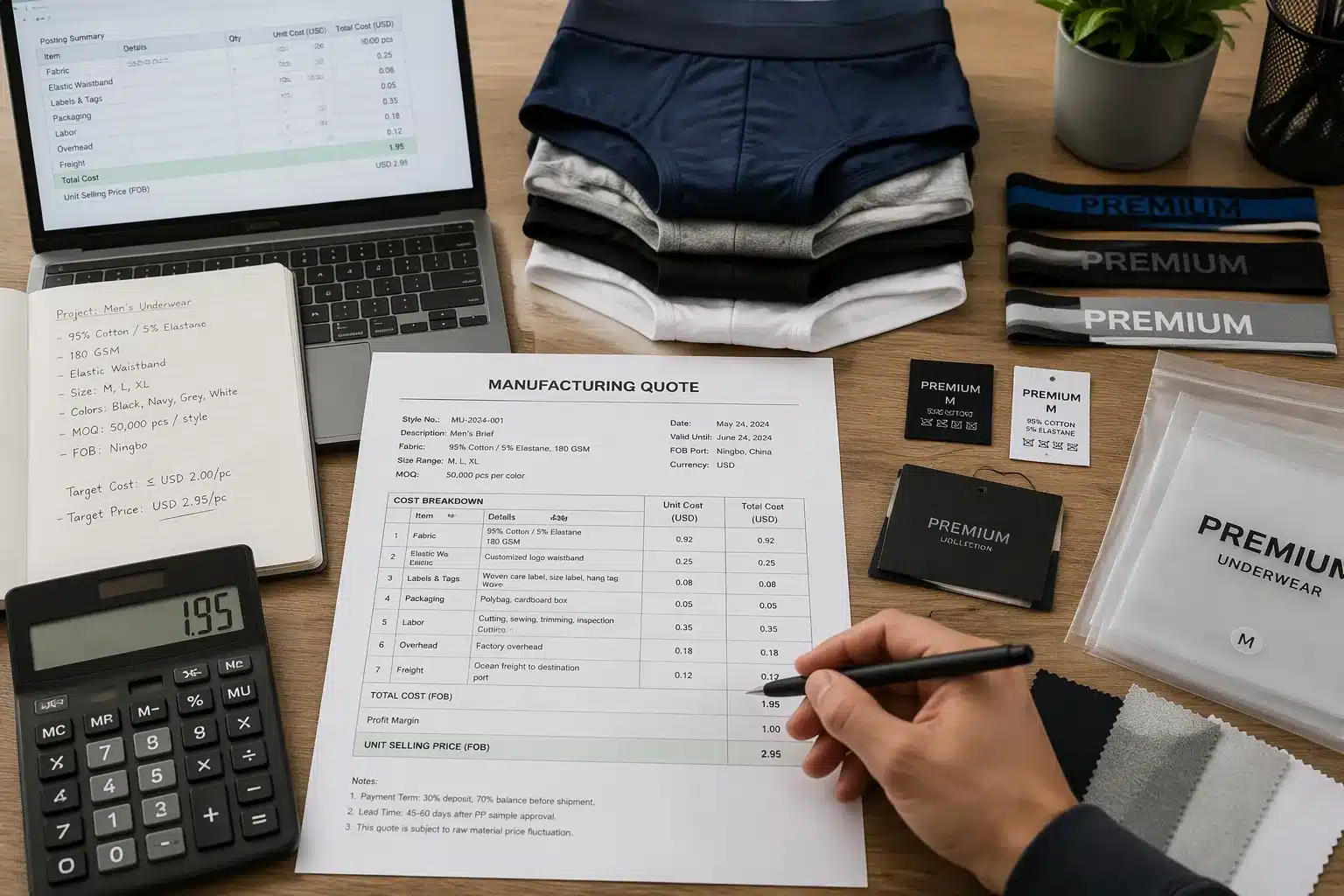
A full quote lists every cost. It covers materials, wages, running costs, shipping and checks. It also says where goods are made.
A supplier serving Britain may not make goods there. The buyer should check the factory address early. The quote should say what happens to rejected items. Without this, comparing quotes is guesswork.
Fabric, Trims and Packaging Costs
Fabric is often the largest cost. Price changes with fibre, weight and finish. Trims include waistbands, woven labels and thread. Packaging includes polybags, boxes and printed inserts. The buyer should ask for a line-by-line list.
A factory that quotes a different fabric weight from the sample will disappoint. The buyer should confirm branding options in the quote. Packaging choices affect unboxing and shop approval.
Labour, Overheads and Logistics
Labour rates vary with location. UK production raises wages but cuts delivery time. Overseas production lowers wages but adds freight, duties and customs delays. The quote must list shipping costs separately.
The buyer should check where each step takes place. A supplier with a London office should not claim British manufacturing. The buyer should ask for factory addresses and audit documents. This protects the men’s underwear brand from false claims.
Quality Control and Contingency Costs
Inspection costs include fabric checks, seam tests and packing checks for underwear. A reliable factory builds these checks into the price. Contingency covers faulty fabric, re-cutting and delay penalties. A quote without contingency is unrealistic.
The buyer should ask about the factory’s reject rate and inspection process. This shows whether the promised standard is real. A low quote with weak inspection creates costly returns later. Reliable suppliers welcome this question.
Negotiate Price Without Sacrificing Quality
The cheapest quote is a mistake. A low price often means worse fabric or poor communication. The buyer should consider reliability, delivery times and support. A mid-priced supplier protects the brand better. Negotiation can target volume discounts, shared packaging orders or longer payment terms.
Don’t let price lower the agreed standard. The buyer should ask suppliers how to cut costs without changing fabric or trims. Options include larger rolls, combined shipping or simpler packaging. If a factory cannot answer, it may plan to cut corners.
Evaluate Communication and Customer Service
Test Responsiveness Before You Commit
A brand should send a test question to every manufacturer it has shortlisted. The question should cover samples, fabrics, branding, packaging and delivery. The brand then checks how fast the reply arrives and how clear it is. A quick, detailed answer shows a well-run business. A slow or unclear answer points to trouble ahead. The test costs nothing and tells a lot.
The brand should also look at how each supplier talks to clients. Some factories email back within a day. Others may take a week or never reply. A supplier that cannot answer a simple question before an order will likely struggle later. For the whole project, good communication at this stage builds trust.
Check Technical Support and Expertise
For fabric, fit and packaging choices, a good manufacturer gives useful technical help. It is worth asking how the factory helps with fabric weight, stretch and breathability. The brand should also ask how the factory advises on fitting different body shapes and sizes. A supplier that responds very well can prevent costly mistakes. A supplier that ignores these questions leaves the brand alone.
Technical skill also matters for branding and packaging. The factory should cover label placement, waistband printing and retail-ready boxes. It should send samples before bulk production. This support shows a true partner, not an order-taker. The brand should make this skill a very important part of choosing a factory.
Spot Warning Signs Early
Slow replies, unclear answers and refusal to share details are warning signs. If a supplier avoids questions about production origin, goods may not be made in Britain. A supplier serving Britain may not make goods there. The brand must check where the factory makes each item. This step protects the brand from false claims.
Other warning signs are refusing to provide samples, no audit reports and unclear prices. A supplier that cannot explain its quality checks will probably make poor underwear. The brand should leave any supplier that avoids basic questions. Reliable suppliers like being checked. They always answer clearly and treat the brand as a long-term partner, not a one-off order.
Request Samples and Conduct Wear Trials
Order Pre-Production Samples
A brand must order pre-production samples before it agrees to bulk manufacturing. This step proves the factory can make samples that match the approved specification. The sample should cover fabrics, branding, packaging and delivery details. A supplier serving Britain does not always make its goods there. The brand must confirm production origin before it approves the sample. This check protects the brand from false claims and customs problems.
The sample review also tests how well the factory communicates. A supplier that sends a sample quickly and answers questions clearly earns trust. A slow or vague reply signals trouble. The brand should compare the sample against the original brief. Any gap in fabric weight, colour or stitching needs fixing before bulk production starts. A signed sample becomes the reference point for the whole order.
Test Fit, Comfort and Durability
The brand should test fit and comfort on real bodies. Different body shapes reveal problems with pattern cutting. The waistband must hold without digging in. Leg openings should stay flat and not ride up. The brand should also check stitching strength and seam placement. Poor stitching causes irritation and early failure.
Durability testing follows the same logic. The brand should wash the sample several times and check for shrinkage, colour loss and elastic fatigue. A garment that loses shape after a few washes will damage the brand’s reputation. The brand should test fit and comfort again after washing. This step shows whether the underwear keeps its quality over time. A men’s underwear brand that skips this check risks costly returns.
Run Wear Trials and Gather Feedback
Small wear trials with target customers give honest feedback. The brand should recruit a handful of testers who match the target market. Each tester wears the underwear for a set period and reports on comfort, fit and durability. This feedback often reveals issues that a factory inspection misses. Testers notice waistband tension, fabric breathability and movement during daily activity.
The brand should collect feedback in a simple format. Questions about comfort, fit and washing performance work well. Negative feedback is more useful than praise at this stage. The brand can take problems back to the factory and ask for changes before bulk production. A supplier that welcomes this process is a true partner. A supplier that resists feedback will struggle to deliver consistent quality.
Negotiate Terms and Contracts
Before any production run starts, the buyer and the manufacturer must agree clear terms on paper. A written contract protects both sides. It sets the price, the schedule and the quality standard. It also stops costly disputes later. A handshake means very little without this document.
Payment Terms and Deposit Structures
A manufacturer usually asks for a deposit before cutting fabric. The deposit covers raw materials and holds factory space. The rest is paid at agreed stages, not all at once. The buyer should ask for a payment plan in the quote. A clear plan shows exactly when money changes hands.
Stages tie payments to progress. The buyer pays after design approval, after bulk stitching and after final inspection. This setup protects cash flow. It also gives the buyer power if quality drops. Every percentage and date must be written down. Verbal promises mean nothing. A reliable factory explains why each payment stage exists. A vague supplier avoids this detail and leaves the buyer at risk.
Exclusivity and Intellectual Property
The buyer must talk about ownership before signing anything. Custom patterns, fabric specs and brand artwork belong to the brand. A contract should say this clearly and in full. This clause stops the factory from reusing the design for another client. The buyer asks if the factory makes a similar underwear range for a rival. Ownership of digital files matters too. The brand should get patterns and tech packs in editable form.
Exclusivity also needs a clear definition. Does the buyer want UK-only rights or worldwide rights? Does the factory already supply a rival label with the same cut? The answers change the price. A factory that won’t put exclusivity in writing is a warning sign. A good partner offers fair terms and keeps the brand’s identity separate. The buyer should ask how long exclusivity lasts and if it renews on its own.
Confidentiality and Contract Essentials
A confidentiality clause keeps pricing, samples and technical files secret. The clause must cover both sides. The duty of secrecy lasts even after the contract ends. Staff cannot share fit data with competitors. Breaking the rule should carry a clear penalty. A set penalty makes the promise real.
The contract must list every agreed document. Quotes, fabric swatches and packaging proofs form part of the deal. The buyer keeps a paper trail for all changes. The contract covers sampling, fabrics, branding, packaging and delivery in one clear schedule. A supplier serving Britain does not always make goods there. The buyer must confirm the factory address and the real manufacturing origin before signing. This one check protects the brand from false claims and customs delays. A final read of the whole contract stops surprises at delivery time.
Product development starts every good collection. A buyer must research suppliers, check quality and compliance, compare MOQs and quotes, ask for samples and agree clear contracts. The best private label men’s underwear UK; boxer briefs manufacturer for UK brands talks clearly and backs the brand’s goals. It is not just the cheapest choice. Confirm where production happens early; a supplier serving Britain does not always make its goods there. Check samples, fabrics, branding, packaging and delivery.
Build a scorecard that ranks each candidate on quality, cost, lead times and communication. Give points for comfort, fit and honest answers. A men’s underwear brand needs a partner that cares about product development and long-term results. Comfort drives repeat purchases. Men’s underwear relies on these checks. An underwear brand that follows this process guards its reputation.
Ask for samples and full quotes from at least three manufacturers in the UK today.
FAQ
What is a typical MOQ for private label men’s underwear?
MOQs are very different from factory to factory. Some factories take small runs for new underwear brands. Others ask for much bigger volumes. A brand should ask each supplier straight away. Low MOQs push the unit price up. High MOQs cut costs but lock up cash. Both ways can work.
How long does pre-production sampling take?
Sampling times are not the same at every factory. For private label men’s underwear UK, a boxer briefs manufacturer for UK brands often sends samples in a few weeks. The brand should ask for a written timeline. Quick sampling means faster fit tests. Slow sampling pushes the launch date back.
Should a brand manufacture in the UK or overseas?
UK production gives shorter lead times. It also makes quality checks easier. Overseas production cuts costs but adds shipping time. A supplier serving Britain may not make goods there. The brand must check the factory address before signing.
What certifications should a manufacturer hold?
OEKO-TEX Standard 100 and REACH compliance are important. These cover chemical safety. The buyer should ask for audit reports and test records. Certifications affect eligibility for large retail orders. A factory without valid papers is a serious risk.
How can a brand verify true UK manufacturing?
Ask for the factory address and audit documents. Check where cutting and stitching take place. Some suppliers have London offices but produce abroad. Request video calls or site visits. A refusal to share evidence is a warning sign.
What should a manufacturing quote include?
A full quote lists fabric, trims, packaging, labour and shipping. It should show quality control costs. Samples, branding and delivery terms belong in the same document. Compare each section across suppliers. A vague quote hides hidden fees.
How many samples should a brand request?
Order at least one pre-production sample per style. Test fit, comfort and durability. Wash the samples several times. Run small wear trials with target customers. Collect honest feedback before bulk production. This step stops costly mistakes.
What payment terms are standard?
Factories usually ask for a deposit before production. The balance follows at agreed milestones. Payment stages protect both sides. The buyer should confirm every date and percentage in writing. Verbal promises are worth nothing.
See Also
Selecting A Private Label Men’s Underwear Maker In 2026
Finding Private Label Men’s Underwear In The UK Easily
US Brands: OEM Versus ODM For Private Label Men’s Underwear
My Quest For A Trustworthy UK Men’s Underwear Wholesaler
Locating The Ideal Custom Waistband Underwear Manufacturer For You