


You can tell a trustworthy underwear wholesaler in Johannesburg by one habit: they show proof before you pay. Ask for their registration, trade references, and a sample you can wash and inspect. A risky supplier avoids those requests and pushes you toward a deposit.
This post gives you trust rules, named wholesalers to shortlist, and clear steps to check before payment. You’ll also see how local stock, private label, and import/OEM routes compare, so you can match the model to your order size and cash flow. Shortlist two or three underwear wholesalers in Johannesburg, then test them with a small trial order first.
Key Takeaways
Ask for their registration, trade references, and a sample before you pay any money.
Wash and look over a sample to check the fabric quality and stitching.
Ask for all prices, defect rules, and delivery times in writing.
Begin with a small test order to check how reliable the supplier is.
Compare local and imported choices by looking at the full landed cost for each unit.
Pick the sourcing model that fits your order size and cash flow.
Go to the warehouse or have a third party check the goods before you pay the rest of the money.
Pick two or three suppliers, then check their papers and references.
Trust Criteria for Wholesalers
Product quality
Fabric and stitching
Ask for a sample before you talk about price. Rub the fabric between your fingers and see how it bounces back. A good cotton or cotton-blend knit springs back and keeps its shape. A weak one stays stretched out. Turn the garment inside out and look closely at the seams. Even stitching, clean overlocking, and no loose threads show that the factory controls its line. Pull gently on the waistband and leg openings. They should snap back without twisting.
Batch consistency
One good sample does not prove much. Ask whether the next batch will match it. A reliable supplier keeps fabric lots and dye lots the same, so your second order looks like your first. Ask for photos or a sample from a recent bulk run. Compare shade, weight, and stretch against your first sample. If the color shifts or the fabric feels thinner, you have found a warning sign early.
Pricing transparency
Unit and size-mix pricing
A trustworthy quote breaks down the unit price by style and size. Some suppliers charge one flat rate across S to 2XL. Others charge more for larger sizes, which is fair when fabric use goes up. Ask for the size curve in writing. Confirm whether the price covers labels, polybags, and cartons. Hidden packaging charges slowly eat away your margin.
Returns and defect terms
Get the defect policy in writing before you pay. Ask what counts as a defect, how many units per order you can claim, and whether the supplier replaces stock or gives credit. A wholesaler who answers clearly has done this before. Vague answers about “sorting it out later” usually mean you carry the loss.
Reliability and compliance
Lead times and accuracy
Ask for a realistic lead time and a fill-rate figure. Then test it with a small order. Did the stock arrive on the promised date? Did the counts match the invoice? Reliable underwear wholesalers in Johannesburg hit their dates and flag problems before shipping day. Keep a simple record of every order. Two or three clean deliveries build real confidence.
Registration and references
Request the company registration and tax clearance certificate. Then call two trade references and ask about delivery accuracy and defect handling. A supplier with nothing to hide shares these documents without fuss. One who stalls or sends excuses deserves a second look before your money moves.
Local Replenishment vs Import OEM
Both routes work. The right one depends on your order size, your cash flow, and how much control you want over the product. Here is where each fits best.
Local strengths
Speed and low minimums
Local replenishment wins when you need stock on the shelf fast. You can restock a popular size in days, not weeks. Minimums stay low, so you test a style without tying up much cash. That matters when you run a small shop or sell through social media. You buy what you need, sell it, and buy again.
In-person inspection
You can visit a Johannesburg warehouse, open a carton, and check the stitching yourself. If a batch looks wrong, you drive back and sort it out face to face. Returns are simpler too. You hand the stock back and get credit or a swap. That kind of hands-on control is hard to match from a distance.
Import strengths
Volume pricing
Import OEM pays off when you order in volume. Unit costs drop as quantities rise, and you spread freight and clearing fees across more pieces. The catch is that you commit cash upfront and wait for production and shipping. Run the math on your full landed cost before you compare it to a local quote. A lower unit price can shrink once freight, duties, and agent fees land on top.
Custom branding
Import OEM gives you full spec control. You choose the fabric weight, the waistband, the label, and the packaging. That lets you build a brand rather than resell someone else’s. Expect higher minimums and longer lead times in return. Plan your cash flow around the production and shipping window.
Choosing between them
Order size and cash flow fit
Ask yourself one question: how much cash can you lock up for a full production cycle? Small, steady orders fit local supply. Large orders with a brand play fit import OEM. A common path is to start local, learn which styles sell, then move your best sellers to an import run. Either way, request samples and inspect before you pay the balance.
Stock, Private Label and Made-to-Order
Stock purchase
Fastest to shelf
Stock purchase is the quickest route from payment to shelf. You pick styles a wholesaler already holds in a Johannesburg warehouse, pay, and collect. No production window, no shipping wait, no clearing agent. For a new shop testing demand, that speed matters more than a few rand off the unit price.
You also keep your cash free. Buy a small batch, sell it, and reinvest. Compare that against an import run, where your money sits in a factory queue for weeks. Run the numbers on both before you decide.
Limited differentiation
The trade-off is sameness. Other shops can buy the same styles from the same wholesaler. Your customer may spot the identical three-pack down the street. Stock purchase suits resellers who compete on convenience and price, not on brand.
If you want a distinct look, treat stock as your testing ground. Find the styles that sell, then move those winners into private label or a custom order.
Private label
Your brand on proven styles
Private label puts your name on styles that already sell. You choose a proven cut, add your label and packaging, and skip the risk of an unproven design. This sits nicely between stock and full custom work.
Ask the supplier which styles they already produce at volume. Proven patterns mean fewer surprises in fit and finish.
Moderate minimums
Expect minimums above stock levels but below full custom production. That middle ground lets a growing retailer build a brand without a huge cash commitment. Confirm the minimum per style and per size, not just per order. A low headline number can hide a size-mix requirement that leaves you holding odd sizes.
Made-to-order
Full spec control
Made-to-order gives you the whole specification. You set the fabric, the waistband, the stitching, and the label placement. This route suits a brand with a clear identity and steady demand.
Control comes with responsibility. You approve the spec sheet, the sample, and the pre-shipment inspection. Every detail you leave open, the factory decides for you.
Longer lead times
Production and shipping stretch your timeline well beyond a local restock. Plan your cash flow around that gap. Weigh the lower unit cost at volume against the landed cost — freight, duties, clearing fees, and last-mile delivery all add up.
A simple test helps: compare your full landed cost per unit against the local stock price. If the gap is thin, the low minimum and fast turnaround of a Johannesburg wholesaler may serve you better.
MOQ, Size Mix and Packaging
MOQ and size curves
Per-style vs per-order minimums
A per-order minimum lets you spread units across several styles. A per-style minimum forces you to commit depth to each one. Read the quote carefully, because a low headline number often hides a per-style rule. Ask the supplier to state both figures in writing.
Then run the worth-it test. Take the total order cost — unit price plus freight, duties, clearing, and last-mile delivery — and divide it by the units you can realistically sell. Compare that landed cost per unit against a local stock price. A low minimum only pays off when your full landed cost still beats the local option.
Size-mix expectations
Most wholesalers sell in a size curve, not single sizes. You might have to take a spread across small to extra-large even when one size sells fastest for you. Ask for the exact ratio before you order. Then check your own sales history against it.
If the curve leaves you heavy on slow sizes, that stock ties up cash. Negotiate a curve that matches your customers, or accept the standard mix and plan a clearance price for the leftovers.
Fabric and construction
Cotton, blends, stretch
Ask what fiber content you are buying and how much stretch the knit carries. Pure cotton breathes well and feels familiar to customers. Blends cost less and hold shape through repeated washing. Stretch content decides how the garment recovers after wear.
Request the spec in writing, then match it to your sample. A supplier who cannot name the fiber content is guessing, and you will pay for that guess in returns.
Finish standards
Check the waistband elasticity, the seam strength, and the label attachment. Pull the waistband and let it snap back. Rub the print or label and see if it lifts. These small checks reveal how the factory finishes its line.
Set your own pass standard before bulk production. Write down what you will reject, and share that list with the supplier.
3-packs and packaging
Pack configuration and labels
Decide whether you sell singles or multi-packs. A three-pack moves faster on a shelf and lifts your average sale. Confirm what goes on the pack — barcode, size label, fiber content, and your brand mark. Ask who prints the labels and who pays for them.
Retail-ready options
Retail-ready packaging saves you labor at the shop. Polybags with headers hang straight on a peg. Plain cartons cost less but need repacking. Weigh the packaging cost against your own time, then choose the option that protects your margin.
Landed-Cost Inputs
Product and freight
Unit price plus freight
Your landed cost starts with the unit price, but it does not end there. Add the freight charge for the whole shipment, then divide it across the units you ordered. That gives you a freight cost per piece. A quote that shows only the unit price hides half the story.
Ask the supplier to quote freight separately from the goods. Then you can see which part moves when you change order size. Keep every line in one sheet: goods, freight, insurance, and handling. You will compare this total against a local price later.
Volume effects
Freight does not scale in a straight line. A bigger shipment spreads the fixed costs — booking, documentation, and handling — across more units. That lowers your freight cost per piece. The goods price often drops at volume too.
Run the numbers at two or three order sizes before you commit. Compare the landed cost per unit at each level. Sometimes the jump from a small order to a mid-size one saves more than the jump to a huge one. Pick the size where your cash outlay and your unit cost both make sense.
Clearance and duties
Duty and VAT estimates
Your goods may attract customs duty and value-added tax when they enter South Africa. The rate depends on the product classification and the current tariff schedule. Do not guess these figures, and do not trust a rate you saw in an old forum post.
Ask your clearing agent for an estimate based on the actual product code. Confirm the current rates with SARS or a licensed customs broker. Build both duty and VAT into your landed cost before you compare it to a local quote. A supplier who cannot explain the classification is a risk.
Clearing agent fees
A clearing agent handles the paperwork, the release, and the delivery to your door. They charge for that service. Ask for a full fee breakdown upfront: clearance, documentation, and any storage if the container waits.
Get two quotes from different agents. The cheapest headline fee can hide add-ons. Add the agent fee to your landed cost sheet as its own line, so you always see what clearing really costs you.
Local delivery
Last-mile and warehousing
Once the goods clear, someone still has to move them to your shop or store. Last-mile delivery, forklift handling, and short-term warehousing all cost money. If you import, plan where the stock sits before it sells.
Local wholesalers often fold delivery into the price or charge a simple flat rate. Ask either way. A “free delivery” claim still has a cost buried somewhere.
Cost per unit
Add every line — goods, freight, duty, VAT, agent fees, and delivery — into one total. Divide that total by the number of sellable units. That figure is your true cost per unit.
Now compare it to the local wholesale price. If the gap is thin, the fast turnaround and low minimum of a Johannesburg supplier may serve you better. If the gap is wide, the import route earns its longer wait.
Supplier Proof and Inspection
Documents to request
Registration and tax clearance
Before you pay any money, ask for the company registration and a valid tax clearance certificate. A real wholesaler will send these without a problem. Make sure the registered name matches the name on the quote and the bank account. If they don’t match, that is a warning sign you should look into.
For a factory in another country, ask for the same documents plus a business license. Then check the bank details in a separate message using a different way to contact them. Payment fraud often starts with a changed account number, not a bad product.
Trade references
Ask for two or three trade references and really call them. Ask how often deliveries came on time, how the supplier handled a short shipment, and if they would order again. Past order records help too — invoices or packing lists from recent bulk orders show real volume.
A supplier who hides every reference is telling you something. So is one who shares them easily.
Sample evaluation
Wear and wash testing
Wash the sample at least twice before you judge it. Check for shrinking, color bleeding, and twisted seams. Pull the waistband and see if it goes back to its shape. Notice any pilling on the fabric surface.
This test matters more for imports, where you cannot drive to the warehouse later. A sample that fails at home will fail in your customer’s hands.
Spec comparison
Put the sample next to the written spec sheet. Compare fiber content, fabric weight, stitch density, and label placement one line at a time. Measure the garment flat and write down the numbers. Small gaps now turn into big disputes later.
Take a photo of the sample and keep it as your approved reference. That photo is your proof when the bulk order arrives.
Pre-shipment inspection
Inspection steps
Book the inspection before you pay the balance, not after. A third-party inspector checks quantity, size mix, measurements, stitching, and packaging against your approved sample. Ask for photos of the cartons and the packing list.
For local stock, do the same check yourself at the warehouse. Open cartons, count units, and compare them against the invoice before you pay.
Defect handling
Write the defect terms into the order confirmation. State what counts as a defect, the acceptable defect rate, and whether the supplier replaces stock or gives credit. Cover shortfalls too — what happens if the count comes up short.
Get a signature or a written reply. A verbal promise to “sort it out” protects nobody once the goods leave the floor.
Top Underwear Wholesalers in Johannesburg
How the list was vetted
Shortlisting criteria
I built this shortlist on four checks. First, a real address you can visit or a factory you can verify through documents. Second, a clear price list you can compare. Third, a stated minimum order and size curve. Fourth, proof they already supply South African shops. Each name below meets at least three of those checks. None of them paid for a place on the list.
What to re-verify
Prices and stock move fast in this market. Treat every figure here as a starting point, not a quote. Call or message each supplier and confirm four things: the current price, the size range, the minimum order, and the lead time. Then ask for a sample. A listing that was accurate last month may be stale today, and a stale price wrecks your margin math before you even order. That habit separates reliable underwear wholesalers in Johannesburg from listings that only look good on a screen.
Wholesalers to shortlist
Local stock and CBD suppliers
KK Wholesalers C5 sells underwear at around R130, with sizes running S to 2XL. You order through WhatsApp, which suits a quick restock from your phone. Confirm the size curve before you commit. A flat price across that whole range is generous, so check what the mix requires.
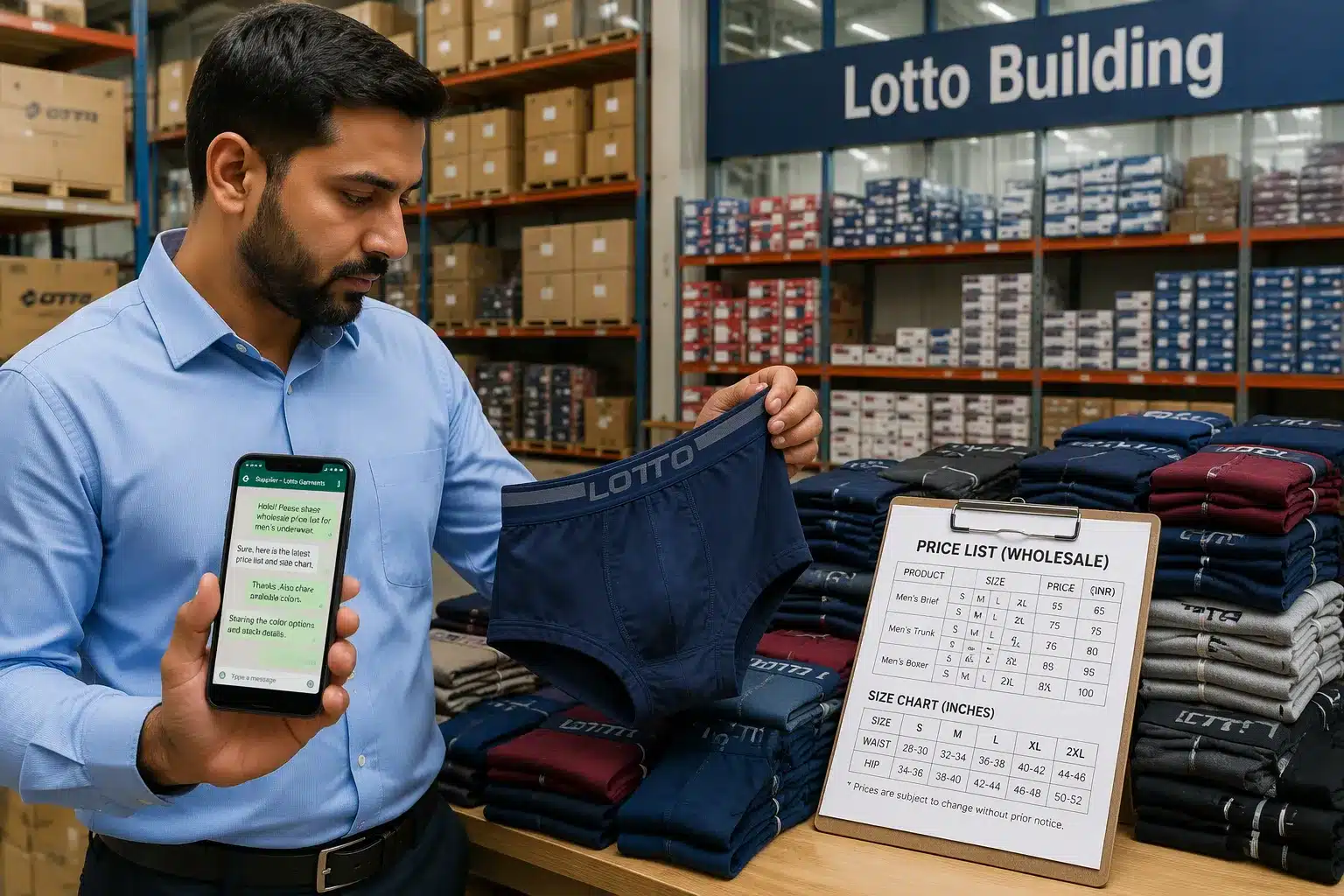
Bodywear sits at Lotto Building, 2nd Floor, Shop 202, in the Johannesburg CBD near Jeppe and Delvers. Bodywear pieces run about R120. The CBD location makes an in-person inspection easy. Open a carton, check the stitching, compare shades, and count the units before you pay.
A Johannesburg warehouse also offers low wholesale prices on socks, hats, and underwear, with delivery across South Africa. That mix suits a reseller who wants one supplier for several categories. Ask what the delivery charge adds per unit, then fold it into your cost sheet.
For bra and panty sets, the Jo’burg Factory shops groups are a useful lead source. Members post current stock and prices, so you can spot a deal and then verify it directly with the shop. Treat the group post as a lead, not as proof.
Import and private-label specialists
Hanyue Apparel Factory is a Chinese manufacturer that supplies lingerie, stockings, mesh sets, and sleepwear to South African shop owners. They hold ready stock with low minimums and also take OEM/ODM work. That combination lets you test a style on a small order, then scale your best seller into a custom run with your own label.
Compare that path against a local restock before you commit. Run your landed cost — goods, freight, duty, VAT, clearing, and delivery — and divide by sellable units. If the gap against a Johannesburg price is thin, the local option wins on speed and low minimums. If the gap is wide, the import run earns its longer wait.
Matching supplier to business
Retail, boutique, reseller fit
A high-street retailer with steady foot traffic needs fast replenishment. Local CBD suppliers fit that model, because you restock a fast size in days and keep cash free. A boutique that competes on look and feel fits private label better. Take a proven style, add your label, and accept moderate minimums. A reseller selling through social media often starts with local stock, learns which styles move, then moves the winners into an import or OEM order.
Match the model to your cash flow, not to the lowest unit price on a screen. A low minimum only pays off when your full landed cost still beats the local shelf price. That is the test that separates a good deal from a cheap headline. Shortlist two or three underwear wholesalers in Johannesburg, request samples and documents, and place a trial order before you scale.
Checking Underwear Wholesalers in Johannesburg
Checks Before You Order
Visiting and Samples
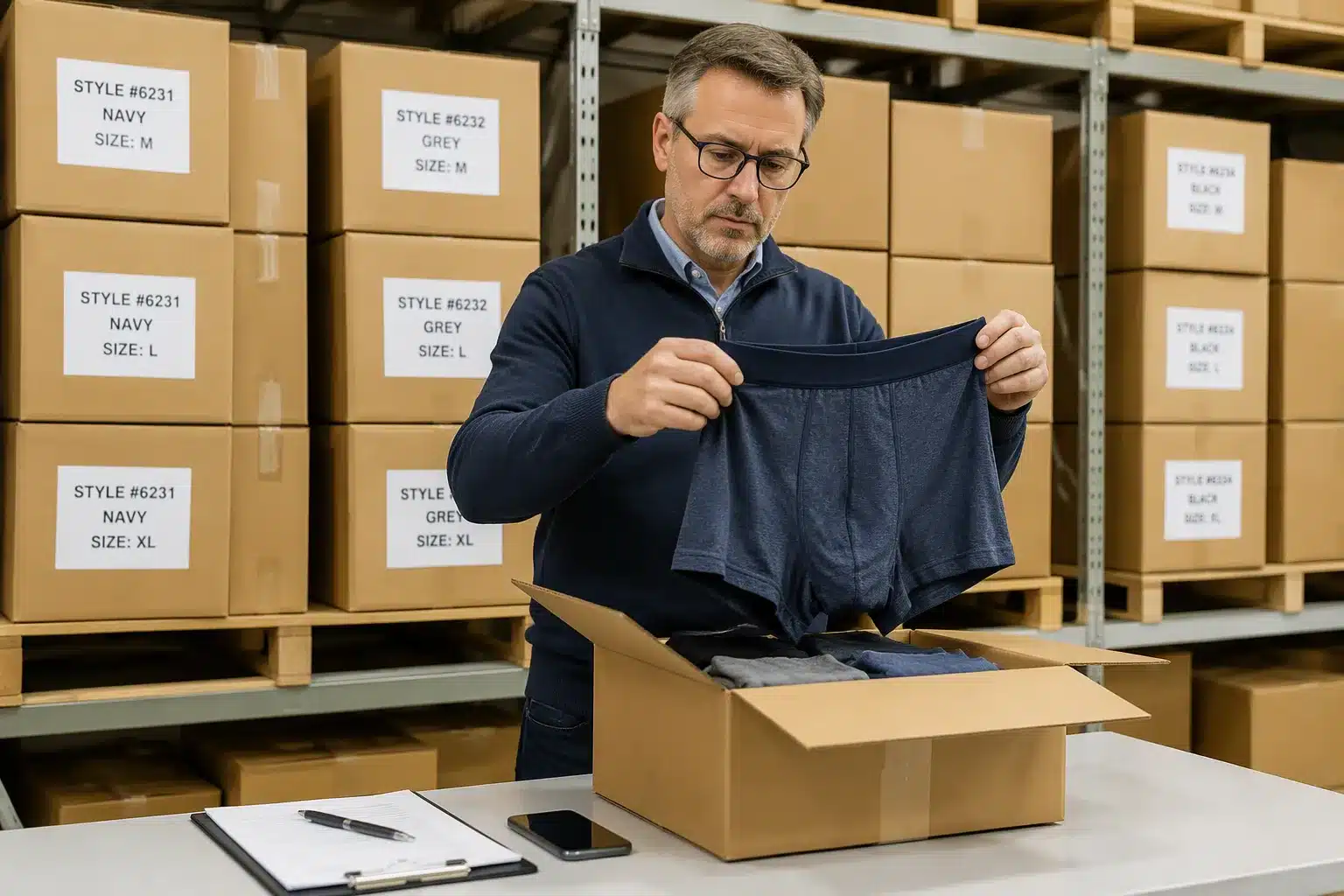
A visit to the warehouse tells you more than any price list. Look at how they store their stock. Boxes stacked on a dry floor and marked by style show a supplier who knows their inventory. Wet corners and boxes with no labels tell a different story.
Ask to open a box yourself. Pull three items from different packs. Check the stitching, the waistband snap, and whether the colors match. If you plan to import from China instead, you cannot make that trip. So ask for a sample by courier and treat it like your warehouse visit. Wash it twice, measure it flat, and photograph it as your approved reference.
Run the same landed-cost test on both routes. Add goods, freight, duty, VAT, clearing, and delivery, then divide by sellable units. Compare that number against the local shelf price. A low minimum order only pays off when your full landed cost still beats the local option.
Reference Calls
Call two or three trade references before you commit. Ask how often deliveries arrived on time and how the supplier handled a short shipment. Listen for hesitation. A reference who praises the price but avoids the delivery question has told you something useful.
For an overseas factory, ask for South African shop owners they already supply. Then check that those shops really exist. A factory that names real customers with real addresses earns trust fast. One that offers only vague claims does not.
Protecting the First Order
Trial Order Terms
Start small on purpose. A trial order tests the supplier without risking your full budget. Ask for a modest quantity across your best-selling sizes, and say clearly that it is a trial. A confident supplier welcomes that framing.
Negotiate the trial terms in advance. Confirm the unit price, the size curve, the packaging, and the delivery date. Ask what happens if the stock arrives late or short. Get the answer before you pay, not after.
Never pay a bulk balance before you inspect the goods. A deposit is normal; a full payment before inspection hands all the risk to the supplier.
Trial Order Terms
Set a clear pass mark for the trial. Decide now what would make you reorder and what would make you walk away. Check the fill rate, the defect count, and the delivery date against the promise. Write those results down.
Then compare the trial against your landed-cost sheet. Did the real cost per unit match your estimate? If freight or clearing came in higher than expected, adjust your numbers before you scale. That habit keeps your margin honest.
Written Agreements
Put every term in writing, even for a small trial. The agreement should name the styles, the quantities, the size mix, the unit price, and the delivery date. Add the defect policy and the shortfall rule. A one-page order confirmation works fine.
For an import order, add the inspection clause. State that a third-party inspection happens before the balance payment, and that defects or shortfalls get replaced or credited. Ask for a signed reply.
Keep the registered company name, the bank details, and the tax clearance on file. Match the bank account to the company name before any money moves. Payment fraud usually starts with a changed account number, not a bad product.
Shortlist two or three underwear wholesalers in Johannesburg, request samples and documents, and run a trial order before you scale. The same discipline protects you whether you buy local stock or place a custom order from China.
Requesting an Overseas Factory Quote
What to include
Styles, quantities, size mix
A vague inquiry gets you a vague price. Send the factory a clear list of styles, with a reference photo or a sample you already own for each one. Name the quantity per style, not just the total. Then spell out the size mix you need — for example, how many smalls, mediums, and larges sit inside each pack.
Ask the factory to quote the size curve separately. Some factories price one flat rate across the range. Others add a surcharge for larger sizes. You want that difference visible on paper, so you can compare it against a Johannesburg quote without guessing.
Fabric and packaging specs
State the fiber content and the stretch you expect. If you already tested a local sample, describe it: the weight, the feel, the waistband recovery. Attach a photo of the label and the polybag you want. Say whether you need a three-pack, a header card, or a plain carton.
Packaging changes the price more than most buyers expect. Ask the factory to quote goods and packaging as separate lines. That way you see what a branded polybag really adds per unit, and you can drop it if the margin gets tight.
Comparing quotes
Landed cost vs unit price
Two factories can quote the same unit price and still land at very different costs. Build one sheet for each quote. Add the goods, the freight, the duty, the VAT, the clearing agent fee, and the last-mile delivery. Divide that total by the sellable units.
Now set that figure beside your local wholesale price. If the gap is thin, the fast restock and low minimum from a Johannesburg supplier may serve you better. If the gap is wide, the import run earns its longer wait. Never compare unit price to unit price — compare landed cost to landed cost.
Lead time and terms
Ask for the production window and the shipping time as two separate numbers. Add your clearing days on top. Then check that total against your cash flow — your money sits in that queue until the stock sells.
Confirm the payment terms in writing. Note the deposit percentage, when the balance falls due, and whether an inspection comes before that balance. A factory that welcomes a pre-shipment inspection is telling you something good. One that dodges the question is telling you something too.
Keep one tool handy as you shop: the trust checklist. Quality you can wash and test, pricing you can read line by line, delivery you can count on, and proof you can verify. Those four checks tell you more than any sales pitch.
Then match the sourcing model to your reality. Local stock suits small, steady orders. Private label fits a growing brand. Import OEM pays off at volume, when your cash flow can wait out production and shipping.
So pick two or three underwear wholesalers in Johannesburg, ask for samples and documents, and start with a trial order. Do that, and you’ll buy with confidence instead of hope.
FAQ
How do I know a Johannesburg wholesaler is trustworthy before I pay?
Ask for proof first. Request the company registration, tax clearance, and two trade references. Then call those references and ask about delivery dates and defect handling. A supplier who shares these documents without fuss earns your trust. One who stalls does not.
Is a low minimum order always the better deal?
No. Run the worth-it test. Add the unit price, freight, duty, VAT, clearing fees, and delivery. Divide that total by the units you can actually sell. Compare the result to a local shelf price. A low minimum only pays off when your full landed cost still wins.
What should I include in my landed cost sheet?
List every line: goods, freight, insurance, duty, VAT, clearing agent fees, and last-mile delivery. Then divide the total by your sellable units. That figure is your true cost per piece. Compare it against a Johannesburg wholesale price before you commit to any order.
How do I test a sample properly?
Wash it at least twice. Check for shrinking, color bleeding, and twisted seams. Pull the waistband and see if it recovers. Then measure the garment flat and compare it to the written spec. Photograph it as your approved reference for the bulk order.
When should I book a pre-shipment inspection?
Book it before you pay the balance, never after. A third-party inspector checks quantity, size mix, measurements, stitching, and packaging against your approved sample. For local stock, do the same check yourself at the warehouse. Open cartons and count units before money moves.
Can I start with local stock and switch to import later?
Yes, and many retailers do. Start local to learn which styles sell fast. Then move your best sellers into a private label or OEM run. That path keeps your cash free early and lowers your unit cost once you know real demand.
What documents protect my first import order?
Put every term in writing. Name the styles, quantities, size mix, unit price, and delivery date. Add the defect policy, the shortfall rule, and the inspection clause. Match the bank account to the registered company name before any money moves.
How do I compare two overseas factory quotes fairly?
Build one sheet per quote. Add goods, freight, duty, VAT, clearing, and delivery. Divide by sellable units. Then set that landed cost beside your local wholesale price. Never compare unit price to unit price — compare landed cost to landed cost.
See Also
Finding A Trustworthy Men’s Underwear Wholesale Supplier In The UK
Essential Men’s Underwear Wholesale Guide For Buyers In The UK
What To Look For In Men’s Underwear Manufacturers In 2026
Data Reveals These Tips Make Underwear Wholesale Restocking Work Best
Buying Men’s Boxer Shorts Wholesale Directly From China For Dutch Brands